
What Does Fault Code P0113 Mean?
Fault code P0113 is a generic OBD-II diagnostic trouble code defined as “Intake Air Temperature Sensor 1 Circuit High Input”. This indicates that the vehicle’s Engine Control Module (ECM) or Powertrain Control Module (PCM) has detected that the voltage signal from the Intake Air Temperature (IAT) Sensor 1 is higher than the expected normal operating range, typically indicating an open circuit or high resistance in the sensor circuit.
Background: The Intake Air Temperature (IAT) sensor is a thermistor (a temperature-sensitive resistor) that measures the temperature of the air entering the engine’s intake manifold. The ECM/PCM supplies it with a 5-volt reference signal. As air temperature increases, the sensor’s resistance decreases, causing the signal voltage to drop. Code P0113 is set when the ECM detects the signal voltage is persistently too high (e.g., above 4.6 volts for more than 2 seconds), which corresponds to an implausibly low temperature reading (typically around -40°C / -40°F). When this happens, the ECM typically enters a fail-safe mode and uses a default temperature value (often 25°C / 77°F or 38°C / 101°F) for fuel calculations, which can affect performance, fuel economy, and emissions.
Symptoms of Fault Code P0113
- Illuminated Check Engine Light (MIL).
- Poor fuel economy (decreased MPG) due to incorrect air-fuel mixture calculations.
- Difficult or extended cranking, especially in cold weather, as the ECM may over-enrich the fuel mixture based on the false cold reading.
- Rough engine idle or potential stalling.
- Engine hesitation or lack of power during acceleration.
- Black smoke from the exhaust during acceleration, indicating a rich fuel mixture.
- Increased emissions, potentially causing the vehicle to fail an emissions test.
Main Causes of Fault Code P0113
- Open Circuit or High Resistance: The most common cause is an open circuit or high resistance in the IAT sensor signal wire or ground circuit, preventing the signal voltage from dropping properly.
- Faulty IAT Sensor: The sensor itself has failed internally, providing an incorrect high-resistance (low-temperature) signal or having an open circuit.
- Damaged Wiring or Connectors: Corroded, frayed, loose, or damaged wires and connectors in the IAT sensor circuit can create an open circuit or high resistance.
- Poor Electrical Connection: Loose, corroded, or damaged pins at the sensor or ECM connector can cause a poor connection that mimics an open circuit.
- Faulty Engine Control Module (ECM/PCM): A rare cause where the control module itself has an internal fault, incorrectly interpreting a normal sensor signal as high.
How to Diagnose Fault Code P0113?
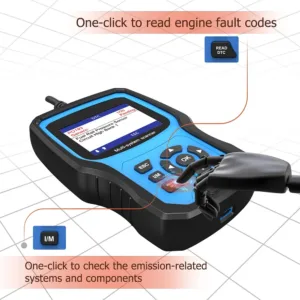
- Scan and Record: Connect an obd2 scanner to confirm code P0113 and check for any related codes (e.g., P0110, P0111, P0112). Record freeze frame data to see the engine conditions when the fault occurred.
- Monitor Live Data: Using a capable scanner, monitor the live IAT sensor reading. A reading stuck at an implausibly low value (e.g., -40°C / -40°F) regardless of the actual ambient temperature strongly indicates an open circuit or faulty sensor.
- Visual Inspection: Inspect the IAT sensor (often integrated into the Mass Air Flow sensor assembly), its wiring harness, and connectors for obvious damage, disconnection, or corrosion.
- Test the Sensor and Circuit: With the ignition OFF, disconnect the IAT sensor connector. Using a digital multimeter, measure the resistance of the sensor itself across its terminals. Compare the reading at ambient temperature to the manufacturer’s specifications. An extremely high or infinite resistance indicates a faulty sensor.
- Circuit Continuity Test: Check for continuity (low resistance) in the signal and ground wires between the sensor connector and the ECM connector. Also, check that the ground circuit has less than 5 ohms of resistance to chassis ground.
Possible Causes and Diagnostic Methods
| Possible Cause | How to Check? |
| Open Circuit or High Resistance (Wiring) | With the sensor disconnected, use a multimeter to check for continuity and resistance in the signal and ground wires between the sensor connector and the ECM. High resistance or no continuity indicates a problem. |
| Faulty IAT Sensor | Measure the sensor’s resistance. If it is extremely high (open circuit) or does not change appropriately when warmed, the sensor is likely faulty and needs replacement. |
| Damaged Wiring/Connector | Perform a thorough visual and physical inspection (wiggle test) of the entire wiring harness from the sensor to the ECM, looking for broken wires, damaged insulation, or corroded terminals. |
| Poor Ground Connection | Check the ground circuit for the sensor for high resistance or an open circuit, which can cause a high signal voltage. |
| Faulty PCM | A last-resort diagnosis. If all wiring and sensor tests are normal and a known-good sensor still causes the code, the PCM may be faulty. Check for technical service bulletins (TSBs) first. |
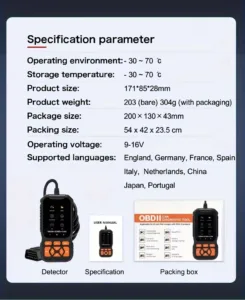
Required Tools: OBD2 diagnostic scanner, digital multimeter (DMM), basic hand tools, vehicle-specific wiring diagrams.
How to Fix Fault Code P0113? (Solutions)
Simple Fixes:
- Clean/Repair Connectors: Disconnect the IAT sensor and ECM connectors, clean any corrosion from the terminals, and ensure they are tightly connected.
- Repair Wiring: Locate and repair any broken wires or sections of the IAT signal or ground circuit that have high resistance. Use solder and heat-shrink tubing for a proper repair.
In-Depth Diagnosis and Repair:
- Replace the IAT Sensor: If the sensor itself tests as open or out of specification, replace it. On many vehicles, this is part of the MAF/IAT sensor assembly.
- Replace Wiring Harness Section: If the open or high resistance is within a damaged section of the harness, replace that section.
- Update PCM Software: In rare cases, a software glitch may cause a false code. Check for available PCM updates from the manufacturer.
- Replace PCM: Only after all other possibilities are exhausted and diagnostics point conclusively to an internal PCM fault.
Troubleshooting by Symptom
| Symptom | Likely Solution |
| Check Engine Light on with hard cold starting and poor fuel economy. | Likely an open IAT sensor or wiring, causing the ECM to think the intake air is extremely cold and over-enriching the fuel mixture. |
| Rough idle and black smoke from exhaust. | Could be caused by the ECM using a default temperature value that is incorrect, leading to a rich fuel mixture at idle and under load. |
| Code returns immediately after clearing. | Indicates a persistent hard fault, most commonly a permanent open circuit in the wiring or an internally open (failed) sensor. |
Common Vehicles with Fault Code P0113
- General Motors (GM) Vehicles (Chevrolet, Buick, GMC, Cadillac, Saturn, Pontiac): For many GM models, DTC P0113 sets when the ECM detects the IAT sensor temperature is less than -39°C (-38°F) for more than 5 seconds under specific conditions. Common affected models include Chevrolet Silverado, Equinox, Malibu, Impala, Tahoe, Suburban; Buick Enclave, LaCrosse; Cadillac Escalade, CTS; and Pontiac G3. Diagnosis involves checking circuit resistance and using a fused jumper wire test.
- Mitsubishi Vehicles: The factory diagnostic procedure is precise. Code P0113 sets if the No. 1 intake air temperature sensor output voltage is more than 4.6 V (corresponding to -40°C or less) for 2 seconds with the ignition ON. Diagnosis follows a strict step-by-step procedure checking voltage, resistance, and harness continuity.
- Ford Vehicles (F-150, Escape, Expedition, Explorer): Prone to wiring harness issues due to heat and vibration, leading to opens or high resistance. The IAT sensor is often integrated into the MAF assembly.
- Toyota/Lexus Vehicles (Camry, RAV4, 4Runner, Sequoia): Known for reliable sensors, but connector issues and wiring harness damage over time can trigger P0113. The ECM uses a default value when the code is set.
- Honda/Acura Vehicles (Civic, CR-V, Odyssey, MDX): Similar to others, causes include sensor failure and wiring opens. Diagnosis involves checking sensor resistance and circuit continuity.
- Chrysler/Dodge/Jeep Vehicles (Grand Caravan, Durango, Ram): The PCM monitors the IAT sensor signal voltage. A “Circuit High” fault (P0113) is set if the voltage reads above a high calibrated threshold, indicating an open circuit or high resistance.
- BMW Vehicles (3 Series, X5): The IAT sensor is typically integrated. Faults often stem from wiring opens or internal sensor failures. Diagnosis may require specialized scan tools to monitor live data.
- Audi Vehicles (A4): Common causes include a faulty IAT sensor (often integrated), wiring issues, or problems with the Engine Control Unit (ECU).
- Nissan/Infiniti Vehicles: Known for connector corrosion and sensor failures, especially in older models, leading to open circuit conditions.
- Hyundai/Kia Vehicles: Wiring harness chafing and sensor connector issues are frequent culprits for P0113 codes in these models.
P0113 Frequently Asked Questions
What does the P0113 code specifically mean?
It means the vehicle’s computer has detected that the signal voltage from the Intake Air Temperature (IAT) Sensor 1 is too high, which usually corresponds to the sensor reporting an implausibly low air temperature (typically around -40°C / -40°F). This indicates an open circuit or high resistance in the sensor circuit.
What is the difference between P0113, P0111, and P0112?
- P0113: “Circuit High Input” – The sensor signal voltage is too high (open circuit/high resistance), making the ECM think the air is extremely cold.
- P0111: “Circuit Range/Performance” – The sensor signal is within range but erratic or not changing logically.
- P0112: “Circuit Low Input” – The sensor signal voltage is too low (short to ground), making the ECM think the air is extremely hot.
Is it safe to drive with a P0113 code?
You can usually drive for a short time, but it is not recommended for extended periods. The engine will be in a fail-safe mode, which can cause poor fuel economy, hard starting (especially in cold weather), rough running, and increased emissions. Prolonged driving may lead to spark plug fouling from a rich mixture.
Can I fix a P0113 code myself?
Yes, if you have basic mechanical and electrical skills. Start by using an obd reader or obd2 diagnostic tool to confirm the code and view live data to see if the IAT reading is stuck at -40°C/-40°F. Then, visually inspect the sensor and wiring for obvious damage. Checking for an open circuit with a multimeter is a key diagnostic step.
Why does my P0113 code keep coming back after I clear it?
This indicates a persistent “hard” fault. The most common reason is a permanent open circuit in the wiring harness (a broken wire) or a completely failed (open) IAT sensor. The fault is immediately redetected once the system runs its self-check.
How much does it cost to fix a P0113 code?
Costs vary: The IAT sensor itself typically costs between $20 and $150. Professional diagnosis and repair at a shop can range from $100 to $300, depending on labor rates and whether it’s a simple sensor replacement or requires wiring repair.
Do I need to replace the entire MAF sensor for a P0113 code?
Often, yes. On most modern vehicles, the IAT sensor is built into the Mass Air Flow (MAF) sensor assembly as a single, non-serviceable unit. If the IAT portion is faulty, the entire MAF/IAT unit must be replaced.
What should the IAT sensor read on a scan tool with a P0113 code?
With a P0113 code present, the live data from the IAT sensor will typically be stuck at an implausibly low value, such as -40°C (-40°F), regardless of the actual air temperature.
How do I test an IAT sensor for a P0113 code?
Disconnect the sensor. Measure its resistance with a multimeter. At room temperature (around 20°C/68°F), a typical IAT sensor resistance might be 2000-3000 ohms. If you measure a resistance that is extremely high (e.g., over 100,000 ohms) or infinite (open circuit), the sensor is faulty. You can also warm the sensor with your hand; the resistance should decrease.
Will disconnecting the battery clear P0113 permanently?
No. It will clear the code and turn off the light temporarily, but the ECM’s self-tests will run again. If the open circuit or faulty sensor is still present, the code will return, usually within one or two drive cycles.
Can a dirty air filter cause P0113?
No, a dirty air filter cannot directly cause a P0113 code. P0113 is an electrical circuit fault (high voltage/open), not a performance issue caused by airflow restriction. However, severe contamination could theoretically affect sensor operation, but it’s not a primary cause.
What is the fail-safe temperature the ECM uses when P0113 is set?
This varies by manufacturer. Common default values are 25°C (77°F) or 38°C (101°F). The ECM uses this fixed value to calculate fuel delivery, which is why drivability issues may occur if the actual air temperature is significantly different.
Related OBD2 Fault Codes
- P0110 – Intake Air Temperature Sensor 1 Circuit Malfunction
- P0111 – Intake Air Temperature Sensor 1 Circuit Range/Performance Problem
- P0112 – Intake Air Temperature Sensor 1 Circuit Low Input
- P0114 – Intake Air Temperature Sensor 1 Circuit Intermittent
Important Note! Code P0113 indicates a specific electrical fault: an open circuit or high resistance. The most effective diagnostic step is to use an obd tool scanner or obd2 diagnostic scanner to view live data and see the implausibly low temperature reading (-40°C/-40°F), then use a multimeter to test for an open circuit or high resistance in the wiring and sensor. Never ignore this code, as it forces the engine to run in a fail-safe mode that can harm performance, fuel economy, and starting, especially in cold climates. For complex wiring issues, consulting vehicle-specific repair information or a professional technician is advised.