The P0188 is a generic OBD-II powertrain trouble code. Its official definition is “Fuel Temperature Sensor B Circuit High Input”.

Unlimited Choices, Easy Shopping
Unlimited Choices, Easy Shopping
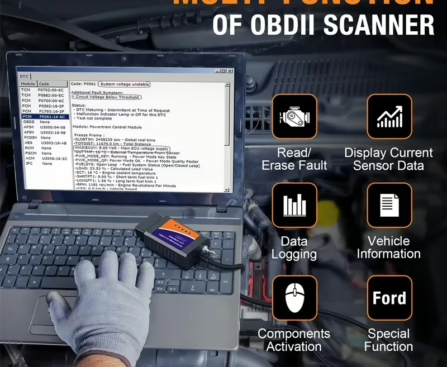
The P0188 is a generic OBD-II powertrain trouble code. Its official definition is “Fuel Temperature Sensor B Circuit High Input”.
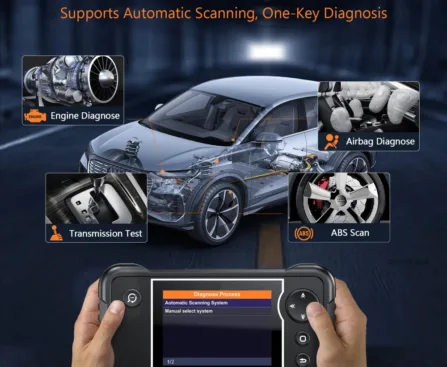
The P0187 is a generic OBD-II powertrain trouble code. Its official definition is “Fuel Temperature Sensor B Circuit Low Input”.
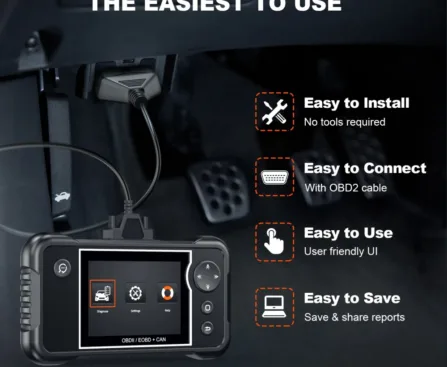
The P0185 is a generic OBD-II powertrain trouble code. Its official definition is “Fuel Temperature Sensor B Circuit Malfunction”.
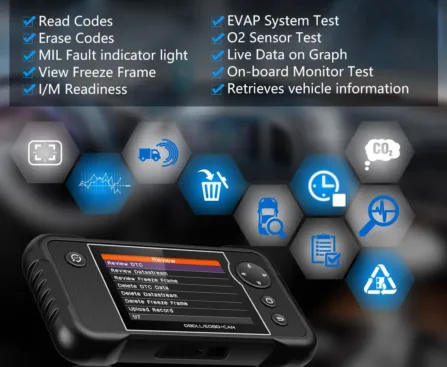
The P0186 is a generic OBD-II powertrain trouble code. Its official definition is “Fuel Temperature Sensor B Circuit Range/Performance”.
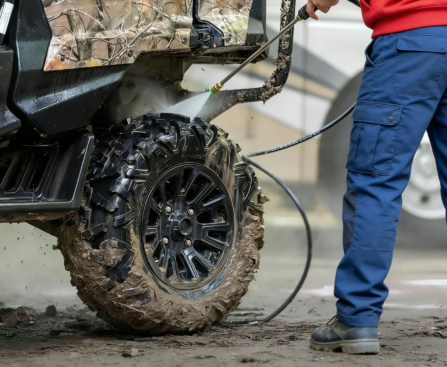
Electric car washers are genuinely useful for most homeowners—they save time, use less water than a bucket wash, and clean far better than manual scrubbing. They are also safe when used correctly, but “safe” depends entirely on three things: buying a properly rated unit (IPX5+ waterproof, thermal cutoff, leakage protection), respecting the risks of combining water and electricity, and operating the pressure washer correctly. The two real dangers are electrical (shock from water-intruded circuitry) and mechanical (high-pressure water damaging paint, trim, or hurting people). Both are preventable with the right equipment and technique.
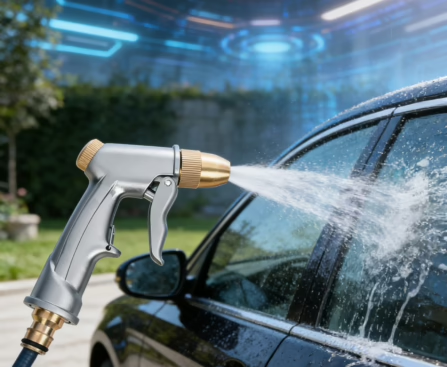
Washing your car in direct midday summer sun is strongly discouraged. The combination of intense heat, UV radiation, and rapid water evaporation creates multiple risks: thermal shock to the clear coat, instant water spotting, premature drying of soap/shampoo (leaving residues and streaks), and increased chance of scratching because contaminants bake onto the surface. The ideal summer wash window is early morning (before 9 AM) or late afternoon/evening (after 5 PM) when the paint surface is cooler and the sun is lower. If you absolutely must wash at noon, work in the shade, keep the car cool with a pre-rinse, and dry each panel immediately.
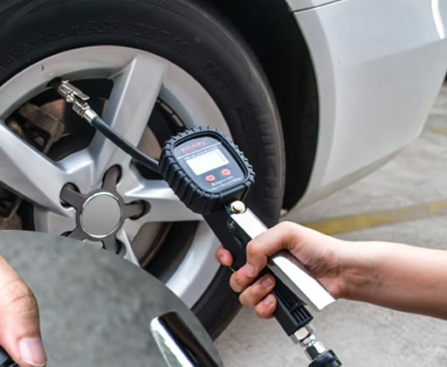
Neither is universally superior—the right choice depends on your vehicle type, inflation frequency, and usage location. For a car or SUV owner who wants a reliable trunk emergency tool, a 12V cigarette-lighter inflator wins on unlimited runtime, lower cost, and zero battery degradation. For urban drivers who value grab-and-go convenience, bike/sports-equipment use, or inflating away from the vehicle, a cordless lithium-ion inflator is the better fit despite battery aging and per-charge limits.
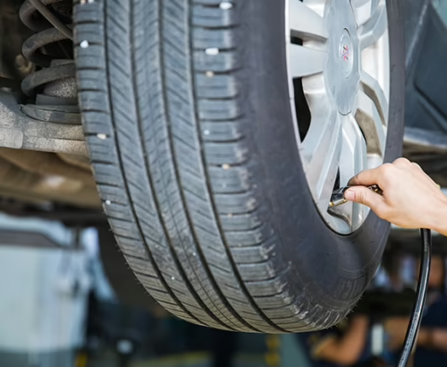
Under normal conditions—engine running, inflator drawing within the socket’s fuse rating (typically 10–15A), and used for reasonable durations—a 12V cigarette-lighter tire inflator will NOT damage your car’s electrical system or battery. The risk appears only when you violate one of three rules: (1) running the engine OFF, (2) exceeding the socket’s fuse rating, or (3) using a pump with a faulty 12V plug that causes arcing or excessive heat at the contact. In these scenarios, you risk a blown fuse (minor), a deeply discharged battery (moderate), or—in worst-case misuse—damaged wiring or the alternator’s voltage regulator (rare but real).
We use cookies to improve your experience on our site. By using our site, you consent to cookies.
Websites store cookies to enhance functionality and personalise your experience. You can manage your preferences, but blocking some cookies may impact site performance and services.
Essential cookies enable basic functions and are necessary for the proper function of the website.
These cookies are needed for adding comments on this website.
Google Tag Manager simplifies the management of marketing tags on your website without code changes.
Statistics cookies collect information anonymously. This information helps us understand how visitors use our website.
Google Analytics is a powerful tool that tracks and analyzes website traffic for informed marketing decisions.
Service URL: policies.google.com (opens in a new window)
SourceBuster is used by WooCommerce for order attribution based on user source.