
What Does Fault Code P0111 Mean?
Fault code P0111 is a generic OBD-II diagnostic trouble code defined as “Intake Air Temperature Sensor 1 Circuit Range/Performance Problem”. This indicates that the vehicle’s Engine Control Module (ECM) has detected that the signal from the Intake Air Temperature (IAT) Sensor 1 is erratic, inconsistent, or outside the expected operating range, but not completely out of range like with P0112 or P0113.
Background: The Intake Air Temperature (IAT) sensor is a thermistor that measures the temperature of the air entering the engine’s intake manifold. This data is critical for the ECM to calculate the correct air-fuel mixture for optimal combustion, fuel economy, and emissions control. The sensor’s resistance changes with temperature, and the ECM monitors this voltage signal. Code P0111 is set when the ECM detects that the IAT sensor signal is not changing appropriately over time or does not correlate reasonably with other sensor data, such as the Engine Coolant Temperature (ECT) sensor.
Symptoms of Fault Code P0111
- Illuminated Check Engine Light (MIL).
- Poor fuel economy (decreased MPG) due to incorrect air-fuel mixture calculations.
- Engine hesitation, stumbling, or surging during acceleration.
- Rough engine idle or stalling.
- Hard starting, particularly in cold weather.
- Reduced engine power and performance.
- Black smoke from the exhaust (indicating a rich condition) or potential engine backfiring.
Main Causes of Fault Code P0111
- Faulty or Contaminated IAT Sensor: The sensor itself is worn out, defective, or contaminated with oil, dirt, or debris, causing it to send erratic or slow-responding signals.
- Damaged Wiring or Connectors: Corroded, frayed, loose, or damaged wires and connectors in the IAT sensor circuit can cause intermittent or unstable voltage signals.
- Dirty or Clogged Air Filter: A severely restricted air filter can alter airflow and cause debris to accumulate on the IAT sensor, affecting its reading.
- Poor Electrical Ground: A faulty or corroded ground connection for the sensor or ECM can lead to voltage instability in the circuit.
- Intake System Vacuum Leaks: Air leaks in the intake manifold or hoses downstream of the sensor can allow unmetered air in, potentially affecting temperature readings.
- Faulty Engine Control Module (ECM): A rare cause where the ECM itself has an internal fault or software glitch that misinterprets a valid sensor signal.
How to Diagnose Fault Code P0111?
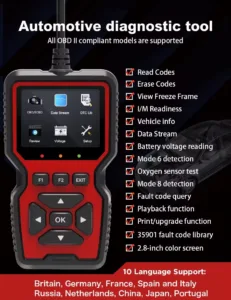
- Scan and Record: Connect an obd2 scanner to confirm code P0111 and check for any related codes (e.g., P0110, P0112, P0113). Record freeze frame data to see the engine conditions (RPM, load, temperature) when the fault occurred.
- Monitor Live Data: Using a capable scanner, monitor the live IAT sensor reading. With the engine off and cold, it should closely match the ambient air temperature. The key test is to see if the value changes appropriately. Start the engine and watch the reading; it should gradually increase as under-hood temperature rises. A reading that is stuck, changes very slowly (less than 1°C/1.8°F over a period), or is erratic indicates a problem.
- Visual Inspection: Inspect the IAT sensor (often integrated into the Mass Air Flow (MAF) sensor assembly) and its wiring harness and connector for obvious damage, corrosion, or disconnection. Check the air filter condition.
- Test the Sensor and Circuit: With the ignition OFF and the sensor disconnected, use a digital multimeter to measure the sensor’s resistance. It should be high when cold and decrease as you warm it with your hand. Also, test the wiring harness for continuity and check for shorts to ground or power.
- Check for Software Updates: For modern vehicles, check with a dealer or using a professional scan tool to see if there are any ECM software updates or Technical Service Bulletins (TSBs) related to IAT sensor performance.
Possible Causes and Diagnostic Methods
| Possible Cause | How to Check? |
| Faulty IAT Sensor | Monitor live data for a stuck or slow-responding reading. Test sensor resistance with a multimeter at different temperatures and compare to specifications. Substitution with a known-good sensor is a definitive test. |
| Damaged Wiring/Connector | Perform a visual and physical inspection (wiggle test) of the harness. Use a multimeter to check for continuity in the signal and ground wires, and check for shorts to power or ground. |
| Dirty/Clogged Air Filter | Remove and inspect the air filter. Replace if heavily clogged. Clean the IAT sensor with specialized MAF/IAT sensor cleaner if it is contaminated. |
| Poor Electrical Ground | Locate and inspect the relevant ground points for the ECM and sensor circuit. Clean any corrosion and ensure tight connections. |
| ECM Software Glitch | A last-resort diagnosis. Check for available ECM software updates from the manufacturer using a professional-grade scan tool. |
Required Tools: OBD2 code scanner, digital multimeter (DMM), basic hand tools, MAF/IAT sensor cleaner, vehicle-specific service information.
How to Fix Fault Code P0111? (Solutions)
Simple Fixes:
- Clean the IAT Sensor: If accessible, carefully clean the sensor element with specialized electronic contact cleaner or MAF sensor cleaner. Allow it to dry completely before reconnecting.
- Replace Air Filter: Install a new, clean air filter.
- Repair Wiring/Connectors: Repair any damaged wires with solder and heat-shrink tubing. Clean corroded connector pins and ensure a secure connection.
In-Depth Diagnosis and Repair:
- Replace the IAT Sensor: If diagnostics confirm the sensor is faulty, replace it. On many vehicles, this requires replacing the entire MAF/IAT sensor assembly.
- Repair Wiring Harness: If the fault is in the wiring, repair or replace the affected section of the harness.
- Update ECM Software: Check for and install any available ECM software updates from the manufacturer.
- Address Vacuum Leaks: Find and seal any leaks in the intake system using a smoke machine for best results.
Troubleshooting by Symptom
| Symptom | Likely Solution |
| Check Engine Light on with poor fuel economy. | Likely a faulty or contaminated IAT sensor providing incorrect, slow-responding data. |
| Rough idle and hard starting. | Could be a sensor providing a stuck or erratic signal, causing incorrect fuel mixture at startup. |
| Hesitation during acceleration. | Often related to a sensor that fails to respond quickly to changing airflow temperatures. |
Common Vehicles with Fault Code P0111
- Nissan Rogue (2014-2020): A common issue in high-mileage vehicles. The IAT sensor, often integrated into the MAF assembly, can fail due to age or internal wear, especially in cold climates, leading to inconsistent readings.
- Toyota Camry/Tundra/Corolla: Toyota’s monitoring strategy is precise. Code P0111 sets if the change in IAT sensor reading is less than 1°C (1.8°F) under specific conditions after engine start or between trips. Common causes include a faulty MAF/IAT assembly or wiring issues.
- Honda Accord/Civic/CR-V: Prone to issues from a clogged air filter causing debris buildup on the IAT sensor element. Wiring harness damage near the intake is also a frequent culprit.
- Ford Focus/Transit Connect: Issues often stem from corroded electrical grounds or damaged wiring due to vibration or moisture exposure in the engine bay.
- Subaru Impreza/Forester: In some model years, a software glitch in the ECM can cause a false P0111 code. A dealer-performed ECM update may be the solution.
- Chevrolet Malibu/Equinox: Oil contamination from a Positive Crankcase Ventilation (PCV) system leak can foul the IAT sensor, causing sluggish response and triggering P0111.
- Mazda 3: Similar to other makes, causes include a faulty sensor, damaged wiring, or air intake leaks. Diagnosis involves checking sensor resistance and inspecting the intake system.
- Mitsubishi models: The factory diagnostic procedure involves checking for specific voltage values at the sensor connector and using a scan tool to monitor data while heating the sensor with a hair dryer to see if the reading changes appropriately.
- Land Rover/Range Rover: The code may be stored as P0111-2A, indicating a “signal stuck in range” fault. Diagnosis requires checking the IAT sensor signal circuit for shorts, opens, or high resistance, and inspecting the combined mass air flow and temperature sensor for contamination.
- General Motors (GM) vehicles (Chevrolet, GMC, Cadillac): The diagnostic approach is similar, focusing on live data monitoring for a non-responsive sensor and thorough inspection of the sensor and its circuit.
P0111 Frequently Asked Questions
What does the P0111 code specifically mean?
It means the Engine Control Module (ECM) has detected that the signal from the Intake Air Temperature (IAT) Sensor 1 is not changing as expected or is performing outside its normal operational range, even though the signal itself is still within electrical limits (not too high or too low).
What is the difference between P0111, P0112, and P0113?
- P0111: “Circuit Range/Performance” – The sensor signal is within the voltage range but is erratic, stuck, or not changing logically.
- P0112: “Circuit Low Input” – The sensor signal voltage is too low (typically indicating a short to ground, making the ECM think the air is extremely hot ~140°C/284°F).
- P0113: “Circuit High Input” – The sensor signal voltage is too high (typically indicating an open circuit, making the ECM think the air is extremely cold ~ -40°C/-40°F).
Is it safe to drive with a P0111 code?
You can usually drive, but it is not recommended for an extended period. The ECM will use a default temperature value (often 25°C/77°F), which can lead to reduced fuel economy, poor performance, and increased emissions. Performance may feel sluggish.
Can I fix a P0111 code myself?
Yes, if you are comfortable with basic automotive diagnostics. Start by using a car code reader to confirm the code and view live data to see if the IAT reading is stuck. Then, perform a visual inspection of the sensor and wiring. Cleaning the sensor and replacing the air filter are simple first steps.
Why does my P0111 code keep coming back after I clear it?
This indicates the root cause has not been fixed. The most common reasons are an intermittent wiring fault, a failing sensor that works intermittently, or an underlying issue like a vacuum leak or software problem that the ECM redetects after a few drive cycles.
How much does it cost to fix a P0111 code?
Costs vary: DIY sensor replacement typically ranges from $20 to $150 for the part. Professional repair at a shop, including diagnosis and labor, can range from $100 to $300, depending on the vehicle and whether it’s just the sensor or requires wiring repair.
Do I need to replace the entire MAF sensor for a P0111 code?
Often, yes. On most modern vehicles, the IAT sensor is built into the Mass Air Flow (MAF) sensor assembly as a single unit. If the IAT portion is faulty, the entire MAF/IAT unit must be replaced.
Can a dirty air filter cause P0111?
Yes, indirectly. A severely clogged air filter can restrict airflow and cause debris to accumulate on the IAT sensor element, making it slow to respond to temperature changes, which can trigger a performance/range code.
What should the IAT sensor read on a scan tool?
With the engine off and cold, the IAT reading should be very close to the ambient air temperature. After starting, it should gradually rise as under-hood heat soaks in. A reading that doesn’t change, or changes extremely slowly, indicates a problem.
How do I test an IAT sensor with a multimeter?
Disconnect the sensor. Set the multimeter to resistance (ohms). Measure the resistance across the sensor’s two terminals. The resistance should be high when the sensor is cold and decrease significantly as you warm it with your hand. Compare your readings to the manufacturer’s specifications.
Will disconnecting the battery clear P0111 permanently?
No. It will clear the code and turn off the light temporarily, but the ECM’s self-tests will run again over several drive cycles. If the underlying fault condition persists, the code will return.
Related OBD2 Fault Codes
- P0110 – Intake Air Temperature Sensor 1 Circuit Malfunction
- P0112 – Intake Air Temperature Sensor 1 Circuit Low
- P0113 – Intake Air Temperature Sensor 1 Circuit High
- P0114 – Intake Air Temperature Sensor 1 Circuit Intermittent
Important Note! Code P0111 indicates a performance issue, not necessarily a complete circuit failure. The key to diagnosis is using a capable car code scanner to monitor live data and observe if the IAT sensor reading changes appropriately. Do not just replace the sensor—always check for simple issues like a dirty air filter or a loose connector first. Ignoring this code can lead to decreased fuel economy and increased emissions. For accurate diagnosis, especially regarding ECM software, consulting vehicle-specific service information or a professional technician is recommended.