
The Working Principle and Structure of an Air Pump
The working principle of an air pump is that the engine drives the pump crankshaft via two V-belts, which in turn drives the piston to inflate the tires. An air pump mainly consists of components such as a tire pressure gauge, cooling fins, ventilation pipes, inner gasket, motor shaft, and rear housing.
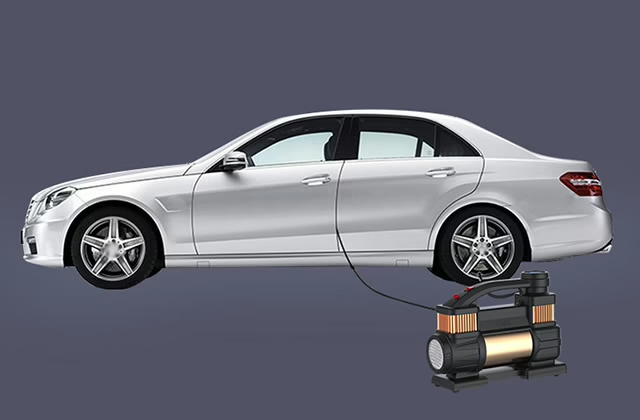
How to Choose an Air Pump
Which is Better, a Single-Cylinder or Twin-Cylinder Car Air Pump?
In terms of inflation speed, a twin-cylinder air pump is significantly faster than a single-cylinder pump. However, single-cylinder air pumps are generally more affordable. Therefore, you can choose based on your actual needs and budget.
Is a Foot-Pedal or Electric Air Pump Better?
Foot-pedal air pumps are slower and require more effort, but they are cheaper. Electric air pumps are faster and more convenient, but they are slightly more expensive. If your budget allows, it is recommended to buy an electric one, as the price difference isn’t significant, and it offers faster and more convenient inflation, saving you a lot of trouble.
How much does an air pump cost?
Small manual air pumps are inexpensive, while electric air pumps are relatively more expensive, and large electric air pumps are even more expensive.
What kind of oil should I use for an air pump/compressor?
It depends on the type of air pump. Small air pumps can use machine oil, while medium and large air pumps require special air compressor oil.
How to set tire pressure on an air pump?
First, check the unit on the air pump. If it’s BAR, set it to 2.4 or 2.8. If it’s PSI, set it to 35-40. If the unit is KPA, set it to 240-280.
How to adjust the pressure on an air pump?
First, open the air pump’s switch box, then locate the pressure adjusting spring. Plug in the air pump, then open the vent valve. Adjust the pressure by turning the nut on the pressure adjusting spring. Turning the nut clockwise increases the pressure, and turning it counterclockwise decreases the pressure.
How much tire pressure should I inflate with an air pump?
The tire pressure for cars depends on the temperature. Generally, in summer when temperatures are high, a setting of 2.2 BAR is suitable, while in winter when temperatures are low, a setting of 2.5 BAR is needed. For large SUVs or trucks, the tire pressure should be increased accordingly, generally around 4.7-5 BAR.
How to read the tire pressure gauge on an air pump?
Modern air pumps usually have an electronic display that shows not only the preset tire pressure but also real-time tire pressure data during inflation. Simply observe the electronic display.
Safety operating procedures for an air pump
- Pre-use checks: Before using the air pump, check that all screws are not loose; that the hoses are normal; that the power supply voltage is correct; and that the lubricant level is appropriate.
- Precautions during operation: When operating the air pump, start the vehicle first, then check the pressure before inflating. Adjustments to the wiring and pressure valve may be necessary during use. If adjustments to the pressure control system are required, they must be made before actual inflation.
Precautions for Using a Car Tire Inflator
Start the vehicle before inflating.
Before using a car air inflator, the vehicle must be started. Inflating while the vehicle is running can drain the car battery and damage it.
Check pressure before inflating.
Car air inflators should not be used blindly. Before use, the tire pressure must be measured, and then inflated according to the specific pressure of each tire.
Properly manage wiring before use.
The wiring of car air inflators is generally quite thin. Before use, the wiring must be properly managed to prevent damage or breakage due to improper use.
Common Problems with Air Inflators
What does “30-cylinder air pump” mean?
A “30-cylinder air pump” means that the air pump has 30 cylinders. A 30-cylinder air pump provides sufficient air pressure and a fast inflation speed.
Difference between 22-cylinder and 30-cylinder air pumps
The difference between 22-cylinder and 30-cylinder air pumps is the number of cylinders. Because of this difference, their inflation speeds differ. A 22-cylinder pump inflates slower than a 30-cylinder pump, and the inflation pressure may be insufficient.
What to do if an air pump fails to inflate?
There are several reasons why an air pump might fail to inflate. It could be due to a damaged exhaust pipe connection, requiring replacement; a damaged exhaust steel plate, requiring replacement; or aging of the internal springs, requiring replacement.
Can an electric vehicle air pump inflate a car?
Yes, but slowly.
An electric vehicle air pump can be used to inflate a car, but it will be slower because the air pressure and inflation volume of an electric vehicle air pump are lower than those of a car air pump.
Which is more accurate, a car air pump or a tire pressure monitoring system?
Tire pressure monitoring is more accurate.
Tire pressure monitoring calculates inflation based on tire temperature, while the pressure sensor inside an air pump will have some error due to the length of the air hose. Therefore, a tire pressure monitoring system is more accurate.
How to Maintain an Air Pump
Clean the Air Source: Always clean the air source before using an air pump. Otherwise, debris can easily enter the pump, causing unnecessary wear, affecting pumping speed and pressure, and reducing the pump’s lifespan.
Use Antifreeze: Some air pumps use engine coolant for cooling, but using antifreeze is better. Using water instead of antifreeze can lead to scale buildup, affecting the pump’s heat dissipation.
Prepare a Mat to Prevent Impacts: It’s best to use a mat when using an air pump. Because of its small size and unstable weight, a mat can prevent the pump from impacting the ground during pumping.
Inflate for Five Minutes, Rest for Three Minutes: When inflating, be sure to allow the pump to rest periodically, generally five minutes of pumping followed by a three-minute rest. This allows the pump to cool down and ensures stable tire pressure.