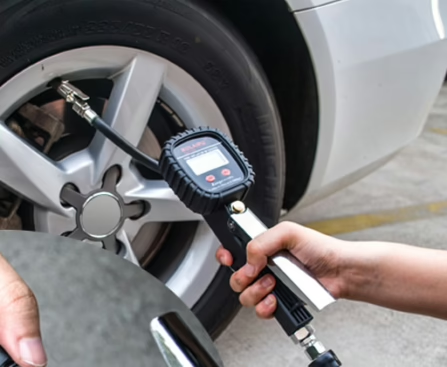
Should you start the car engine when using a tire inflator? Why?

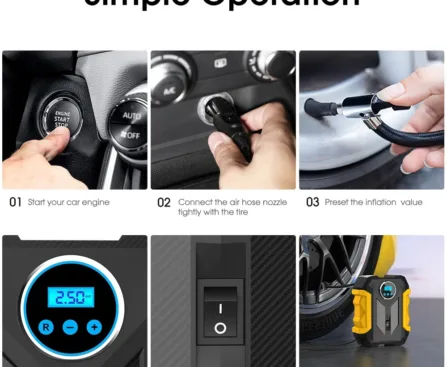
Run the engine. A running engine lets the alternator hold system voltage at ~13.8–14.4V, delivering steady power to the inflator while simultaneously recharging the battery. With the engine off, the inflator draws directly from the 12V battery, which sags to ~11.5–12.0V under load, reduces the inflator’s efficiency, and risks discharging the battery to the point where the vehicle won’t restart.

What accessories should come standard with a tire inflator purchase?

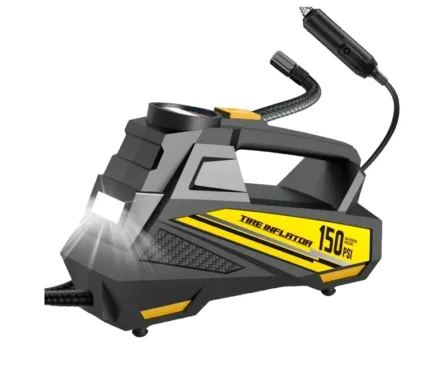
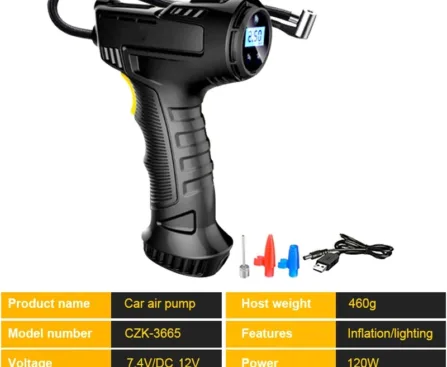
At minimum, a tire inflator should ship with a spare fuse, a set of nozzle adapters (cone + ball needle + Presta valve adapter), an air hose long enough to reach all four tires, and a user manual. A quality tire pump adds a carry bag or hard case, battery clamps as an alternative power path, an LED work light, and an extension hose coupling. If the box is missing the spare fuse or the adapter set, that is a red flag regardless of brand.

Which is better: a metal cylinder or plastic cylinder inflator?

For any driver who inflates tires more than once a month, owns an SUV/truck, or cares about not having the pump die halfway through the fourth tire, a metal cylinder is objectively better. Period. A plastic cylinder tire inflator is lighter and cheaper and perfectly adequate for occasional emergency top-offs on a compact car—but it will warp, leak, and lose performance under sustained heat. The catch: “metal housing” is NOT the same as “metal cylinder.” You must check what the cylinder block itself is made of, not just the outer shell.

How to store and maintain a tire inflator when not in use long-term?

A portable 12V inflator left in the trunk for 6 months will usually still work—but the battery in the digital gauge will be dead, the hose will have a permanent kink memory, and the cig-plug contacts may be corroded. The real killers aren’t the pump itself (DC motor + piston are simple); it’s the peripheral stuff: gauge battery leakage, hose rubber aging, and 12V plug oxidation. 10 minutes of prep before storage saves a dead pump the day you actually need it.

Is it normal for a tire inflator to get very hot after use?

Small 12V portable inflators run a DC motor + piston compressor inside a plastic or thin-metal shell with almost no active cooling. After 5–10 minutes of continuous run, the housing can hit 120–150°F (50–65°C)—hot enough to make you pull your hand away, but not necessarily broken. What matters is distinguishing “normal operating heat” from “dangerous overheating” that signals motor strain, blocked intake, or a pump you’re pushing too hard.

How to properly connect a 12V cigarette lighter inflator to the car’s port?

Short version: engine running → plug firmly into the 12V socket → attach hose to valve stem and lock the lever → set target PSI → run. The real traps aren’t the plugging part—they are (a) forgetting to start the engine so the socket even has power, and (b) exceeding the socket’s 10–15A fuse limit, which blows the car’s cig-lighter fuse instantly.

What things can a 12V cigarette lighter air compressor inflate?

A 12V portable tire inflator is designed primarily for vehicle tires and small-to-medium volume inflatables, but its usefulness extends further than most people expect. The key limitation is flow rate (L/min) and duty cycle, not just max PSI — so what it can inflate depends on how much air volume is involved and whether the pressure required is within its ~80 PSI reliable range.