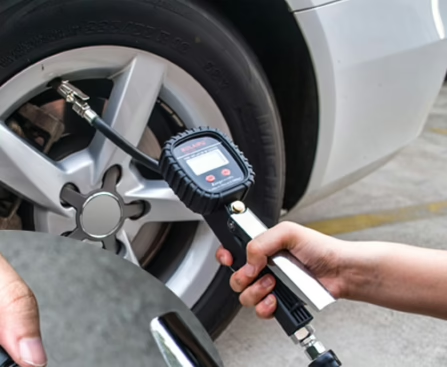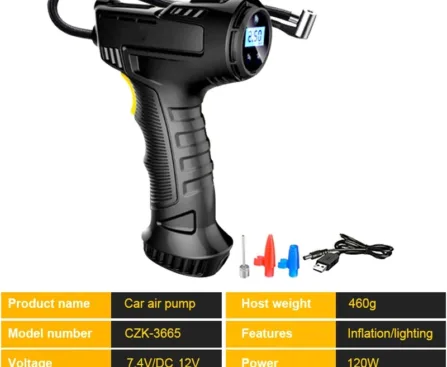
Proper tire inflation follows a fixed sequence: park safely → read the vehicle’s recommended cold PSI from the door jamb placard → start the engine in an open, well-ventilated area → connect the 12V tire inflator → set target pressure → inflate → verify with a standalone gauge → disconnect and stow. The most common mistakes are using the tire sidewall’s maximum PSI instead of the vehicle’s recommended PSI, failing to start the engine, and running the tyre pump past its duty-cycle limit until it overheats.
A cheap tire inflator is the best solution for drivers who want reliable performance at a low cost. These budget tire inflators, also known as affordable air compressors or tire pumps, provide essential features such as pressure control, compact design, and easy operation without unnecessary extras.
Whether you’re looking for a portable air pump for emergencies, a 12V tire inflator for your car, or a low-cost air compressor, there are plenty of options that balance price and performance.
all tire inflators
portable tire inflators
top-rated models
Benefits of Cheap Tire Inflators
Affordable price
Easy to use
Compact and lightweight
Suitable for basic car tire inflation
Best Cheap Tire Inflators
-
Sale!

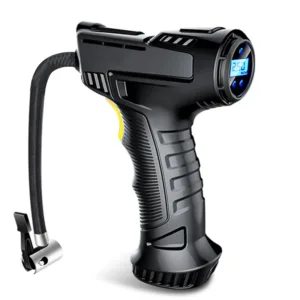
Rechargeable Tire Inflator Portable Air Compressor With Digital Display
Original price was: $88.99.$78.99Current price is: $78.99. -

Handheld Air Compressor Pump Tire Inflator For Car And Bicycle
Price range: $85.99 through $89.99This product has multiple variants. The options may be chosen on the product page -

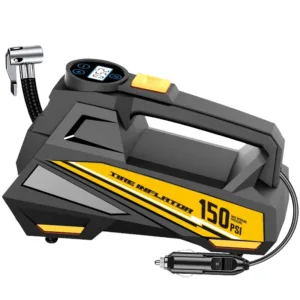
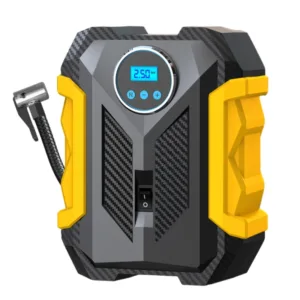
12 Volt Portable Car Air Pump inflator Cigarette Lighter Socket Powered
$99.99 -

Portable Car Air Compressor Travel Emergency Tire Inflator Pump
Price range: $107.99 through $109.99This product has multiple variants. The options may be chosen on the product page
View cheap inflators →
How to Choose a Budget Tire Inflator
Minimum 100 PSI recommended
Check power source (12V or battery)
Look for basic safety features
Consider portability
FAQs
Are cheap tire inflators reliable?
Yes, for everyday car use and emergencies.
Do budget inflators support auto shut-off?
Some models include this feature—check product specs.
Related Guides
portable air compressors
fast tire inflators
digital inflators
A tire inflator’s cable length and weight are important for real-world usability, but they rank below max PSI, airflow (L/min or CFM), amp draw, cylinder material, and duty cycle. A 9–11 ft power cord and an 18–26 inch air hose are the sweet spot for most cars and SUVs; anything shorter forces you to reposition the vehicle or the pump. Weight typically lands between 2–6 lbs for portable units—lighter is better for storage and handling, but a heavier tire pump usually means a metal cylinder, higher CFM, and better heat management. Match the size to your vehicle: a compact tire inflator for a sedan, a heavier tire pump for a truck.
For any driver who inflates tires more than once a month, owns an SUV/truck, or cares about not having the pump die halfway through the fourth tire, a metal cylinder is objectively better. Period. A plastic cylinder tire inflator is lighter and cheaper and perfectly adequate for occasional emergency top-offs on a compact car—but it will warp, leak, and lose performance under sustained heat. The catch: “metal housing” is NOT the same as “metal cylinder.” You must check what the cylinder block itself is made of, not just the outer shell.
Small 12V portable inflators run a DC motor + piston compressor inside a plastic or thin-metal shell with almost no active cooling. After 5–10 minutes of continuous run, the housing can hit 120–150°F (50–65°C)—hot enough to make you pull your hand away, but not necessarily broken. What matters is distinguishing “normal operating heat” from “dangerous overheating” that signals motor strain, blocked intake, or a pump you’re pushing too hard.
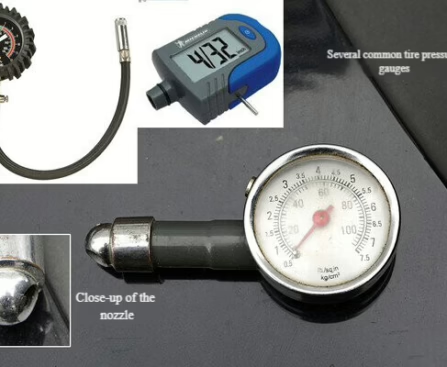
For pure accuracy, digital wins hands down. For long‑term “grab‑and‑go” reliability, mechanical wins – but only if you accept its lower precision.
The short answer: a typical 12V portable inflator takes roughly 5 to 12 minutes to bring one completely flat passenger-car tire (say 0 → 35 PSI) to proper pressure, depending on the tire size, the inflator’s flow rate, and whether you respect the duty cycle. It’s slow compared to a gas-station pump, but fast enough to get you off the shoulder and to a repair shop.
A 12V portable tire inflator is designed primarily for vehicle tires and small-to-medium volume inflatables, but its usefulness extends further than most people expect. The key limitation is flow rate (L/min) and duty cycle, not just max PSI — so what it can inflate depends on how much air volume is involved and whether the pressure required is within its ~80 PSI reliable range.