What does the P0188 code mean?
The P0188 is a generic OBD-II powertrain trouble code. Its official definition is “Fuel Temperature Sensor B Circuit High Input“.
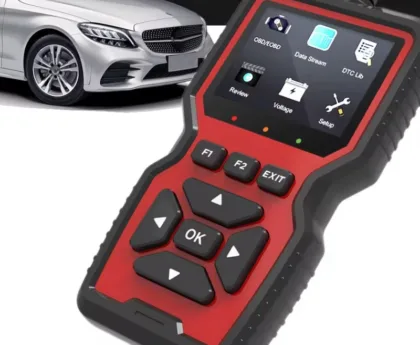
When you connect a car scanner to the diagnostic link connector, the powertrain control module (PCM) reports P0188 if it detects a high voltage signal from the fuel temperature sensor B circuit. Sensor B is the second fuel temperature channel and may be located in the fuel tank module, fuel supply line, fuel rail, near the high-pressure pump, or inside a combined fuel composition sensor. The sensor is a negative temperature coefficient thermistor: as fuel temperature decreases, resistance increases, causing the signal voltage to rise. A high input condition means the PCM sees a voltage above the expected maximum threshold (typically greater than 4.5 V to 4.8 V), which would correspond to an extremely low fuel temperature reading (often -40 °F or colder). Using a professional vehicle diagnostics tool with live data allows technicians to view the raw B-sensor voltage and compare it with sensor A and coolant temperature. An obd2 scanner can also capture freeze frame data showing engine conditions at the moment the fault occurred. Unlike codes like P0185 (general circuit malfunction) or P0187 (low input), P0188 specifically indicates a sustained high voltage condition on the B circuit.
Symptoms of Error Code P0188
- Malfunction Indicator Lamp (MIL) illuminated
- Hard starting, especially in cold weather
- Poor fuel economy due to incorrect fuel delivery calculations
- Rough idle or hesitation during acceleration
- White smoke from exhaust (under‑fueling) or black smoke (over‑fueling)
- Possible reduced engine power or limp mode
Main Causes of Error Code P0188
- Open circuit in the sensor signal wire
- Short to battery voltage (12 V) in the signal wire
- Faulty fuel temperature sensor B (internal open circuit)
- Open circuit in the ground wire to the sensor
- Corroded or damaged connector at the sensor
- PCM internal fault (rare)
How to Diagnose Error Code P0188?
- Connect a vehicle code reader to the DLC port and retrieve all stored DTCs, including freeze frame data. Note fuel temperature B reading, fuel temperature A, coolant temperature, and engine load.
- Perform a visual inspection of the fuel temperature sensor B, its wiring, and connector. Look for chafed insulation, broken wires, corrosion, or water intrusion. The sensor is typically on the fuel rail, fuel line, or inside the fuel tank.
- Start the engine and let it idle. Use a car code scanner with live data to monitor the fuel temperature B value. A reading of -40 °F or colder (or a voltage near 5 V) confirms a high input condition.
- Disconnect the sensor. With key on, measure the voltage at the PCM‑side connector on the signal wire. It should read approximately 5 V (reference voltage). If it reads 12 V or higher, there is a short to battery power.
- Measure the resistance of the fuel temperature sensor B across its terminals. Typical values: at 68 °F, resistance is around 2.5 kΩ; at 212 °F, around 180 Ω. If the resistance is infinite (open), the sensor is faulty.
- Check for continuity in the ground circuit. An open ground can cause the signal voltage to float high.
- If the sensor and wiring check out, clear the code with an obd2 scanner and perform a test drive. If the code returns, consider a PCM software update or replacement (rare).
Possible Causes and Diagnostic Methods
| Possible Cause | How to Check? |
| Open signal wire | Check continuity between sensor and PCM; voltage should drop when sensor connected |
| Signal wire shorted to 12 V | Disconnect sensor; measure voltage at PCM connector; should be 5 V reference, not 12 V |
| Faulty sensor (internal open) | Measure sensor resistance; replace if infinite |
| Open ground wire | Check continuity between ground pin and chassis ground |
| Corroded connector | Visual inspection; clean with contact cleaner; check pin tension |
Tools needed: obd2 scanner or vehicle diagnostics tool, digital volt/ohmmeter (DVOM), wiring diagram, basic hand tools, safety glasses.
How do I fix error code P0188? (Solutions to the Problem)
Simple Fixes
- Clear the code with a car code scanner and drive. If the code does not return, it may have been a temporary glitch.
- Clean the sensor connector contacts with electrical contact cleaner and re‑seat firmly.
- Apply dielectric grease to the connector to prevent future moisture ingress.
In‑depth Diagnosis and Repair Solutions
- Replace the fuel temperature sensor B with an OEM or high‑quality aftermarket unit if it is internally open.
- Repair the open circuit in the signal wire. Locate the break, strip, and solder with heat shrink.
- If the signal wire is shorted to power, locate and insulate the short.
- If the ground wire is open, repair or replace it.
- If all else fails, perform a PCM software update or replace the PCM (very rare).
Fix faults based on symptoms
| Observed Symptom | Likely Root Cause | Recommended Action |
| Fuel temp B reads -40 °F constantly | Open sensor circuit | Check wiring and sensor resistance; replace sensor if open |
| Sensor voltage reads 12 V with sensor disconnected | Short to battery power | Locate and repair short |
| Sensor voltage reads 5 V but code persists | Open ground or PCM issue | Check ground continuity; check for TSB |
| Code returns after sensor replacement | Wiring issue or PCM problem | Thoroughly inspect harness; consider reflash |
Common Error Code P0188 in Vehicles
Ford & Lincoln: On Ford F‑150, Explorer, and Lincoln Navigator with EcoBoost engines, P0188 often indicates an open circuit in the fuel temperature sensor B wiring near the fuel rail. Ford TSB 19‑2345 addresses software updates for improved sensor monitoring. A common issue is chafing of the sensor harness against the intake manifold.
General Motors (Chevrolet, GMC, Cadillac): GM defines P0188 as “Fuel Temperature Sensor B Circuit High Input”. Common on Silverado, Tahoe, and Escalade with 5.3 L and 6.2 L engines. The sensor is integrated into the fuel pump module on returnless systems. Water contamination in the fuel tank can cause the sensor to fail open. GM TSB PIP5678 recommends checking the connector for moisture.
Chrysler, Dodge, Jeep, Ram: On Ram 1500 with 3.6 L Pentastar engine, P0188 may appear when the fuel temperature sensor B in the fuel tank develops an open circuit. Chrysler TSB 08‑003‑20 recommends replacing the fuel pump module assembly if the sensor is non‑serviceable.
Toyota & Lexus: Toyota Camry and Lexus ES 350 with direct injection may log P0188 if the fuel temperature sensor B on the high‑pressure pump fails open. Toyota recommends using genuine Denso sensors. A cracked connector housing is a known issue on 2015–2018 models.
Honda & Acura: Honda Accord and Acura TLX with direct injection sometimes see P0188 due to an open fuel temperature sensor B in the fuel rail. Honda TSB 21‑045 suggests inspecting the wiring harness for rodent damage, as soy‑based insulation attracts animals.
Volkswagen & Audi: VW Golf GTI and Audi A3 with TSI engines may experience P0188 when the fuel temperature sensor B circuit opens. The sensor is part of the fuel pressure regulator on the fuel rail. Carbon buildup on the sensor tip can cause intermittent high voltage readings.
BMW & Mini: BMW 3 Series and X3 with N20/N26 engines sometimes store P0188 for the fuel temperature sensor B. Oil leaks from the valve cover can contaminate the connector. Replacing the sensor and cleaning the harness is the standard fix.
P0188 Frequently Asked Questions
Can I drive with a P0188 code?
You can usually drive for a short distance, but it is not recommended for extended periods. The code affects fuel delivery calculations, which can lead to poor performance, increased emissions, and potential engine damage if the fuel mixture becomes too lean or too rich. It is best to diagnose and repair promptly.
How much does it cost to fix P0188?
Costs typically range from $120 to $450. The fuel temperature sensor B costs $30–$120 depending on location and OEM vs aftermarket. Labor adds $60–$250, especially if the sensor is inside the fuel tank (requires dropping the tank). Wiring repairs may add $50–$150. Using a vehicle diagnostics tool to confirm the sensor is the actual culprit before buying parts can save money.
Will replacing the fuel temperature sensor B always fix P0188?
In most cases, yes – a faulty sensor is the primary cause. However, if there is an open or short in the wiring, a corroded connector, or a PCM issue, replacing the sensor alone will not fix it. Always check wiring continuity and voltage levels first. A car code scanner with live data can help confirm the sensor reading before replacement.
Where is fuel temperature sensor B located?
Location varies by vehicle. Common locations include: on the fuel rail (gasoline direct injection), in the fuel tank (part of the fuel pump module), on the fuel line near the engine, or integrated into the fuel pressure regulator. Consult your vehicle’s service manual for the exact location.
Can a bad fuel temperature sensor B cause starting problems?
Yes. The PCM uses fuel temperature to calculate injection timing and quantity. A faulty sensor can cause the PCM to deliver incorrect fuel amounts, leading to hard starts, especially in cold weather. The engine may crank without firing or run rough until it warms up.
How do I reset the P0188 code after repair?
Use an obd2 scanner to clear the code. Then perform a drive cycle that includes a cold start, idling for 2–3 minutes, and driving at varying speeds for 10–15 minutes. The PCM will run the fuel temperature sensor monitor during this cycle. If the repair was successful, the MIL should stay off. Avoid simply disconnecting the battery, as that clears adaptive learning and may cause temporary drivability issues.
Is P0188 a serious code?
Moderately serious. While it will not immediately disable the vehicle, it can cause drivability issues, reduce fuel economy, and increase emissions. Prolonged driving with incorrect fuel temperature readings may lead to catalytic converter damage. Early diagnosis with a car scanner is recommended.
P0188 Related OBD2 Errors
- P0180 – Fuel Temperature Sensor A Circuit Malfunction
- P0181 – Fuel Temperature Sensor A Circuit Range/Performance
- P0182 – Fuel Temperature Sensor A Circuit Low Input
- P0183 – Fuel Temperature Sensor A Circuit High Input
- P0184 – Fuel Temperature Sensor A Circuit Intermittent
- P0185 – Fuel Temperature Sensor B Circuit Malfunction
- P0186 – Fuel Temperature Sensor B Circuit Range/Performance
- P0187 – Fuel Temperature Sensor B Circuit Low Input
- P0189 – Fuel Temperature Sensor B Circuit Intermittent
- P0190 – Fuel Rail Pressure Sensor Circuit Malfunction
- P0191 – Fuel Rail Pressure Sensor Circuit Range/Performance
Important Warning
Important! Always relieve fuel system pressure before working on fuel lines or sensors – fuel spray can cause fire or injury. Wear safety glasses and work in a well‑ventilated area. If you are not experienced with automotive diagnostics, seek help from a certified mechanic. Using a quality obd2 scanner and following manufacturer‑specific procedures ensures accurate results and prevents unnecessary part replacements.