What does the P0189 code mean?
The P0189 is a generic OBD-II powertrain trouble code. Its official definition is “Fuel Temperature Sensor B Circuit Intermittent“.
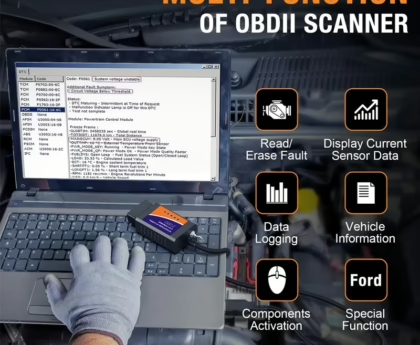
When you plug a vehicle code reader into the diagnostic link connector, the powertrain control module reports P0189 if the fuel temperature sensor B signal becomes unstable, drops out, spikes, or otherwise fails to follow a smooth temperature trend. Sensor B is the second fuel temperature channel and may be a standalone sensor on the rail, line, or tank module, or part of a combined fuel composition and temperature assembly. Most designs use a 5 V reference and a thermistor element; as fuel temperature rises the resistance falls and signal voltage drops, while colder fuel raises resistance and voltage. With a vehicle diagnostics tool you can graph live B-sensor temperature and voltage, run a wiggle test, and capture freeze frame so the erratic event is recorded. A car scanner that shows sensor A, coolant temperature, and intake air temperature makes it easier to tell a true intermittent electrical fault from normal cold-start swings. An obd2 scanner with data-logging is especially useful because P0189 often clears itself, then returns only under vibration, moisture, or thermal cycling.
Symptoms of Error Code P0189
- Malfunction Indicator Lamp illuminated intermittently or continuously
- Fuel temperature B reading jumps, freezes, or flips between extreme values
- Rough idle or unstable rpm at idle
- Hesitation or stumble during acceleration
- Hard starting, especially in very cold or very humid conditions
- Reduced fuel economy, sometimes 2 to 5 MPG below normal
- Flex-fuel trim errors, incorrect ethanol compensation, or related composition codes
- Possible limp mode if the PCM loses confidence in fuel temperature data
Main Causes of Error Code P0189
- Loose, corroded, or water-contaminated fuel temperature sensor B connector
- Poor terminal tension causing intermittent contact
- Broken conductor inside insulation, chafed harness, or rodent damage
- Intermittent open or short to ground/voltage in the signal, reference, or ground wire
- Faulty fuel temperature sensor B with internal intermittent thermistor
- Moisture intrusion into a tank module, rail sensor, or composition-sensor housing
- Unstable 5 V reference or weak PCM ground, and rarely PCM internal fault
How to Diagnose Error Code P0189?
- Connect a car scanner and record P0189 plus all stored, pending, and history codes. Save freeze frame with fuel temp B, fuel temp A, coolant temperature, intake air temperature, load, and rpm.
- Look up model-specific technical service bulletins for the B-sensor location, connector issues, and any reference-voltage or software updates before electrical tests.
- Inspect the sensor B connector and full harness. Check for green corrosion, bent pins, cracked locks, fuel residue, chafing near hot exhaust, rubbing on brackets, and rodent damage.
- Key on, engine off. Back-probe the connector with a vehicle diagnostics tool or meter. Confirm around 5 V reference, solid ground, and a plausible signal voltage; many generic fuel temp circuits sit roughly 0.2 to 4.8 V across the full temperature span.
- Start and idle. Graph fuel temp B. Watch for sudden jumps to -40 °F, 300 °F, or frozen values while coolant and intake temperature change smoothly.
- Perform a wiggle test. Move the harness and connector while monitoring live data. If temperature or voltage spikes when the wire is bent, an intermittent open or short is confirmed.
- Disconnect the sensor and measure resistance at cold, room, and warmed conditions. Compare with the OEM chart; NTC elements usually read several thousand ohms cold and a few hundred ohms hot. Erratic resistance during flexing means a bad sensor.
- Clear the code with an obd2 scanner and road-test over bumps, during warm-up, and after a car wash or rain exposure if the fault is moisture-related. Confirm the monitor stays passed.
Possible Causes and Diagnostic Methods
| Possible Cause | How to Check? |
| Loose or corroded connector | Visual inspection; wiggle test; clean terminals; verify stable 5 V reference and ground with a vehicle code reader |
| Intermittent open wire | Continuity test sensor to PCM; flex harness while graphing voltage with an obd2 scanner |
| Intermittent short to ground or 12 V | Disconnect sensor; test signal wire to ground and battery positive; repair chafed insulation |
| Faulty sensor B | Measure resistance at several temperatures; replace if values jump, read open, or read near 0 ohms |
| Moisture in connector or module | Inspect for water, green corrosion, or fuel odor; dry, seal, and apply dielectric grease |
| Weak reference or PCM issue | Only after sensor and wiring pass; check TSBs, reflash, or test PCM input |
Tools needed: obd2 scanner or vehicle diagnostics tool, digital volt/ohmmeter, infrared thermometer, oscilloscope if available, manufacturer wiring diagram, dielectric grease, basic hand tools, safety glasses.
How do I fix error code P0189? (Solutions to the Problem)
Simple Fixes
- Clear P0189 with a car scanner and retest if the light appeared after refueling, a bump, or brief electrical upset.
- Unplug the B-sensor connector, clean terminals with electrical contact cleaner, apply dielectric grease, and reseat it fully.
- Check the fuel cap and fuel quality; water or heavy contamination can make composition and temperature data erratic.
In-depth Diagnosis and Repair Solutions
- Replace fuel temperature sensor B or the combined composition/temperature sensor when resistance is unstable across temperature and the harness tests good.
- Repair chafed, broken, or rodent-damaged wires. Solder splices, use heat shrink, and reroute the harness away from heat and moving parts.
- Replace damaged connector pigtails instead of reusing corroded terminals with poor tension.
- For tank-mounted B sensors, replace the fuel pump or sender assembly if the manufacturer does not sell the sensor separately.
- Reflash or replace the PCM only after reference voltage, ground, sensor, and full wiring are proven good.
Fix faults based on symptoms
| Observed Symptom | Likely Root Cause | Recommended Action |
| Fuel temp B drops to -40 °F then returns | Intermittent open circuit | Wiggle-test harness; repair broken wire or replace sensor |
| B voltage spikes toward 5 V or battery voltage randomly | Intermittent short or loose terminal | Locate chafe or poor pin; repair short and reseat connector |
| Code only on rough roads or after harness movement | Broken conductor inside insulation | Continuity-test while flexing; replace damaged section |
| Code returns after rain, wash, or high humidity | Moisture in connector or module | Dry connector, repair seals, apply dielectric grease |
| Live data erratic even with new sensor | Wiring, reference, or PCM input | Verify 5 V reference and ground; check TSB and PCM |
Common Error Code P0189 in Vehicles
Ford and Lincoln: EcoBoost trucks, SUVs, and Lincoln models with a second fuel temperature channel may set P0189 from chafed rail or pump-module wiring. Use a vehicle diagnostics tool to compare sensor B with sensor A during warm-up. Secure the harness away from the intake and heat shields, and inspect pump-module connectors for moisture before replacing parts.
General Motors Chevrolet, GMC, Cadillac: GM applications that monitor fuel temperature B through the tank module or composition sensor often show intermittent codes from corroded module connectors and unstable 5 V reference. Graph live B temperature, check the returnless fuel system connector, and apply dielectric grease after cleaning. Reflashing may be needed if the calibration falsely counts brief dropouts.
Stellantis Chrysler, Dodge, Jeep, Ram: Ram and Jeep flex-fuel or direct-injection models can log P0189 when the B channel connector loses tension or the tank sensor develops internal intermittent resistance. If the sensor is part of the pump assembly, replace the whole module; otherwise repair the pigtail and verify live data.
Toyota and Lexus: Toyota and Lexus models with rail-mounted or composition-type B sensors may set the code from cracked connector housings and moisture. Denso replacement sensors, clean terminals, and a wiggle test under the engine cover usually solve repeat failures. Always compare B with coolant and intake temperature before condemning the PCM.
Honda and Acura: Honda and Acura direct-injection models may use B temperature input on the rail or pump side. Soy-based insulation can attract rodents, causing intermittent opens. Inspect the harness thoroughly, repair with soldered sleeves, and clear the code with an obd2 scanner after a full drive cycle.
Volkswagen and Audi: TSI, TDI, and other injected engines with a second fuel temperature input may set P0189 from heat-brittle harness near the rail or oil-contaminated connectors. Graph sensor B with a car scanner, replace damaged pigtails, and verify smooth resistance change across temperature before any module work.
BMW and Mini: BMW and Mini models with separate rail and tank fuel temperature sensors can store P0189 when valve-cover or fuel-housing leaks reach the B connector. Clean the harness, repair the leak source, replace the sensor if resistance is unstable, and confirm live data after the repair.
P0189 Frequently Asked Questions
What does P0189 mean in simple terms?
P0189 means the PCM sees an unreliable, on-again/off-again signal from fuel temperature sensor B. The sensor may briefly work, then drop out, spike, or give impossible temperatures. It is an electrical stability problem rather than a fixed high or low reading.
Is P0189 serious enough to keep driving?
It is medium seriousness. Many vehicles still run, but erratic fuel temperature can upset injection timing, flex-fuel compensation, and cold-start strategy. If you notice stalling, severe hesitation, or limp mode, stop and diagnose with a vehicle code reader.
How is P0189 different from P0184, P0186, or P0188?
P0184 is the same intermittent fault but for sensor A. P0186 means sensor B is in range/performance trouble with a plausible but wrong value. P0188 means sensor B is fixed high input. P0189 means the B signal is erratic, dropping out, or randomly spiking rather than staying at one fault value.
Where is fuel temperature sensor B located?
Location depends on the vehicle. It may be on the fuel rail, low-pressure line, in-tank pump module, near the high-pressure pump, or inside a combined fuel composition sensor between the tank and rail. Use the OEM wiring diagram before removing parts.
Can I just replace the sensor to fix P0189?
Not always. Replacement fixes many internal sensor faults, but loose connectors, broken wires inside insulation, and intermittent shorts will bring the code back. A wiggle test with an obd2 scanner is the best way to avoid replacing a good sensor.
How much does P0189 repair cost?
Connector cleaning and minor wiring repair may cost $50 to $200. Sensor replacement typically runs $100 to $350. Tank-module or combined composition-sensor replacement can reach $300 to $900 depending on model. PCM software or replacement, done only after full circuit proof, can exceed $400 to $1200.
How do I reset P0189 after repair?
Use a car scanner to clear the code, then perform a drive cycle with cold start, idle, light cruise, bumps, and acceleration. Watch fuel temp B on live data; the light should stay off and fuel trims should stabilize. Do not keep clearing the code without fixing the root cause.
P0189 Related OBD2 Errors
- P0180 – Fuel Temperature Sensor A Circuit Malfunction
- P0181 – Fuel Temperature Sensor A Circuit Range/Performance
- P0182 – Fuel Temperature Sensor A Circuit Low Input
- P0183 – Fuel Temperature Sensor A Circuit High Input
- P0184 – Fuel Temperature Sensor A Circuit Intermittent
- P0185 – Fuel Temperature Sensor B Circuit Malfunction
- P0186 – Fuel Temperature Sensor B Circuit Range/Performance
- P0187 – Fuel Temperature Sensor B Circuit Low Input
- P0188 – Fuel Temperature Sensor B Circuit High Input
- P0190 – Fuel Rail Pressure Sensor Circuit Malfunction
- P0191 – Fuel Rail Pressure Sensor Circuit Range/Performance
- P0194 – Fuel Rail Pressure Sensor Circuit Intermittent
- P0176 – Fuel Composition Sensor Circuit Malfunction
- P0177 – Fuel Composition Sensor Circuit Range/Performance
Important Warning
Important! Relieve fuel system pressure and disconnect the battery before servicing fuel sensors, rails, or tank modules to prevent fuel spray, fire, and electrical shock. Work in a ventilated area, avoid sparks near fuel, and use a properly rated obd2 scanner or vehicle diagnostics tool for confirmation. If you are unsure about high-pressure fuel, hybrid systems, or PCM reprogramming, use a qualified technician.