The P0188 is a generic OBD-II powertrain trouble code. Its official definition is “Fuel Temperature Sensor B Circuit High Input”.
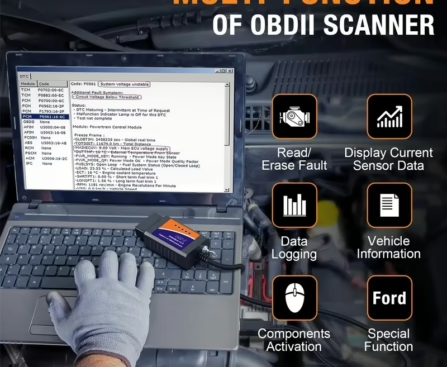

Unlimited Choices, Easy Shopping
Unlimited Choices, Easy Shopping
If you’re new to car diagnostics, choosing the right OBD2 scanner for beginners can make all the difference. Whether you’re a home user, a first-time car owner, or someone interested in DIY car repair, a beginner-friendly OBD2 scanner helps you quickly read fault codes, monitor vehicle health, and avoid expensive mechanic visits. These tools are designed to be simple, affordable, and easy to use—making them perfect for everyday diagnostics and basic troubleshooting.
All OBD2 Scanners
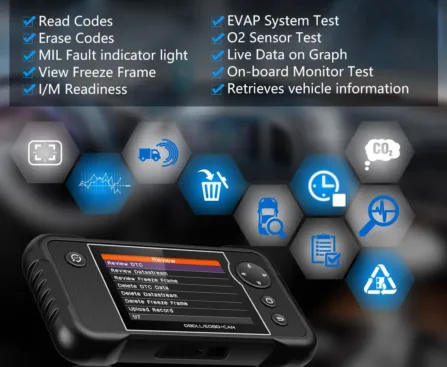
A beginner OBD2 scanner is a simple diagnostic tool designed for ease of use. Unlike professional scan tools, these devices focus on essential functions like:
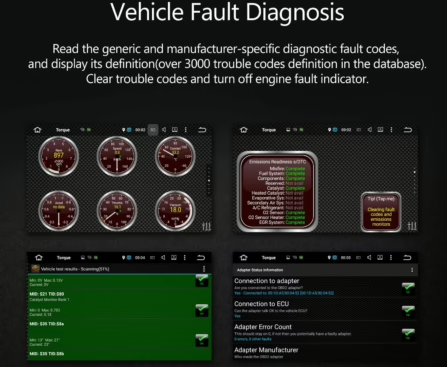
Reading and clearing engine fault codes
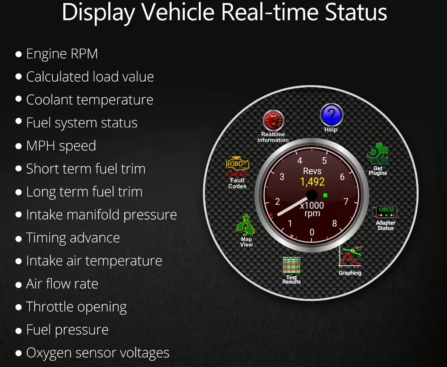
Monitoring basic live data
Checking vehicle status before repairs
Performing quick diagnostics at home
They are ideal for home users who want a straightforward way to understand their car without technical expertise.
Easy to Use – No technical skills required
Affordable – Great for budget-conscious users
Perfect for DIY Car Repair – Diagnose issues before fixing
Saves Money – Avoid unnecessary mechanic visits
Portable – Use anytime, anywhere
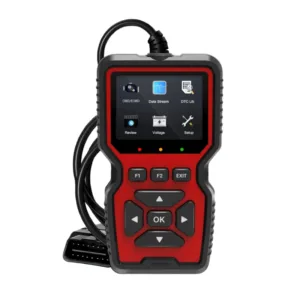
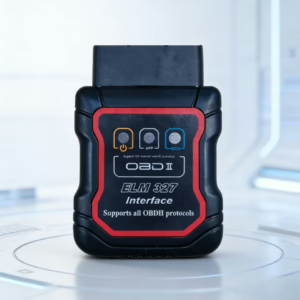
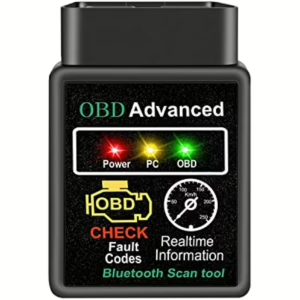
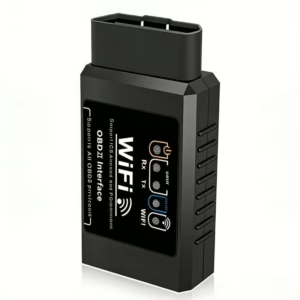
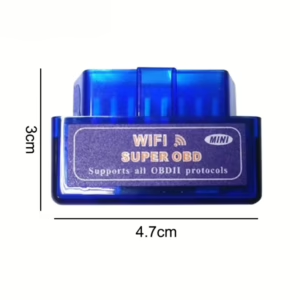
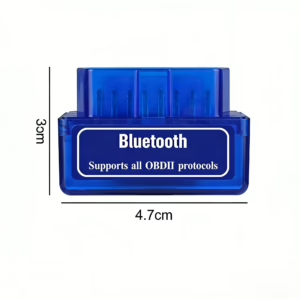
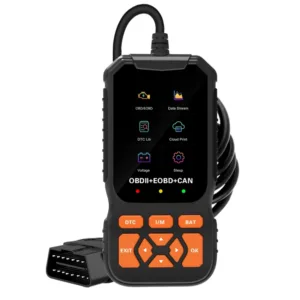
When selecting an OBD2 scanner for beginners or DIY users, consider:
Ease of Use – Simple interface or mobile app
Compatibility – Works with your car and phone
Basic Features – Code reading, clearing, live data
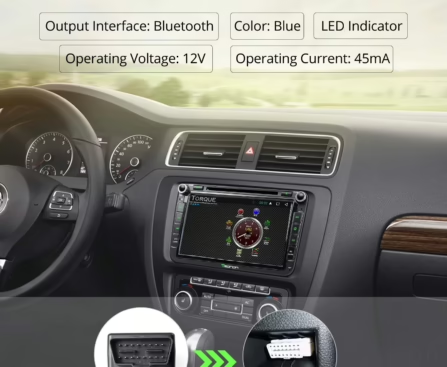
Connection Type – Bluetooth for convenience
App Support – Clear instructions and user-friendly UI
Q: Are OBD2 scanners suitable for home users?
A: Yes, beginner scanners are specifically designed for home users and DIY car owners.
Q: Can I use an OBD2 scanner for DIY car repair?
A: Absolutely. It helps identify issues before repairing your vehicle.
Q: Do I need technical knowledge?
A: No, most beginner models are plug-and-play.
Cheap OBD2 Scanners
Bluetooth OBD2 Scanners
OBD2 Scanners Under $50
The P0188 is a generic OBD-II powertrain trouble code. Its official definition is “Fuel Temperature Sensor B Circuit High Input”.
The P0186 is a generic OBD-II powertrain trouble code. Its official definition is “Fuel Temperature Sensor B Circuit Range/Performance”.
The P0183 is a generic OBD-II powertrain trouble code. Its official definition is “Fuel Temperature Sensor A Circuit High Input“.
The P0180 is a generic OBD-II powertrain trouble code. Its official definition is “Fuel Temperature Sensor A Circuit”.
The P0176 is a generic OBD-II powertrain trouble code. Its official definition is “Fuel Composition Sensor Circuit Malfunction”.
The P0172 is a generic OBD-II powertrain trouble code. Its official definition is “System Too Rich (Bank 1)”.
The P0167 is a generic OBD-II powertrain trouble code. Its official definition is “O2 Sensor Heater Circuit Malfunction (Bank 2, Sensor 3)”.
The P0162 is a generic OBD-II powertrain trouble code. Its official definition is “O2 Sensor Circuit Malfunction (Bank 2, Sensor 3)”.
We use cookies to improve your experience on our site. By using our site, you consent to cookies.
Websites store cookies to enhance functionality and personalise your experience. You can manage your preferences, but blocking some cookies may impact site performance and services.
Essential cookies enable basic functions and are necessary for the proper function of the website.
These cookies are needed for adding comments on this website.
Google Tag Manager simplifies the management of marketing tags on your website without code changes.
Statistics cookies collect information anonymously. This information helps us understand how visitors use our website.
Google Analytics is a powerful tool that tracks and analyzes website traffic for informed marketing decisions.
Service URL: policies.google.com (opens in a new window)
SourceBuster is used by WooCommerce for order attribution based on user source.