The P0181 is a generic OBD-II powertrain trouble code. Its official definition is “Fuel Temperature Sensor A Circuit Range/Performance”.

Unlimited Choices, Easy Shopping
Unlimited Choices, Easy Shopping
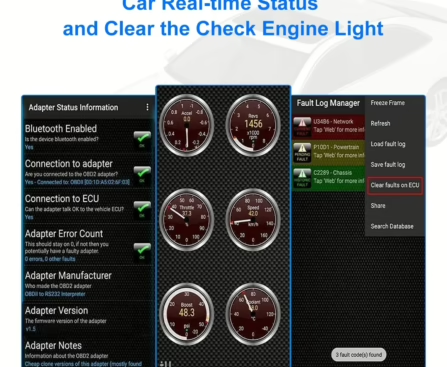
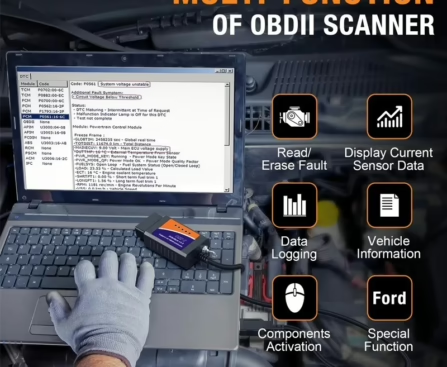
A bluetooth OBD2 scanner is the easiest way to diagnose your car wirelessly. Also known as a wireless OBD2 scanner, it connects to your smartphone to read fault codes, monitor live data, and track performance. Compared with wired tools, Bluetooth models are more portable and beginner-friendly, making them ideal for everyday vehicle diagnostics.
All OBD2 Scanners
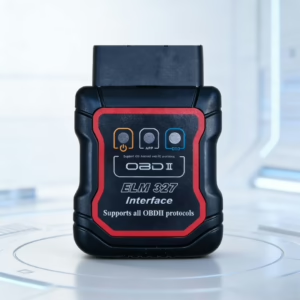
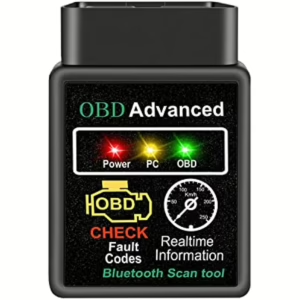
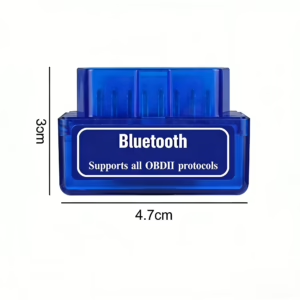
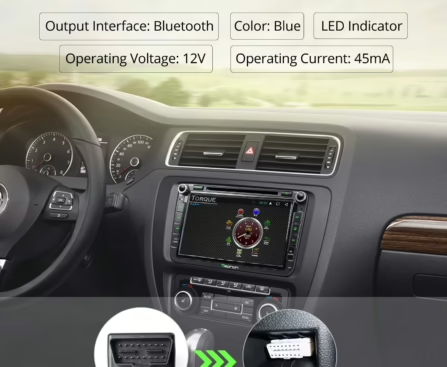
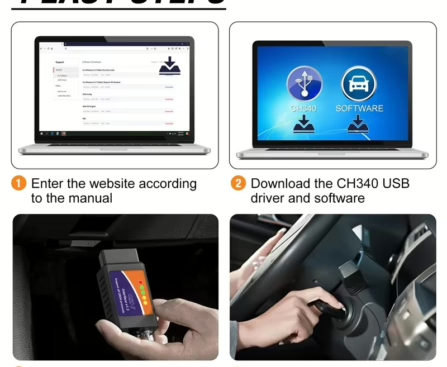
A Bluetooth OBD2 scanner plugs into your car’s OBD2 port and sends data to your phone via Bluetooth. It works with apps to display real-time engine information and diagnostics.
Wireless convenience
Affordable price range
Easy mobile app integration
Real-time monitoring
Portable design
Check iOS/Android compatibility
Look for stable chipsets
Ensure app support
Consider data speed
Q: Do Bluetooth OBD2 scanners work with iPhone?
A: Only certain models support iOS due to Bluetooth limitations.
Q: Are they accurate?
A: Yes, for basic diagnostics and live data.
Q: Do I need an app?
A: Yes, apps are required to read data.
Cheap OBD2 Scanners
OBD2 Scanners for Beginners
OBD2 Scanner for iPhone
The P0181 is a generic OBD-II powertrain trouble code. Its official definition is “Fuel Temperature Sensor A Circuit Range/Performance”.
The P0175 is a generic OBD-II powertrain trouble code. Its official definition is “System Too Rich (Bank 2)”.
The P0172 is a generic OBD-II powertrain trouble code. Its official definition is “System Too Rich (Bank 1)”.
The P0168 is a generic OBD-II powertrain trouble code. Its official definition is “Fuel Temperature Too High”.
The P0163 is a generic OBD-II powertrain trouble code. Its official definition is “O2 Sensor Circuit Low Voltage (Bank 2, Sensor 3)”.

The P1061 is a P1xxx powertrain diagnostic trouble code. Its official definition is “Variable Valve Timing (VVT) / Valvetronic Supply Voltage Control Motor — Supply Voltage Circuit Malfunction / Electrical (Bank 1)”.
The P105B is a P1xxx powertrain diagnostic trouble code. Its official definition is “Variable Valve Timing (VVT) Control Module — Internal Fault, Current / Voltage Too Low” (also documented as Internal Control Module VVT Error, Voltage Too Low).
The P105A is a P1xxx powertrain diagnostic trouble code. Its official definition is “Variable Valve Timing (VVT) Control Module — Internal Fault, Current Too High.
We use cookies to improve your experience on our site. By using our site, you consent to cookies.
Websites store cookies to enhance functionality and personalise your experience. You can manage your preferences, but blocking some cookies may impact site performance and services.
Essential cookies enable basic functions and are necessary for the proper function of the website.
These cookies are needed for adding comments on this website.
Google Tag Manager simplifies the management of marketing tags on your website without code changes.
Statistics cookies collect information anonymously. This information helps us understand how visitors use our website.
Google Analytics is a powerful tool that tracks and analyzes website traffic for informed marketing decisions.
Service URL: policies.google.com (opens in a new window)
SourceBuster is used by WooCommerce for order attribution based on user source.