
1. How to Maintain Tires in Summer
(1) Monitor Tire Pressure Frequently
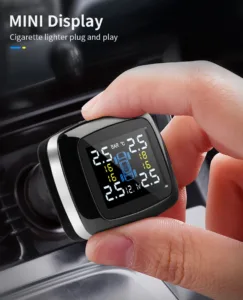
As summer temperatures rise, the risk of tire blowouts also increases. When driving—especially on long trips—it is recommended to keep a tire pressure gauge in your vehicle for regular checks. To easily keep track of tire conditions, consider using a car TPMS cigarette lighter tire pressure monitoring system, which can display real-time pressure and temperature for each tire, providing an extra layer of safety while driving.
It’s best to check the pressure of all tires, including the spare, at least once a month.
If pressure drops too quickly after inflation, check whether the tire has been punctured or if the valve rubber is aged or cracked. If any issues are found, take your vehicle to a professional repair shop promptly.
(2) Replace Tires When Worn to the Tread Wear Indicators
When the tread wears down to the wear indicators, the tire’s drainage performance decreases significantly, seriously affecting grip on wet or slippery roads.
In addition, uneven tire wear may indicate wheel misalignment or imbalance, which not only shortens tire life but also compromises vehicle handling. Immediate adjustment or replacement is necessary.
(3) Protect Tires from Corrosion
Tires are made of rubber, so avoid contact with oil, acids, and other chemicals to prevent corrosion, deformation, or softening.
During hot weather, try to park your vehicle in shaded areas to avoid direct sunlight, which can accelerate tire aging.
(4) Avoid Impact with Hard Objects
Running over potholes or curbs can compress and deform the tire, leading to sidewall bulges. In severe cases, this may cause sidewall rupture or air loss.
Therefore, try to avoid road potholes while driving. If unavoidable, slow down and pass over them carefully.
2. What Is the Proper Tire Pressure in Summer?
Generally, the sidewall of a tire will show the maximum pressure it can withstand.
Based on the principle of thermal expansion and contraction, tire pressure in summer can be 0.1–0.2 bar (≈1–3 psi) lower than the standard value, while in winter it can be 0.1–0.2 bar higher. The standard pressure can be found in your vehicle’s owner’s manual.
In winter, regularly clear debris from the tread grooves to prevent damage from trapped hard objects.
The recommended tire pressure in summer typically ranges from 2.2–2.4 bar (≈32–35 psi).
In spring, at around 20°C, tire pressure is usually maintained at 2.3–2.5 bar (≈33–36 psi). However, as ambient and road temperatures increase, pressure can rise quickly during high‑speed or long‑distance driving, raising the risk of a blowout. For safety, it’s advisable to pull over and let the tires cool down if necessary.
In summer, road surfaces can reach 60–70°C. If tire pressure is too high, even a slight impact on a weak spot of the tire can easily cause a blowout. Therefore, it is generally recommended to maintain tire pressure around 2.2 bar (≈32 psi).
Excessively high tire pressure reduces the contact area between the tire and the road, dramatically increasing pressure and wear per unit area, which may lead to:
- Reduced braking effectiveness
- Higher risk of blowouts when hitting bumps or potholes
- Damage to the vehicle’s suspension system
- Reduced ride comfort