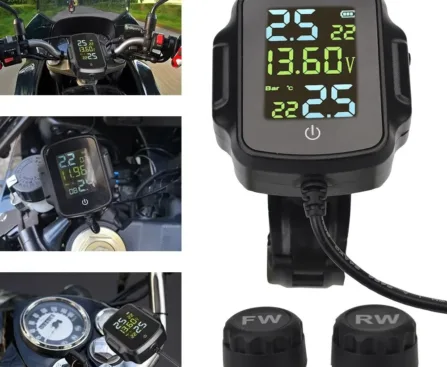
A TPMS with app connects to your smartphone, allowing real-time tire pressure monitoring. These smart TPMS systems offer convenience and advanced features.

Best App-Based TPMS

Related

display TPMS
best TPMS

How to tell if TPMS sensor needs replacing, not just a dead battery?

The definitive way to determine if a Tire Pressure Monitoring System (TPMS) sensor requires full replacement, rather than just suffering from a depleted battery, is to perform a diagnostic procedure that checks for physical damage, internal electronic failure, and specific fault codes. Since the battery is a non-serviceable part of the sealed sensor unit, any internal failure necessitates a complete sensor replacement. The core distinction lies in identifying symptoms that go beyond simple power loss.

TPMS sensor battery replaceable?

No, the battery in a standard, factory-installed or aftermarket direct TPMS (Tire Pressure Monitoring System) sensor is not designed to be replaced by the end-user or as a standard service procedure. The sensor is a sealed, non-serviceable unit. When the battery dies (typically after 5-10 years), the entire sensor assembly must be replaced. While technically possible to open and replace the battery in a workshop setting, this is highly impractical, risky, and not recommended due to issues of resealing, recalibration, and cost.

Cigarette lighter TPMS shows garbled code, safe to drive?

Yes, you can continue to drive the vehicle, but you must immediately perform a manual check of all tire pressures using a reliable tire pressure gauge. A garbled or scrambled display on an aftermarket cigarette lighter TPMS monitor indicates a failure of that specific display unit or its connection, not necessarily a problem with your tires or the sensors themselves. Your primary safety concern is the actual tire condition, not the faulty display.

Cigarette lighter TPMS battery life?

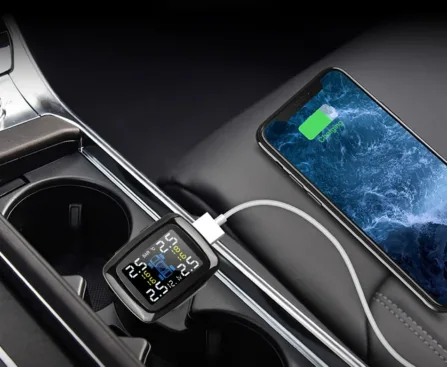
A TPMS (Tire Pressure Monitoring System) display that plugs into your vehicle’s cigarette lighter (also known as a 12V accessory socket) does not have a traditional “battery life” or “runtime.” Unlike battery-powered or solar-powered displays, it is designed to be powered directly by your vehicle’s electrical system. Its operation is entirely dependent on the power state of the cigarette lighter socket. Therefore, its effective “runtime” is either the duration of your drive or, in vehicles with always-live sockets, potentially until it contributes to draining the car battery over several days.

Common fault codes for 4-sensor TPMS.

A 4-sensor Tire Pressure Monitoring System (TPMS) uses individual pressure sensors in each wheel to provide precise, real-time data. When the system detects an issue, it stores Diagnostic Trouble Codes (DTCs) that can be read with an OBD-II scanner. Understanding these codes is crucial for accurate diagnosis and repair. The most common codes relate to sensor communication failures, low battery warnings, and system malfunctions.

How to replace sensors on 4-sensor cigarette lighter TPMS?

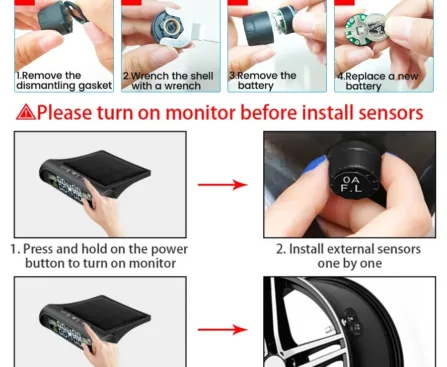
Replacing the sensors on an aftermarket cigarette lighter TPMS (Tire Pressure Monitoring System) involves two distinct phases: the physical replacement of the sensor hardware inside each tire, and the electronic pairing/relearning of the new sensors to the display unit. The process requires basic mechanical skill for tire work and careful attention to the specific relearn procedure for your TPMS kit. It is highly recommended to have a professional tire shop handle the tire dismounting and sensor installation to avoid damage; the pairing process can often be done by the user.