
What does the P011A code mean?
The P011A is a generic OBD-II (Onboard Diagnostics II) trouble code. Its official definition is “Engine Coolant Temperature Sensor 1/2 Correlation“.
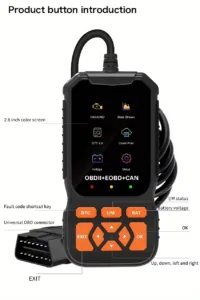
Background Information: This code is stored when the vehicle’s Engine Control Module (ECM) or Powertrain Control Module (PCM) detects an inconsistency or excessive difference between the signals from two separate Engine Coolant Temperature (ECT) sensors. Unlike codes for a single sensor failure, P011A specifically indicates that the readings from Sensor 1 and Sensor 2 do not correlate within the expected range. This code only appears in engines equipped with multiple ECT sensors, which are common in modern vehicles for redundancy and more precise temperature monitoring across different parts of the engine (e.g., cylinder head outlet vs. radiator inlet). The first step in diagnosis is always to use a professional obd2 diagnostic scanner to read the live data from both ECT sensors and observe their values simultaneously.
Symptoms of Error Code P011A
- Illuminated Check Engine Light (MIL).
- Poor engine performance, including hesitation or lack of power.
- Rough idling, especially during cold starts.
- Decreased fuel economy.
- Engine may run too rich (black smoke) or too lean.
- Erratic operation of the radiator cooling fans (may run constantly or not at all).
- Potential for engine overheating if the ECM cannot determine the correct temperature.
- Difficulty starting the engine when warm.
Main Causes of Error Code P011A
- Faulty Engine Coolant Temperature (ECT) Sensor: One of the two sensors has failed, providing an inaccurate signal.
- Wiring or Connector Issues: Damaged, corroded, or loose wires/connectors in the circuit for either sensor (open circuit, short to ground, or short to power).
- Low Engine Coolant Level: Insufficient coolant can cause one sensor to be exposed to air, leading to erratic or false readings.
- Air Pockets (Air Lock) in the Cooling System: Trapped air can create localized hot or cold spots, causing sensor disagreement.
- Faulty Thermostat: A thermostat stuck open or closed can cause abnormal coolant flow and temperature distribution, leading to a genuine temperature difference between the two sensor locations.
- Faulty Water Pump: Inadequate coolant circulation can create temperature gradients.
- Faulty PCM/ECM: Rare, but an internal fault in the control module’s signal processing circuits could cause it to misinterpret valid sensor signals.
How to Diagnose Error Code P011A?
- Connect an OBD2 Diagnostic Scanner: Use a capable obd2 diagnostic tool to confirm the presence of P011A and check for any related codes (like P0117, P0118). Access the live data stream (PID) to view the real-time temperature readings from both ECT Sensor 1 and ECT Sensor 2.
- Observe Live Data: With the engine cold, start it and let it warm up. Watch both sensor readings. They should start at a similar ambient temperature and rise together. A P011A code is confirmed if there is a consistent, large discrepancy (e.g., one reads 80°C while the other reads 20°C) or if one reading is frozen or erratic.
- Check the Cooling System: Visually inspect the coolant level in the reservoir and radiator (when cold). Look for signs of leaks, contamination, or air in the system. Bleed the cooling system if necessary.
- Visual Inspection: Inspect the wiring harnesses and connectors for both ECT sensors. Look for physical damage, corrosion, coolant intrusion, or loose pins. Perform a “wiggle test” on the harnesses while watching the live data on your obd tool scanner for any changes.
- Test the Sensors:
- With the engine off and cool, disconnect the electrical connector from each sensor.
- Using a digital multimeter set to Ohms (Ω), measure the resistance across the two terminals of each sensor.
- Compare the measured resistance to the manufacturer’s specifications for the given coolant temperature. A sensor with resistance far out of spec or showing an open circuit (infinite resistance) is faulty.
- You can also test by submerging the sensor tip in hot water and watching the resistance drop smoothly.
- Test the Wiring Circuits: Using a multimeter and a wiring diagram, check for continuity in the signal and ground wires from each sensor connector back to the corresponding pins at the ECM. Also check for shorts to power or ground.
- Check Related Components: If sensors and wiring test good, consider testing the thermostat and water pump function, as they can cause real temperature differences.
Possible Causes and Diagnostic Methods
| Possible Cause | Diagnostic Check with Tools |
| Failing ECT Sensor | Use an obd reader for live data discrepancy. Test sensor resistance with a multimeter against specs. |
| Wiring/Connector Fault | Visual inspection and multimeter continuity/short test on the circuit. Wiggle test while monitoring live data. |
| Low Coolant/Air Pocket | Visual check of coolant level and condition. Perform cooling system bleed procedure. |
| Faulty Thermostat | Monitor live coolant temperature rise pattern. A slow warm-up may indicate a stuck-open thermostat. |
| ECM/PCM Fault (Rare) | Professional diagnosis required, often involving checking signal voltage directly at the ECM pins with a vehicle diagnostics tool. |
Tools needed: A professional-grade OBD2 diagnostic scanner with live data capability is essential. Additionally, you will need a digital multimeter, basic hand tools, a cooling system pressure tester (optional), and access to vehicle-specific service information or wiring diagrams.
How do I fix error code P011A? (Solutions to the Problem)
Simple Fixes
- Top Up and Bleed Coolant: If the coolant level is low, refill with the correct type of coolant to the proper level. Thoroughly bleed the cooling system to remove all air pockets.
- Clean Electrical Connections: Disconnect the battery, then clean any corrosion from the ECT sensor and ECM connectors using electrical contact cleaner. Apply dielectric grease to the terminals before reconnecting to prevent future corrosion.
- Repair Minor Wiring Damage: If you find a broken wire or damaged insulation, repair it properly with solder and heat-shrink tubing.
- After these checks, clear the code with your obd2 code scanner and perform a test drive to see if it returns.
In-depth Diagnosis and Repair Solutions
- Replace the Faulty ECT Sensor: Identify which sensor is providing the erroneous reading (using live data and resistance tests). Drain a small amount of coolant, replace the faulty sensor with an OEM-quality part, refill coolant, bleed the system, and clear codes.
- Repair or Replace the Wiring Harness: If the wiring is damaged beyond a simple repair, replace the affected section of the harness or repair it according to manufacturer standards.
- Replace a Faulty Thermostat: If diagnostics point to a sticking thermostat, replace it along with a new gasket and refill/bleed the cooling system.
- Replace the Water Pump: If the pump is failing and causing poor circulation, it must be replaced.
- ECM/PCM Reprogramming or Replacement: In very rare cases, a software update (Technical Service Bulletin) may be available for the ECM. If all other components check out perfectly, a faulty ECM itself may need to be replaced—this should be a last resort after exhaustive testing by a professional with advanced diagnostic equipment.
Fix faults based on symptoms
| Symptom Pattern | Recommended Repair Path |
| One sensor reads -40°C or is frozen | Likely an open circuit in that sensor or its wiring. Replace the sensor and inspect/repair its circuit. |
| Both sensors read but with a large, constant offset | One sensor is likely degraded. Replace the sensor showing the less plausible temperature (e.g., reading too cold when engine is hot). |
| Erratic readings from one sensor | Faulty sensor or intermittent connection. Focus on that sensor’s connector and wiring harness. |
| Code returns immediately after sensor replacement | The problem is almost certainly in the wiring harness or connector for that sensor, not the new sensor itself. |
Common Error Code P011A in Vehicles
General Motors (GMC, Chevrolet, Buick, Cadillac): Very common in trucks and SUVs like the Silverado, Sierra, Tahoe, and Suburban, as well as passenger cars. GM vehicles often use two sensors for precise cylinder head and block temperature monitoring. Diagnosis requires a good obd2 diagnostic scanner to access both sensor PIDs.
Ford (F-150, Escape, Explorer, Fusion, Mustang): Frequent in many models, especially those with EcoBoost engines that use multiple temperature sensors for advanced thermal management.
Toyota/Lexus (Camry, Highlander, Tacoma, Tundra, Lexus RX): Known for reliability, but wiring harness issues or sensor failures in older models can trigger P011A. The correlation check is part of their comprehensive self-diagnostics.
Honda/Acura (Accord, Civic, CR-V, Pilot, Acura MDX): Common, particularly in models with variable cylinder management (VCM) or turbocharged engines that rely on accurate temperature data from multiple points.
Chrysler/Dodge/Jeep (Ram 1500, Grand Cherokee, Charger): Often related to sensor failure or wiring issues, especially in the harsh engine bay environment.
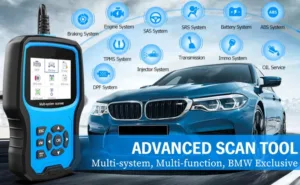
BMW: Can be complex due to integrated sensor networks. Professional diagnosis with a sophisticated obd2 diagnostic tool is often necessary to differentiate between sensor, wiring, and module issues.
Hyundai/Kia: A common code across many models, often solved by replacing the faulty sensor identified through live data comparison.
Subaru: Common in models like the Forester and Outback. It’s important to also check for underlying head gasket issues that could introduce air into the cooling system, causing sensor disagreement.
Volkswagen/Audi: The ECT sensors (e.g., G62, G83) are known failure points. Correlation faults often point to one specific sensor failing.
P011A Frequently Asked Questions
What is the first thing I should check with a P011A code?
The absolute first step is to use an OBD2 scanner to view the live data from both Engine Coolant Temperature sensors. Observe if one is reading an implausible value (like -40°C), is frozen, or if there is a consistent large temperature difference between them while the engine warms up. Then, check the coolant level.
Is it safe to drive with a P011A code?
It is not recommended. Since the ECM cannot trust the coolant temperature readings, it may use default values that can cause the engine to run too rich or too lean, reducing performance, harming fuel economy, and potentially damaging the catalytic converter or leading to overheating. Diagnose and repair as soon as possible.
How much does it typically cost to fix a P011A code?
Costs vary widely. DIY: $30 – $100 for a new sensor. Professional repair: $150 – $400 on average. The cost increases if wiring repair is needed, if both sensors must be replaced, or if other components like the thermostat are faulty. The diagnostic time with a professional vehicle diagnostics tool contributes to labor costs.
Can I replace the ECT sensor myself?
Yes, if you are comfortable working with engine coolant and basic tools. It’s crucial to identify which sensor is faulty using your obd reader and multimeter. Always depressurize the cooling system when the engine is cold, drain some coolant, and properly bleed air after refilling. Clear the code with your scanner afterward.
Will disconnecting the battery clear the P011A code?
It may temporarily turn off the Check Engine Light, but the code will remain stored in the ECM’s memory as a “permanent” or “pending” code. The underlying fault must be fixed before the code can be properly cleared with an obd2 code scanner, otherwise it will quickly return.
What’s the difference between P0117/P0118 and P011A?
P0117 (Circuit Low) and P0118 (Circuit High) indicate electrical faults (short or open) in a single ECT sensor circuit. P011A indicates a logical problem: two separate sensors are reporting temperatures that don’t make sense together, but each circuit might be electrically functional.
Can low coolant cause a P011A code?
Yes, absolutely. If the coolant level is so low that one sensor is exposed to air (steam) while the other is still submerged in liquid, they will naturally read very different temperatures, triggering the correlation fault.
My scan tool shows Sensor 1 at 90°C and Sensor 2 at 30°C. Is this P011A?
Yes, that is a textbook example. A 60°C difference between two sensors measuring the same cooling system is implausible and will trigger the P011A correlation code.
How do I know which of the two ECT sensors is bad?
Compare the live data to the expected behavior. The sensor reading an implausibly low temperature (often when the engine is hot) is usually the faulty one. You can also swap the two sensors (if they are identical) and see if the faulty reading moves to the other sensor PID on your obd2 diagnostic scanner. Finally, resistance testing with a multimeter will confirm.
After replacing one sensor, the code came back. Why?
The most likely cause is a problem in the wiring harness or connector for that sensor circuit. You replaced the sensor, but the open circuit or high resistance in the wiring remains. You must repair the wiring. Alternatively, the other sensor could also be failing, or there is a genuine cooling system problem (like a blocked passage) creating a real temperature difference.
Do I need to bleed the cooling system after sensor replacement?
Yes, it is critical. Any time you open the cooling system (which includes removing a sensor immersed in coolant), you must properly bleed it according to the vehicle’s procedure to remove air pockets, which can themselves cause sensor inaccuracies and overheating.
Can a P011A code cause the engine to overheat?
Indirectly, yes. If the ECM receives conflicting data, it may not activate the cooling fans at the correct time or may use an incorrect temperature value for fuel control, potentially leading to overheating conditions.
What tools are essential to diagnose P011A?
Essential tools include: a quality OBD2 diagnostic scanner that can display live data from multiple PIDs simultaneously, a digital multimeter for resistance and continuity testing, basic hand tools, and vehicle-specific service data for wiring diagrams and sensor specifications.
Why is diagnosing P011A considered more complex?
Because it involves comparing two data points and their circuits. You’re not just looking for a short or open, but for a logical disagreement. This requires understanding the cooling system layout, using advanced scanner functions, and methodically testing two separate but related components.
P011A Related OBD2 Errors
- P0115: Engine Coolant Temperature Sensor Circuit Malfunction
- P0116: Engine Coolant Temperature Sensor Circuit Range/Performance Problem
- P0117: Engine Coolant Temperature Sensor Circuit Low Input
- P0118: Engine Coolant Temperature Sensor Circuit High Input
- P0119: Engine Coolant Temperature Circuit Intermittent
- P0125: Insufficient Coolant Temperature for Closed Loop Fuel Control
- P0128: Coolant Thermostat (Coolant Temperature Below Thermostat Regulating Temperature)
Important! Diagnosing P011A requires a systematic approach and the right tools. A basic code reader is not enough; you need a scanner capable of live data streaming. Always prioritize safety: work on a cool engine and properly handle coolant. Due to the complexity of modern engine management systems, if you are not confident in your diagnostic skills, consulting a professional technician with access to factory-level obd2 diagnostic tools and information is highly recommended.