What does the P105A code mean?
The P105A is a P1xxx powertrain diagnostic trouble code. Its official definition is “Variable Valve Timing (VVT) Control Module — Internal Fault, Current Too High“.
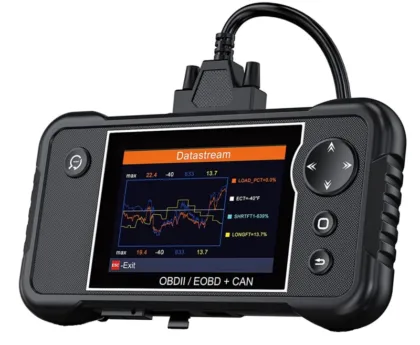
The P105A belongs to the P1xxx group, which means it is Manufacturer-Specific (OEM-Defined) — not an SAE/ISO standardized generic code — and its documented home is almost exclusively BMW & MINI vehicles equipped with the Valvetronic/VVT system (N52, N53, N54, N55, B58 and related variants). The VVT/Valvetronic system uses an electric servomotor (driven by the DME/ECM) to rotate an eccentric shaft, which adjusts intake-valve lift continuously instead of relying solely on a traditional throttle plate. The DME constantly monitors the current flowing through the high-side and low-side driver transistors that power this motor. When the system recognizes an excess current condition — meaning the motor is drawing more amperage than the calibrated safe limit, pointing to a shorted winding, a mechanically jammed/seized valvetronic motor, or a failed driver inside the control module — it sets P105A, illuminates the Check Engine Light (MIL), and typically shuts down Valvetronic operation entirely as a protective measure. Because this is a manufacturer-specific code, the first thing you need is a capable car scanner that can talk to the BMW DME and display the OEM-specific description plus any freeze-frame / shadow-code data, since a generic P-code reader may only show “P105A — Manufacturer Contr.” with zero usable context.
Symptoms of Error Code P105A
- Check Engine Light (MIL) / Service Engine Soon light is ON (solid, not usually flashing for this fault).
- Noticeable loss of power — the car may feel “flat,” accelerate slowly, or enter a soft limp where the DME locks the eccentric shaft at a default lift position and opens the throttle plate wide to keep the engine running.
- Rough or unstable idle, stalling, or surging right after cold start.
- Hesitation or jerkiness during light-throttle transitions (because Valvetronic lift is no longer being modulated).
- Significantly worse fuel economy once the system defaults out.
- You may also see companion Valvetronic/VVT codes stored alongside it (P1055, P1057, P1058, P1059, P105B, P105C, P1060 etc.) depending on what exactly failed and in what order the DME caught it.
- If you scan with a basic code reader that only reads generic P-codes, it may show the number but not the real meaning — you need an obd2 scanner with BMW/MINI OEM-profile support to see DME text and Valvetronic angle data.
Main Causes of Error Code P105A
- Seized or binding Valvetronic/eccentric-shaft mechanism — the most common root trigger. Sludge buildup in the cylinder head, worn eccentric-shaft bearings, or a jammed intermediate lever can force the servomotor to stall under load, spiking current.
- Internally shorted Valvetronic servomotor windings — the motor itself draws excess current because coils are breaking down (heat + age + oil contamination).
- Wiring damage between the DME and the servomotor connector — chafed wires, pinch points near the valve cover, or oil-soaked/burnt insulation that alters resistance and current draw.
- Oil-contaminated or corroded servomotor connector — these plugs sit directly in engine oil; sludge inside the connector can create cross-leakage paths that upset the driver monitoring.
- Failed DME/ECM VVT driver stage (high-side/low-side transistor shorted internally) — less common than a seized motor, but possible and expensive.
- Rare: incorrect/low engine oil level or wrong-spec oil causing the Valvetronic motor to struggle under higher drag, contributing to overcurrent conditions during adaptation attempts.
How to Diagnose Error Code P105A?
- Pull the right data first. Hook up a vehicle code reader or BMW-capable scan tool and save ALL stored codes plus freeze-frame. P105A is a “big deal” code — if there are also oil-pressure (P06xx), throttle-body, or crankshaft-sensor codes alongside it, treat the bigger picture before diving into the servomotor blindly.
- Visual & tactile pre-check (ignition OFF, battery negative disconnected for safety near electronics). Locate the Valvetronic servomotor on the cylinder head (under the valve cover on most N5x/B58 architectures; the electrical connector is accessible from outside). Check:
- Connector condition — is there oil inside the plug housing? Green/white terminal corrosion?
- Wiring loom rub points — trace the harness a few inches each direction looking for pinch damage.
- Valve-cover gasket seepage — if oil is flooding the plug, the gasket needs fixing regardless of what you replace.
- Manual rotation / binding check. With the ignition off and battery disconnected, a technician will typically remove the servomotor and attempt to manually rotate the eccentric shaft (via the motor gear) to feel for binding or hard spots. If the shaft is jammed / does not move smoothly through its full arc, the fault is mechanical — not an electrical “part swap” fix.
- Resistance / winding checks (DMM). Disconnect the servomotor plug. Measure resistance across the motor terminals per the factory spec (BMW publishes expected ranges). A very low reading (near 0 Ω = shorted coil) or OL/open points to an internal motor fault. Compare to a known-good reference if available.
- Power/ground & driver check. On BMW, the DME switches the servomotor supply directly via internal MOSFET drivers. If the motor and harness both check good but P105A still sets instantly, the suspicion moves to the DME driver stage — which requires dealer-level confirmation with a proper vehicle diagnostics tool running BMW test plans, not a roadside guess.
- Clear & verify. After any repair (especially a motor/valve-cover job), clear the code with your scan tool, perform the BMW Valvetronic relearn procedure as required by the software, and confirm the light stays out across a full drive cycle.
Possible Causes and Diagnostic Methods
| Possible Cause | How to Check? |
| Binding / jammed eccentric shaft or Valvetronic mechanism (sludge, wear, seizure) | Remove servomotor, attempt to hand-rotate eccentric shaft through travel. Feel for hard spots or complete lockup. Requires valve-cover removal; this is the #1 root cause of overcurrent faults. |
| Shorted/degred Valvetronic servomotor windings (internal coil failure) | Measure winding resistance with a DMM per BMW spec. Near-0 Ω = shorted coil; OL = open coil. Compare to known-good range. Replace motor if out of spec. |
| Oil-contaminated or corroded motor connector (sludge inside plug → leakage paths) | Unplug, inspect pins for oil ingress and etching. Clean with contact cleaner, reseat with dielectric grease. Fix valve-cover gasket leak if present. |
| Damaged harness (chafe/pinch near valve cover edge) | Trace loom from DME area to head. Continuity-check each conductor end-to-end; wiggle test while watching for jumps. |
| DME/ECM internal driver short (high-side/low-side MOSFET failure) | Only after motor + harness are 100% verified good. Needs dealer-level checks with a car scanner capable of DME test plans / output-driver diagnostics. |
Tools needed: A vehicle diagnostics tool / obd2 scanner with BMW/MINI DME access (ISTA or equivalent aftermarket), digital multimeter (DMM), socket/wrench set for valve cover & motor, torque wrench (in-lbf/ft-lb as specified), contact cleaner, dielectric grease, and the factory repair manual values for Valvetronic lift/angle specs.
How do I fix error code P105A? (Solutions to the Problem)
Simple Fixes
- Clean and reseat the servomotor connector + fix the oil leak. If the plug is full of sludge but the motor itself still spins freely, depower, unplug, clean terminals, reseat with dielectric grease, and — this is mandatory — fix the valve-cover gasket if it is weeping onto the connector. Clear with your car scanner and re-evaluate.
- Check oil level / condition before tearing anything. Low or badly sludged 10W-60/5W-30 (whatever the engine calls for) increases drag on the Valvetronic mechanism. A fresh, correct oil & filter service is cheap insurance and sometimes reveals the motor adapts successfully afterward — though if P105A is already hard-set, something is already unhappy mechanically.
In-depth Diagnosis and Repair Solutions
- Valvetronic servomotor replacement + valve-cover gasket. If the windings are shorted or the motor shaft bearing feels rough, the motor is done. Replace it with an OEM or OEM-equivalent unit (BMW is picky about motor calibration). Torque the cover and motor bolts to factory values. After install, use a vehicle diagnostics tool to run the Valvetronic limit-stop / angle relearn procedure — without this step the system will flag another code.
- Eccentric shaft / Valvetronic mechanism overhaul. If manual rotation shows the shaft itself is jammed (not just the motor), the valve cover has to come off and the eccentric shaft, intermediate levers, and bearings inspected. Sludge packing behind the shaft or a worn bearing journal is the usual villain. This is a bigger job — often $1,200–$2,800 depending on what needs replacing.
- DME/ECM driver evaluation. If motor + wiring + mechanics all check out and P105A returns the instant the DME tries to drive the motor, the internal MOSFET driver may be shorted. Dealer/shop territory: requires OEM-level scan software to confirm before anyone spends money on an ECU.
Fix faults based on symptoms
| Symptom / Diagnostic Finding | Recommended Solution |
| Connector full of oil, pins etched, valve cover clearly seeping onto the plug | Replace valve-cover gasket, clean & reseat servomotor connector with dielectric grease. Clear P105A with an obd2 scanner and monitor. |
| Motor windings read near 0 Ω or OL; motor shaft feels gritty/noisy when spun off-car | Replace Valvetronic servomotor with OEM-spec part. New valve-cover gasket while in there. Run DME relearn with a car scanner afterward. |
| Motor connector & wiring perfect, but shaft will not rotate by hand (jammed eccentric shaft) | Valve cover removal required — inspect eccentric shaft, intermediate levers, and sludge packing. Mechanical repair/replacement as needed. |
| Motor, harness, and mechanics all verified good, yet P105A returns instantly every cycle | Suspect DME internal driver fault. Needs professional diagnosis with a vehicle diagnostics tool that can run BMW VVT output tests. |
Common Error Code P105A in Vehicles
BMW & MINI (only real home of this code): P105A is overwhelmingly a BMW/MINI Valvetronic fault. Engines affected include the N52 (E90 325i/328i, E60 525i/528i, E83 X3), N53, N54 (135i, 335i, 535i, Z4 35i), N55 (E70 X5 35i, F30 335i/435i, F10 535i), and B58 (B58TU variants). The DME monitors the high-side/low-side driver current to the Valvetronic servomotor; when that current exceeds the safe threshold — because the motor is jammed, shorted, or the driver itself has failed — P105A is set and the system typically defaults to throttle-plate-only operation (loss of full Valvetronic lift control). A car scanner that can read BMW DME freeze-frame and run the Valvetronic limit-stop learn is the right tool for this job; guessing parts on a Valvetronic system gets expensive fast.
Other brands (Ford, Toyota, Honda, GM, Stellantis, etc.): P105A has no standardized meaning outside BMW/MINI. If a generic database lists it as something else for another brand, that is a cataloging cross-wire. Always confirm the definition through your specific car’s OEM scan data — not a random internet chart — before buying anything.
P105A Frequently Asked Questions
Is P105A a generic OBD-II code?
No. P105A is a P1xxx Manufacturer-Specific code — the “1” in the second digit marks it OEM-defined, not SAE-standardized. A basic P-code reader may only show “Manuf Specific.” You need an obd2 scanner with the correct BMW/MINI DME profile to see what the ECU actually means.
Can I keep driving with P105A?
In most cases the car will still run because the DME falls back to throttle-plate control — so it won’t strand you roadside instantly — but you are driving with Valvetronic disabled, which means noticeably worse throttle response, reduced power, rough cold idle, and poor MPG. More importantly, if the root cause is a jammed eccentric shaft or sludge-packed mechanism, ignoring it can escalate into bent valves or deeper cylinder-head damage. Get it diagnosed soon.
Will disconnecting the battery clear P105A?
It may kill the MIL for a cycle, but P105A reports a hardware-level overcurrent condition. The DME will reset it the moment it tries to drive the motor again. Use a proper vehicle code reader to clear it only after the mechanical/electrical root cause is actually fixed — and if a Valvetronic relearn is required, the tool has to do it.
How much does fixing P105A cost?
- Diagnosis / BMW DME scan: $80–$180 (often rolled into the repair).
- Connectors / wiring pigtail repair: $120–$350.
- Valvetronic servomotor replacement + valve-cover gasket (the most common paid repair): $650–$1,400 depending on engine access, whether the cover is plastic (crack-prone) and needs replacing, and labor rates.
- Eccentric shaft / internal Valvetronic mechanism overhaul (worst case): $1,500–$3,500+.
- DME repair/replacement (rare): $1,200–$2,500+ and only after everything else is ruled out.
What should I not do?
Don’t just clear the code and hope. “Current too high” means something is drawing excess amperage right now — it isn’t a soft sensor drift. Don’t throw a random servomotor at it without checking whether the eccentric shaft itself is jammed, and don’t skip the DME relearn procedure afterward. A half-hour with a multimeter and a decent car scanner is worth far more than guessing.
P105A Related OBD2 Errors
- P1055 — VVT / Valvetronic Control Module Performance / related driver fault (Bank 1)
- P1057 — VVT Control Module — Circuit Malfunction / Internal Fault (Bank 1)
- P1058 — VVT Control Module — Supply Voltage High Input (Bank 2)
- P1059 — VVT Control Module — Supply Voltage Low Input (Bank 2)
- P105B — VVT / Valvetronic Position Sensor Plausibility / Range
- P105C — VVT / Valvetronic Position Learning Not Complete
- P105D / P105E / P105F — related Valvetronic adaptation and limit-stop codes
- P0014 / P0024 — “B” Camshaft Timing Over-Advanced (often secondary to VVT shutdown)
- P06DE / P06DF — Oil pressure / oil pump control codes (sometimes accompany sludge-related Valvetronic failures)
Important! P105A means the DME detected excess current on the Valvetronic servomotor driver — this is a hardware-protective shutdown, not a soft sensor glitch. If you are not comfortable measuring live circuits around a running engine or working inside the valve-cover area, let a BMW/MINI shop handle it. Capture the freeze-frame with a quality vehicle diagnostics tool before unplugging anything, verify the definition through BMW OEM data for your exact engine, and never reuse a stretched timing chain or sludge-packed oil passage as “good enough” once you’re in there — Valvetronic jobs reward doing it right the first time.