
What does the P0118 code mean?
The P0118 is a generic OBD-II (Onboard Diagnostics II) trouble code. Its official definition is “Engine Coolant Temperature Sensor Circuit High Input“.
Background Information: This code is stored when the vehicle’s Engine Control Module (ECM) or Powertrain Control Module (PCM) detects that the voltage signal from the Engine Coolant Temperature (ECT) sensor is consistently higher than the expected normal operating range. The ECT sensor is a thermistor whose resistance decreases as coolant temperature increases. A “high input” typically corresponds to the ECM reading an implausibly low or cold temperature (often around -40°F), which is most commonly caused by an open circuit in the sensor signal path, a failed sensor with very high internal resistance, or a poor ground connection. The first diagnostic step should always involve using a professional obd2 scanner to check the live ECT data, which will likely show a frozen or excessively low value.
Symptoms of Error Code P0118
- Illuminated Check Engine Light (MIL).
- Poor fuel economy, as the ECM may enrich the fuel mixture for a perceived cold engine.
- Engine may run rough, hesitate, or stall, especially during cold starts.
- Difficulty starting when the engine is actually warm.
- Engine cooling fans may run continuously.
- The temperature gauge on the dashboard may show an excessively low reading or be pegged at cold.
- Black smoke from the exhaust due to an overly rich fuel mixture.
- Reduced engine performance and potential for overheating if the fail-safe mode is inaccurate.
Main Causes of Error Code P0118
- Faulty Engine Coolant Temperature (ECT) Sensor with an internal open circuit.
- Open Circuit or broken wire in the Sensor Signal Wire or ground circuit.
- Poor Electrical Connection, corrosion, or bent pins at the ECT sensor connector or ECM connector.
- Low engine coolant level or air pockets (air locks) in the cooling system.
- Faulty PCM/ECM (rare) – internal fault in the signal processing circuit.
- A short to voltage in the sensor signal wire.
How to Diagnose Error Code P0118?
- Connect an OBD2 code scanner to confirm code P0118 and observe the live data stream for the ECT sensor. A reading stuck at -40°F or an abnormally low value when the engine is warm confirms the issue.
- Check the engine coolant level and condition. Look for contamination, low level, or air in the system.
- Perform a visual inspection of the ECT sensor wiring harness (from sensor to ECM) and connectors. Look for broken, disconnected, or corroded wires.
- With the engine off and cool, disconnect the ECT sensor electrical connector.
- Using a digital multimeter, measure the resistance across the two terminals of the sensor itself. A very high (over 6600Ω) or infinite (OL) resistance reading indicates an internal open, failed sensor.
- Test the vehicle wiring harness:
- Check for 5-volt reference signal at the harness connector (with ignition ON).
- Check for continuity in the signal and ground wires back to the ECM using the multimeter’s continuity setting.
Possible Causes and Diagnostic Methods
| Possible Cause | How to Check? |
| Open Circuit ECT Sensor | Measure sensor resistance (disconnected). A very high or infinite (OL) ohm reading indicates a faulty sensor. |
| Open Circuit in Signal Wire | Check continuity of signal wire from sensor connector to ECM pin. No continuity indicates a broken wire. |
| Poor Ground Connection | Check continuity of ground wire from sensor connector to chassis/ECM ground. No continuity indicates a ground fault. |
| Low Coolant/Air Pocket | Visual inspection, coolant system bleed procedure. Ensure the sensor is fully submerged in coolant. |
| Faulty PCM/ECM | Professional diagnosis with an advanced obd2 diagnostic tool to verify signal input at the module. |
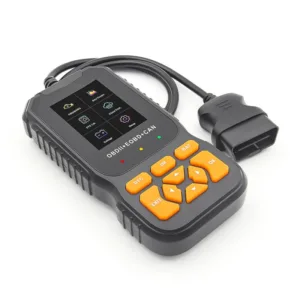
Tools needed: A quality OBD2 diagnostic scanner (like a car code reader or obd2 code scanner) capable of reading live data, a digital multimeter, basic hand tools, and a vehicle-specific wiring diagram.
How do I fix error code P0118? (Solutions to the Problem)
Simple Fixes
- Repair broken or disconnected wiring by splicing in a new section of wire.
- Clean corroded terminals at the sensor and ECM connectors with electrical contact cleaner and apply dielectric grease.
- Refill and properly bleed the cooling system to remove air pockets and ensure the sensor is immersed in coolant.
- Reset the error code with your obd code reader after performing these checks.
In-depth Diagnosis and Repair Solutions
- Replace the faulty ECT Sensor. Drain a small amount of coolant, install a new OEM-quality sensor, refill, bleed the system, and clear codes.
- Repair or replace the damaged section of the wiring harness causing the open circuit.
- If the thermostat is stuck closed (causing overheating that may affect sensor readings), replace it.
- If all wiring and sensor tests are perfect, professional diagnosis and potential replacement of the PCM may be necessary (rare).
Fix faults based on symptoms
| Symptom | Possible Solution |
| SRS warning light is on | Troubleshoot the SRS system, focusing on wiring and connectors. |
| Seatbelt is inoperative. | Check and replace the pretensioner or entire seatbelt assembly. |
| Error does not reset after repair. | Check the SRS control module and replace it if necessary. |
Common Error Code P0118 in Vehicles
Ford (F-150, F-250, F-350, Escape, Explorer, Fusion, Mustang, Ranger): Very common in models from the early 2000s to 2010s. Wiring harness issues and sensor failures are frequent. Using a car code reader is the first step for diagnosis.
General Motors (Chevrolet, GMC, Buick, Cadillac): Common in trucks and SUVs like the Silverado, Sierra, Tahoe, Suburban, and passenger cars like the Camaro, Impala, and Malibu.
Honda/Acura (Accord, Civic, CR-V, Pilot, Odyssey, Acura MDX): Common, particularly in models from the 2000s to 2010s. Diagnosis benefits from a capable obd2 scanner.
Toyota/Lexus (Camry, Corolla, RAV4, Highlander, Tacoma, Tundra): A frequent code across many models. Toyota sensors are generally reliable, but wiring issues and connector corrosion, especially in older vehicles, can trigger P0118.
Chrysler/Dodge/Jeep (Ram 1500, Grand Cherokee, Charger, 300, Durango, Grand Caravan): Often seen with various engines. Sensor failure or wiring issues, particularly in the connector, are typical causes.
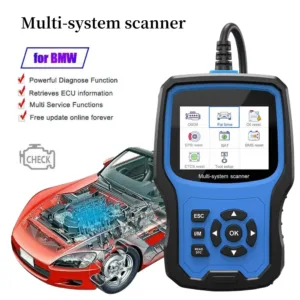
BMW (3 Series, 5 Series, X5): Can involve the sensor on the cylinder head or radiator outlet. Wiring issues and sensor opens are not uncommon. Professional diagnosis with an advanced obd2 diagnostic tool is often recommended for BMWs.
Hyundai/Kia (Sonata, Elantra, Santa Fe, Sorento, Sportage): A very common code across many models, often solved by sensor replacement or checking for wiring issues.
Nissan/Infiniti (Altima, Maxima, Sentra, Rogue, Pathfinder, Frontier, Infiniti G35): Frequent in models with various engine series. Sensor failure is a known issue.
Subaru (Impreza, WRX, Forester, Outback, Legacy): Common, sometimes associated with underlying cooling system problems (air pockets) or simple sensor failure.
Volkswagen/Audi (Jetta, Golf, Passat, Tiguan, Audi A4, Q5): The ECT sensor (G62) is a common failure point. An open circuit in the wiring is a typical culprit.
P0118 Frequently Asked Questions
What is the first thing I should check with a P0118 code?
Use an OBD2 scanner to view the live Engine Coolant Temperature data. If it shows an implausibly cold reading (like -40°F) when the engine is warm or at operating temperature, you have confirmed the fault. Then, inspect the sensor wiring and connector for obvious breaks or disconnections.
Is it safe to drive with a P0118 code?
It is not advisable to drive for long. The engine will run in a rich “cold-engine” mode, which can cause poor fuel economy, rough running, carbon buildup, and potential overheating if the fail-safe temperature setting is incorrect. Immediate diagnosis is recommended.
How much does it typically cost to fix a P0118 code?
DIY repair: $20 – $100 for a new sensor. Professional repair at a shop: $100 – $300 on average, including diagnosis and labor. Cost increases if wiring harness repair is needed. A faulty PCM replacement is rare but can cost $800-$1500.
Can I replace the ECT sensor myself?
Yes, if you are comfortable working with engine coolant and basic hand tools. Remember to safely depressurize the cooling system, drain a small amount of coolant below the sensor level, and properly bleed the system of air after refilling. Use an obd code reader to clear the code afterward.
Will disconnecting the battery clear the P0118 code?
It may temporarily clear the light, but the code and light will return on the next drive cycle if the underlying problem (like an open circuit) is not fixed. Use a car code scanner to clear codes only after a successful repair.
What’s the difference between P0117 and P0118?
P0117 is “Circuit Low Input” (low voltage/short to ground, reads as very HOT). P0118 is “Circuit High Input” (high voltage/open circuit, reads as very COLD). They are opposite electrical faults in the same sensor circuit.
Can low coolant cause P0118?
Yes, indirectly. If the coolant level is so low that the ECT sensor is not submerged, it cannot accurately read the coolant temperature. This can lead to erratic readings that may trigger a P0118 code, especially if an air pocket surrounds the sensor.
My scan tool shows the ECT is -40°F. Is this definitely P0118?
Yes, a constant -40°F reading is the classic symptom of an open circuit in the ECT sensor circuit, which is precisely what triggers code P0118.
How do I test an ECT sensor for an open circuit with a multimeter?
Disconnect it. Set the multimeter to Ohms (Ω). Measure resistance between the two terminals. A good sensor will show a specific resistance that changes with temperature. A very high (over several thousand ohms when warm) or infinite (OL) ohm reading means the sensor is internally open and faulty, causing P0118.
After replacing the sensor, the code came back immediately. Why?
The problem is almost certainly not the sensor, but in the wiring harness. You have an open circuit or a poor connection (corrosion, bent pin) in the signal or ground wire that you haven’t found and repaired yet. Inspect the entire wire run from sensor to ECM.
Do I need to bleed the cooling system after sensor replacement?
Yes. Anytime you open the cooling system and lose coolant, you must properly bleed it to remove air pockets. Air in the system can cause overheating, inaccurate gauge readings, and can even mimic or contribute to sensor circuit problems.
Is the ECT sensor the same as the temperature gauge sender?
Often, they are separate components. The ECT sensor provides data to the ECM for engine management. A separate temperature sender (often with one wire) typically feeds the dashboard gauge. Replacing the gauge sender will not fix a P0118 code.
Can a P0118 code cause overheating?
Yes. If the ECM’s fail-safe mode uses an incorrect temperature value (thinking the engine is very cold), it may not activate the cooling fans at the right time or may keep the thermostat closed, potentially leading to overheating.
What tools are essential to diagnose P0118?
Essential tools: An OBD2 scanner capable of reading live data (an obd2 diagnostic scanner is ideal), a digital multimeter, basic hand tools, and a vehicle-specific wiring diagram for accurate circuit tracing.
Why is my engine running rough and my cooling fan always on with a P0118 code?
The ECM thinks the engine is extremely cold (-40°F), so it enriches the fuel mixture (causing rough running) and commands maximum cooling (fans on) to try to “warm up” the non-existent cold engine. This is part of the fail-safe strategy.
P0118 Related OBD2 Errors
- P0115: Engine Coolant Temperature Sensor Circuit Malfunction
- P0116: Engine Coolant Temperature Sensor Circuit Range/Performance Problem
- P0117: Engine Coolant Temperature Sensor Circuit Low Input
- P0119: Engine Coolant Temperature Sensor Circuit Intermittent
- P0125: Insufficient Coolant Temperature for Closed Loop Fuel Control
- P0128: Coolant Thermostat (Coolant Temperature Below Thermostat Regulating Temperature)
Important! Always allow the engine to cool completely before attempting any work on the cooling system or ECT sensor to avoid the risk of severe burns from hot coolant or engine components. Diagnosing electrical opens requires careful continuity testing. If you are unsure about any diagnostic or repair procedure, consult a qualified automotive technician. Using a professional-grade obd2 scanner is highly recommended for accurate troubleshooting and live data monitoring.