
What is the P006E trouble code?
The P006E trouble code, applicable to all car manufacturers, means “Turbocharger/Supercharger Boost Control A Supply Voltage Circuit Low“.
Background Information: A turbocharger uses the inertial force of the exhaust gases from the engine to drive a turbine, which in turn drives a coaxial impeller to pressurize the intake air, thereby increasing the car’s power. A supercharger is an air compressor used to increase the intake air of an internal combustion engine. More intake air provides the engine with more oxygen, allowing the control module to supply more fuel, thus increasing output power. The turbo/supercharger boost controller’s function is to control the boost level by using air pressure to push the wastegate actuator (pneumatic-mechanical) to bypass some of the exhaust gases around the turbine when the boost pressure reaches a set value, thereby reducing the turbine speed. This trouble code indicates that the turbo/supercharger boost control A supply voltage is below the calibrated minimum value.
What are the symptoms of the P006E code?
Symptoms of the P006E trouble code may include:
- Low, unstable, and/or abnormal power
- Poor overall driving performance
- Reduced throttle response
- Difficulty driving uphill
- Vehicle entering “limp mode” (i.e., fail-safe mode)
- Intermittent driving symptoms
What are the potential causes of the P006E code?
The causes of this P006E code may include:
- Defective or damaged boost control solenoid (e.g., lever stuck, broken, bent, etc.)
- High resistance due to corrosion (e.g., connectors, pins, ground, etc.)
- Wiring problems (e.g., wear, open circuit, short to power, short to ground, etc.)
- Internal ECM (Engine Control Module) problems
- Excessive exhaust soot in the turbocharger blades, leading to stagnant, low, or incorrect boost levels
- Boost control module problems
- Exhaust leaks
How to diagnose P006E?
Check wiring: Inspect the wiring harness and connectors of the turbocharger/supercharger boost control system. Check for signs of damage, loose connections, or corrosion.
Test the boost control solenoid: Use a multimeter to measure the resistance across the boost control solenoid. Compare the reading to the manufacturer’s specifications.
Inspect the boost pressure sensor: Check the boost pressure sensor for any visible signs of damage or contamination. Use an OBD2 scanner tool to diagnose and monitor boost pressure readings during engine operation.
Verify voltage supply: Use a multimeter to measure the voltage supply to the turbocharger/supercharger boost control system. If the voltage is below the specified range, check the vehicle’s electrical system for any problems.
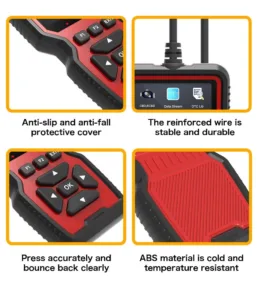
How to fix P006E code?
#1. It’s important to note that forced induction systems generate dangerous heat, which can cause severe burns if not protected and/or the engine is not cooled. However, visually locate the boost control solenoid valve. These devices are typically mounted directly on the charger, but not always. Once located, ensure its mechanical function is up to par.
This is important because it mechanically controls your turbocharger and boost pressure. If you can manually move the lever from the solenoid to the charger housing, that’s a good sign. However, keep in mind that in some systems, this is simply not possible.
#2. I’ve seen these solenoids sometimes have adjustable levers to help find the “sweet spot.” Of course, this varies greatly between manufacturers, so it’s best to do your research first.
Note: Try to be as non-invasive as possible here. You don’t want to damage the charger components, as they are usually expensive.
#3. Depending on your specific configuration, the module may be mounted directly on the boost control. Essentially, as an assembly. If so, ensure there are no signs of water intrusion. Any signs of corrosion/water damage/damage will likely require replacement of the component (or just the module, if possible).
#4. Pay attention to the wiring harness connected to the boost control solenoid valve. These wires are routed near dangerously high temperatures. In most cases, if heat damage exists, it will be evident early in the troubleshooting process.
#5. Clear the fault code and test drive: After completing the necessary repairs, use a diagnostic scan tool to clear the fault code. Test drive the vehicle to ensure the P006E code does not reappear.
Specific Vehicle Brand Information for P006E:
P006E Acura — Turbocharger Power Circuit Malfunction
P006E Honda — Turbocharger Power Circuit Malfunction
Common Questions about Fault Code P006E:
How serious is this P006E code?
The severity is rated as medium to high. When there is a problem with the forced induction system, you risk altering the air-fuel ratio. I believe that if ignored or left untreated, it could lead to serious engine damage. This could not only damage internal engine components, but also result in very poor fuel economy, so fixing any malfunctions in the forced induction system is your best option.
How much does it cost to diagnose a P006E code?
Diagnosing a P006E code typically requires 1.0 hour of labor. Rates vary depending on location, vehicle, and repair shop. Many shops charge between $80 and $150 per hour; dealerships and metropolitan areas may have higher rates, while independent shops may have lower rates.
If you are unsure about any steps, or if the problem persists after attempting repairs, be sure to consult your vehicle’s repair manual or seek professional help.