
What does the P001D code mean?
The P001D is a generic OBD-II (Onboard Diagnostics II) trouble code. Its official definition is “A Camshaft Profile Control Circuit/Open (Bank 2)“.
This code is triggered when the vehicle’s Engine Control Module (ECM) or Powertrain Control Module (PCM) detects an open circuit or complete loss of electrical continuity in the control circuit for the “A” camshaft (typically the intake camshaft) on engine Bank 2. Bank 2 refers to the side of the engine that does not contain cylinder number 1; in V-type or horizontally opposed engines, it is the second bank of cylinders. The circuit controls the camshaft profile adjustment system, which is part of modern Variable Valve Timing (VVT) technology. This system uses an electronically controlled solenoid (often called an Oil Control Valve or VVT solenoid) to direct engine oil pressure to a phaser, physically adjusting the camshaft angle to optimize valve timing for performance, efficiency, and emissions. An open circuit means the ECM cannot complete the electrical path to command the solenoid, disabling the VVT function on that bank. The first step in diagnosis is always to connect a professional obd2 scanner to read and confirm the stored code and any related codes.
Symptoms of Error Code P001D
- Illuminated Check Engine Light (MIL).
- Reduced engine power and poor acceleration.
- Decreased fuel economy (lower MPG).
- Rough, unstable, or fluctuating engine idle.
- Engine may run poorly or misfire.
- Sluggish throttle response and general poor drivability.
- Difficulty starting the engine in some cases.
- In severe cases, the engine may enter a reduced power or “limp home” mode to prevent damage.
Main Causes of Error Code P001D
- Open Circuit in Wiring Harness: A broken wire, completely disconnected connector, or severe corrosion in the circuit between the ECM and the Bank 2 “A” camshaft profile control solenoid, creating a complete break in electrical continuity.
- Faulty Camshaft Profile Control Solenoid (VVT Solenoid): An internal failure of the solenoid coil, resulting in an open circuit (infinite resistance). The solenoid may be electrically dead.
- Engine Oil Issues: Extremely low engine oil level, severely contaminated or sludgy oil, or oil with incorrect viscosity. Poor oil condition can prevent proper hydraulic operation of the VVT system, which the ECM may interpret as an electrical fault.
- Blown Fuse: A blown fuse in the circuit supplying power to the VVT solenoid can create an open circuit condition.
- Faulty Engine Control Module (ECM): A rare internal failure within the ECM, where the driver circuit for the solenoid has failed open, preventing it from completing the circuit.
- Mechanical Binding or Failure: A completely seized or mechanically bound camshaft phaser or control valve can sometimes mimic an open circuit by presenting an infinite load.
How to Diagnose Error Code P001D?
- Read and Record Codes with a Scanner: Connect a capable obd2 diagnostic tool or vehicle code reader to the vehicle’s DLC port. Read and document all stored Diagnostic Trouble Codes (DTCs). Pay special attention to P001D and any related codes (like P001E, P002D, or cam/crank correlation codes). Note the code status (current/pending) and freeze frame data.
- Check Engine Oil Level and Condition: Inspect the engine oil level using the dipstick. Check the oil’s color and consistency. Old, sludgy, or incorrect oil is a common root cause for VVT system faults. Perform an oil and filter change using the manufacturer-specified oil if necessary.
- Visual Inspection of Wiring and Connectors: Locate the Bank 2 “A” camshaft profile control solenoid (usually on the cylinder head of Bank 2). Visually inspect the entire wiring harness and connectors for any obvious damage, breaks, disconnections, or severe corrosion. Pay close attention to areas where the harness may rub against sharp edges or hot components.
- Check Related Fuses: Consult the vehicle’s fuse diagram and locate the fuse(s) for the VVT system or engine control modules. Check visually or with a multimeter to ensure they are not blown.
- Electrical Circuit Testing with a Multimeter: With the ignition off and the solenoid connector disconnected, use a digital multimeter to measure the resistance of the solenoid coil. Compare the reading to the specification in the service manual (typically 5-20 ohms). A reading of “OL” (Over Limit) or infinite resistance confirms an open circuit within the solenoid. Next, check for continuity in the wiring harness between the solenoid connector and the ECM connector pins to identify any breaks.
- Test Power and Ground at the Connector: With the ignition on (engine off), use the multimeter to check for battery voltage (approx. 12V) at the power pin of the solenoid connector. Also, verify a good ground connection at the ground pin.
- Advanced Diagnostics with a Scan Tool: Use an advanced obd2 diagnostic scanner with bidirectional controls to command the Bank 2 VVT solenoid on and off while monitoring the commanded state and circuit status parameters in live data. A lack of response can help confirm the open circuit.
Possible Causes and Diagnostic Methods
| Possible Cause | How to Check? |
| Open Solenoid Coil | Measure the solenoid’s coil resistance with a multimeter. A reading of infinite resistance (OL) confirms an internal open circuit. This is a definitive test for a faulty solenoid. |
| Broken Wire in Harness | Perform a continuity test on each wire in the circuit between the solenoid connector and the ECM connector. A lack of continuity (infinite resistance) indicates a broken wire. |
| Disconnected or Corroded Connector | Physically inspect all connectors in the circuit. Ensure they are fully seated and locked. Look for green/white corrosion on the terminals, which can block electrical contact. |
| Blown Fuse | Locate the fuse for the VVT solenoid circuit (check owner’s manual or service information). Visually inspect the fuse filament or test for continuity with a multimeter. |
| Faulty ECM Driver | If all wiring, fuses, and the solenoid test perfectly (have continuity and correct resistance), the internal driver circuit within the Engine Control Module may have failed open. This requires professional ECM testing. |
Tools needed: A professional obd2 diagnostic scanner or vehicle diagnostics tool for code reading and live data, a digital multimeter for continuity and resistance testing, basic hand tools (sockets, wrenches, screwdrivers), and access to the vehicle’s service manual or wiring diagrams.
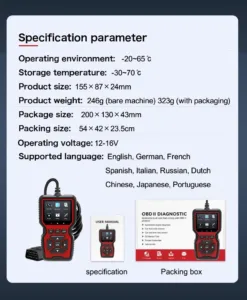
How do I fix error code P001D? (Solutions to the Problem)
Simple Fixes
- Repair Broken Wiring: If the visual and continuity tests identify a broken wire, repair it properly using solder and heat-shrink tubing or replace the affected section of the harness. Ensure the repair is secure and well-insulated.
- Clean and Reconnect Electrical Connectors: If corrosion is found on the terminals, clean them thoroughly with electrical contact cleaner and a small brush. Ensure the connector is fully seated and the locking mechanism is engaged.
- Replace a Blown Fuse: If a fuse is blown, replace it with one of the identical amperage rating. Investigate why the fuse blew (possible short circuit) before simply replacing it.
- Change Engine Oil and Filter: If the engine oil is severely contaminated, sludgy, or low, perform a complete oil and filter change using the exact oil specified by the manufacturer. This can resolve issues where poor oil flow is misinterpreted as an electrical fault.
In-depth Diagnosis and Repair Solutions
- Replace the Faulty Camshaft Profile Control Solenoid: If resistance testing confirms an open coil (infinite resistance), the solenoid must be replaced. Always use an OEM or high-quality equivalent part.
- Repair or Replace the Wiring Harness: For extensive wire damage or breaks within a complex harness, it may be necessary to repair the specific wires or, in some cases, replace a section of the engine wiring harness.
- Address Mechanical VVT System Issues: If the solenoid and wiring are electrically sound, the mechanical phaser on Bank 2 may be seized. This requires more invasive diagnosis, potentially involving timing cover removal to inspect and replace the VVT phaser assembly.
- Reprogram or Replace the ECM: In rare cases where all other components and circuits test perfectly (showing continuity and correct values), the issue may be a faulty driver circuit inside the Engine Control Module. This may require flashing the ECM with updated software or replacing and programming a new module.
Fix faults based on symptoms
| Symptom / Diagnostic Finding | Recommended Repair Path |
| Code P001D is stored, but the engine runs normally with no noticeable symptoms. | Focus on an intermittent open circuit. Check for loose connectors, wiring that breaks contact when the engine moves, or a solenoid with an intermittent internal open. |
| Code appears with noticeable rough idle and loss of power, especially on Bank 2. | This strongly points to a hard fault. Begin with checking the solenoid resistance and wiring continuity on Bank 2. A failed solenoid is highly likely. |
| Solenoid resistance measures “OL” (infinite) on the multimeter. | The solenoid is confirmed faulty and must be replaced. This is the most common fix for a persistent P001D code. |
| All electrical tests show good continuity and correct resistance, but the code persists. | Suspect an ECM driver circuit failure or a mechanical binding in the VVT phaser. Further diagnosis with a professional-grade vehicle diagnostics tool and possibly mechanical inspection is needed. |
Common Error Code P001D in Vehicles
Volvo with VVT: Common in various Volvo models with turbocharged engines. The Intake (A) Cam Profile Control Solenoid on Bank 2 can fail due to internal coil opens. Diagnosis often involves using a professional obd2 diagnostic scanner to monitor the solenoid control signal and circuit status parameters specific to Volvo’s system. Wiring issues near the valve cover are also common.
General Motors (Chevrolet, Cadillac, GMC): Frequently appears in GM vehicles with Active Fuel Management (AFM) or similar VVT systems. Typical causes include an open circuit in the wiring to the intake camshaft position actuator solenoid on Bank 2, or a failed solenoid itself. Corrosion in the connector on top of the valve cover is a known issue.
Ford with Ti-VCT: Found in Ford’s EcoBoost and other engines with Twin Independent Variable Camshaft Timing (Ti-VCT). An open circuit in the control wiring for the intake camshaft position actuator solenoid on Bank 2 is a typical cause. The wiring harness near the turbocharger or exhaust manifold on Bank 2 can suffer heat damage, leading to broken wires.
Hyundai and Kia with CVVT: Seen in models like Sonata, Santa Fe, Sorento, and Sportage. A faulty CVVT (Continuously Variable Valve Timing) solenoid for the intake camshaft on Bank 2, often due to an internal open circuit from heat cycling or contamination from oil sludge, is a frequent culprit. Using a basic obd reader can confirm the code, but a more advanced tool is needed for solenoid actuation tests.
Chrysler, Dodge, Jeep: Occurs in vehicles with the Pentastar V6 or Hemi V8 engines. The intake camshaft position actuator solenoid on Bank 2 can fail electrically. It’s also important to check for Technical Service Bulletins (TSBs) related to updated solenoid part numbers or harness clips.
Audi and Volkswagen: Common in various models with TFSI or TSI engines. The issue often stems from a faulty camshaft adjustment valve (N205 solenoid or similar) on Bank 2. Diagnosis requires a VAG-specific obd2 scanner or a capable generic tool to read manufacturer-specific codes and perform output tests on the solenoid.
P001D Frequently Asked Questions
What is the difference between P001C and P001D?
Both codes relate to the “A” camshaft profile control circuit. P001C indicates a “Circuit High” condition (typically a short to power), while P001D indicates a “Circuit/Open” condition (a complete break in the circuit, like a broken wire or open solenoid coil). P001D means the ECM sees infinite resistance in the circuit.
Can I drive my car with a P001D code?
The vehicle is often drivable, but it is not recommended for extended periods. The engine will run with fixed camshaft timing on Bank 2, leading to reduced power, poor fuel economy, and potentially increased emissions. Driving with this fault for too long could also lead to further issues if the root cause is related to oiling (like a clogged solenoid from sludge).
What is the most likely fix for a P001D code?
The most common and likely fix is replacing the faulty Bank 2 intake camshaft profile control solenoid (VVT solenoid). An internal open circuit in the solenoid’s coil is a frequent failure point. Always perform basic electrical testing with a multimeter to confirm this before replacement.
How much does it cost to fix a P001D code?
Costs vary by vehicle. Replacing just the VVT solenoid typically costs between $150 and $400 for parts and labor. If the repair requires addressing wiring harness issues, costs could be $200-$500. If the problem is a seized phaser requiring timing component service, costs can range from $800 to over $2,000.
Will disconnecting the battery clear a P001D code?
Yes, disconnecting the battery will clear the code and turn off the Check Engine Light temporarily by resetting the ECU’s memory. However, if the underlying open circuit fault (like a broken wire or bad solenoid) is not repaired, the code will return once the ECM completes its self-tests during the next drive cycle, usually within a few miles.
Can low oil cause a P001D code?
Yes, extremely low engine oil level or severely contaminated oil can indirectly cause a P001D code. The VVT system relies on clean engine oil at proper pressure to function hydraulically. If the oil is too low or too sludgy to actuate the phaser, the ECM may interpret the lack of movement as an electrical fault in the control circuit, setting an open circuit code.
Do I need a special obd2 tool scanner to diagnose P001D?
A basic obd2 code reader can read and clear the P001D code. However, for effective diagnosis, a more advanced vehicle diagnostics tool is highly recommended. Such a tool can access manufacturer-specific live data parameters (like solenoid command status and circuit feedback) and perform bidirectional tests to command the solenoid, which is crucial for pinpointing an open circuit fault.
Is P001D a serious code?
P001D is considered a moderately serious code. While the car may still run, it indicates a failure in a critical engine management system (VVT). Ignoring it can lead to reduced performance, poor fuel economy, and in rare cases, potential damage if the root cause is related to oil starvation or timing issues. It should be diagnosed and repaired promptly.
P001D Related OBD2 Errors
- P001C: “A” Camshaft Profile Control Circuit High (Bank 2)
- P001E: “A” Camshaft Profile Actuator Control Circuit Low (Bank 2)
- P001F: “A” Camshaft Profile Actuator Control Circuit High (Bank 2)
- P002D: “B” Camshaft Profile Control Circuit/Open (Bank 2)
- P0016: Crankshaft Position – Camshaft Position Correlation (Bank 1 Sensor A)
- P0017: Crankshaft Position – Camshaft Position Correlation (Bank 1 Sensor B)
- P0018: Crankshaft Position – Camshaft Position Correlation (Bank 2 Sensor A)
- P0019: Crankshaft Position – Camshaft Position Correlation (Bank 2 Sensor B)
Important! Code P001D indicates a complete break in the electrical circuit controlling a critical engine component. While the vehicle may be drivable, operating it for extended periods with this fault can lead to reduced engine efficiency, increased fuel consumption, and potential long-term wear. More importantly, if the root cause is severe oil sludge, continued driving could worsen engine damage. Always diagnose and repair the underlying issue, not just clear the code with your obd tool scanner.