
Can an Action Camera Replace a Dash Cam? A Functional Comparison and Usage Guide
Can an Action Camera Function as a Dash Cam?
Action cameras and dedicated dash cams share the core function of recording video, leading some car owners who desire higher video quality to consider using an action camera as a substitute. While theoretically possible, this is generally not recommended due to significant limitations arising from their different design purposes.
Key Limitations and Comparison:
- Battery Life: Action cameras rely on built-in batteries, typically offering only about one hour of continuous recording without external power. Dash cams are hardwired to the car’s electrical system, powering on/off with the vehicle, eliminating battery concerns.
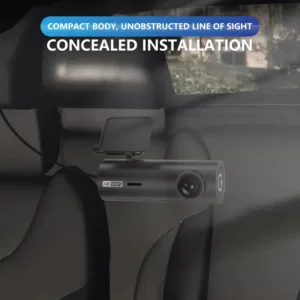
- Convenience: A prominently mounted action camera is a theft target, often requiring removal when parked. This increases the chance of forgetting to reinstall or turn it on. Dash cams are usually more discreet, compact, and designed for permanent installation.
- Recording Functionality: Many action cameras lack essential loop recording, requiring manual memory card cleanup when full—a significant hassle. Dash cams automatically overwrite the oldest files, ensuring continuous recording of the latest footage.
- Mounting Security: Action cameras are often secured by a single adhesive or suction mount, with the lens, body, and memory card as one unit. In a collision, they can easily be dislodged or damaged. Dash cams frequently feature a separate lens and main body/data storage unit, offering more secure mounting and better data protection.
- Resolution & Storage: Action cameras prioritize high resolution (e.g., 4K), which consumes substantial storage space and can impact device performance and battery life. For capturing crucial details like license plates and incidents, the moderate resolution of dash cams is sufficient and more storage-efficient.
- Cost: Action cameras are generally more expensive, and the total cost increases with necessary car mounts and accessories. Dash cams are a more cost-effective, purpose-built solution.
In summary, while an action camera can serve as a temporary dash cam in a pinch, its shortcomings in battery life, convenience, core features (like loop recording), and cost make it unsuitable as a primary, long-term replacement.
How to Use an Action Camera as a Car Camera?
If your action camera has a dash cam mode or suitable accessories, it can be used in-vehicle as follows:
- Operation: While driving, you can trigger photo or video capture via gesture control, a remote, or a smartphone app. Recorded media can be easily viewed, edited, and shared through a companion app.
- Handling Emergencies: Some advanced action cameras feature G-sensor collision detection or emergency recording, automatically locking and saving crucial footage upon impact. Some models can also log GPS data and upload incident videos via connected platforms.
- Recording Modes: In a “Car/Dash Cam” mode, operation typically involves two states:
- Driving Mode: While the car is on, the camera (and a rear camera if supported) automatically records in a loop, continuously capturing the road.
- Parking Mode: After parking, the camera can automatically take front/rear photos to log the parking location. Some models offer parking surveillance with motion detection.
Overall, an action camera offers excellent video quality and flexibility for specific scenarios like recording road trip scenery. It can serve as a supplement to a dedicated dash cam for these purposes, but is not ideal as a complete replacement.