
What does the P000C code mean?
The P000C is a generic OBD-II (Onboard Diagnostics II) trouble code. Its official definition is “A Camshaft Position Slow Response Bank 2“.
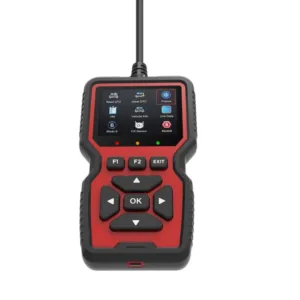
This code is set when the vehicle’s Engine Control Module (ECM) or Powertrain Control Module (PCM) detects that the camshaft position sensor on engine Bank 2 is responding slower than expected. The ECM constantly monitors the signal from the camshaft position sensor (CMP) and compares its timing and frequency to the crankshaft position sensor (CKP) signal. If the camshaft signal on Bank 2 shows a delayed response beyond a calibrated threshold, the ECM interprets this as a performance fault and stores code P000C. This slow response can disrupt precise valve timing, affecting engine performance, fuel efficiency, and emissions. The first step in diagnosing this issue is to connect a professional obd2 scanner to confirm the code and examine live data from the camshaft position sensor.
Symptoms of Error Code P000C
- Illuminated Check Engine Light (MIL).
- Rough or unstable engine idle.
- Reduced engine power and poor acceleration.
- Decreased fuel economy (lower MPG).
- Engine hesitation or stumbling during acceleration.
- Engine stalling, particularly at idle or when coming to a stop.
- Difficulty starting the engine.
- Potential engine misfire codes (e.g., P0300 series) may also be present.
Main Causes of Error Code P000C
- A failing or dirty camshaft position sensor (CMP) on Bank 2.
- Faulty or worn Variable Valve Timing (VVT) solenoid or actuator on Bank 2.
- Low engine oil level or dirty, degraded engine oil that cannot properly actuate the VVT system.
- Stretched, worn, or jumped timing chain or timing belt on Bank 2.
- Faulty timing chain tensioner or guides causing timing slack.
- Wiring issues in the camshaft position sensor circuit, such as damaged wires, poor connections, or corrosion.
- A faulty crankshaft position sensor (CKP) providing an incorrect reference signal.
- Mechanical issues within the engine, such as worn camshaft lobes or damaged valve train components.
- A faulty Engine Control Module (ECM) or PCM (rare).
How to Diagnose Error Code P000C?
- Connect an obd2 diagnostic scanner to the vehicle’s DLC port. Read and confirm code P000C. Check for any related codes, such as P000A, P000B, P000D, or misfire codes.
- Use the scanner’s live data function to monitor the camshaft position sensor signal for Bank 2. Compare its signal pattern and response time to the crankshaft position sensor signal. A slow or erratic camshaft signal confirms the fault.
- Check the engine oil level and condition. Low oil level or dirty, sludgy oil is a common cause of VVT system sluggishness, which can trigger P000C.
- Visually inspect the wiring harness and connector for the Bank 2 camshaft position sensor. Look for chafing, cuts, corrosion, or loose pins.
- Test the camshaft position sensor using a digital multimeter. Check for proper reference voltage (usually 5V or 12V), ground, and signal output according to the vehicle’s service manual specifications.
- Inspect the Variable Valve Timing (VVT) solenoid or actuator on Bank 2. Check for clogged oil screens or a stuck solenoid. An obd tool scanner with bi-directional controls can often command the VVT solenoid to test its operation.
- Perform a mechanical inspection of the timing components. This may involve checking timing marks on the crankshaft and camshaft(s) for Bank 2 to ensure they are aligned correctly, indicating the timing chain/belt has not jumped.
- If the sensor and wiring test good, consider using an advanced obd2 diagnostic tool with an oscilloscope to compare the waveforms of the camshaft and crankshaft position sensors for precise timing analysis.
Possible Causes and Diagnostic Methods
| Possible Cause | How to Check? |
| Failing Camshaft Position Sensor | Use a multimeter to test sensor resistance and output signal. Monitor live data with an obd2 diagnostic scanner; a slow or flat signal line indicates a bad sensor. |
| Clogged VVT Solenoid/Oil Control Valve | Remove the solenoid and inspect the filter screen for debris. Use a bi-directional scan tool to actuate the solenoid and listen for a clicking sound. |
| Low or Dirty Engine Oil | Check the dipstick for proper level and oil condition. Dark, sludgy oil can restrict oil flow to the VVT actuators, causing slow response. |
| Timing Chain/Belt Issue | Manually rotate the engine to Top Dead Center (TDC) and inspect the alignment marks on the crankshaft and camshaft sprockets for Bank 2. Misalignment indicates a jumped timing component. |
| Wiring/Connector Problem | Perform a voltage drop test on the sensor’s power and ground circuits. Visually inspect the connector for corrosion, bent pins, or moisture ingress. |
Tools needed: A professional OBD2 scanner or obd2 diagnostic tool with live data and bi-directional controls, a digital multimeter, basic hand tools (sockets, wrenches), and potentially a mechanic’s stethoscope and oscilloscope for advanced diagnosis.
How do I fix error code P000C? (Solutions to the Problem)
Simple Fixes
- Change Engine Oil and Filter: Perform a complete engine oil and filter change using the manufacturer’s specified viscosity and quality grade. This can often resolve issues caused by sludge blocking the VVT oil passages.
- Clean the VVT Solenoid: Remove the VVT solenoid or oil control valve for Bank 2. Clean it thoroughly with an appropriate solvent and a soft brush, paying special attention to the small filter screen. Reinstall and clear codes.
- Clean and Secure Electrical Connections Disconnect the battery, then unplug the camshaft position sensor connector. Clean the terminals with electrical contact cleaner, ensure they are tight, and apply dielectric grease before reconnecting.
In-depth Diagnosis and Repair Solutions
- Replace the Camshaft Position Sensor (Bank 2): If testing confirms a faulty sensor, replace it with an OEM or high-quality equivalent. Ensure the sensor is properly aligned and torqued to specification during installation.
- Replace the VVT Solenoid or Actuator: A solenoid that fails electrical or mechanical tests must be replaced. On some engines, the entire camshaft phaser (actuator) may need replacement if it is mechanically worn.
- Repair or Replace Timing Components: If diagnosis points to a stretched timing chain, worn guides, or a jumped timing belt, a complete timing component service is required. This is a complex repair that often involves removing the front engine cover.
- Repair Wiring Harness: Repair any damaged wires or replace the entire sensor pigtail harness if corrosion or breaks are found. Solder and seal all connections properly.
- Address Underlying Mechanical Issues: In rare cases, a slow camshaft response can be caused by excessive bearing wear on the camshaft itself or severe valve train wear, necessitating a more involved engine repair.
- After any repair, clear the codes with your obd reader, perform an ECM reset or adaptive values reset if applicable, and complete a drive cycle to verify the fix.
Fix faults based on symptoms
| Symptom / Data Pattern | Recommended Repair Path |
| Code P000C with rough idle and low oil pressure warning. | Immediately check and correct engine oil level and condition. A clogged oil pickup screen from low oil can starve the VVT system. |
| Code appears after an oil change with the wrong oil viscosity. | Drain and refill with the correct oil specification. Incorrect oil can cause the VVT system to respond sluggishly. |
| Code P000C accompanied by a rattling noise from the timing cover on cold starts. | Strongly indicates a failing timing chain tensioner or stretched chain, requiring timing component inspection and replacement. |
| Intermittent code that appears only when the engine is hot. | Suggests a failing sensor or a wiring issue that worsens with heat. Focus on testing the camshaft position sensor and its circuit under hot conditions. |
Common Error Code P000C in Vehicles
Subaru Vehicles with FB Engines: Particularly common in Subaru models like the Forester, Outback, Legacy, and Impreza equipped with the 2.0L or 2.5L FB series engines. Subaru’s Active Valve Control System (AVCS) is sensitive to oil quality and flow. The primary causes are often dirty oil clogging the AVCS solenoids or oil control valves, or a failing camshaft position sensor itself. Using the correct oil weight and frequent changes is critical.
Toyota and Lexus Vehicles: Found in many Toyota and Lexus models with VVT-i or VVT-iW systems, such as the Camry, RAV4, Highlander, and Lexus ES/RX. Issues often stem from a dirty or stuck VVT-i oil control valve (OCV) on Bank 2, or a failing camshaft position sensor. Toyota’s diagnostic procedure typically involves checking the VVT system response with a capable scan tool.
Honda and Acura Vehicles: Occurs in models with i-VTEC or VTEC systems, like the Accord, Civic, CR-V, and Acura TL/MDX. The cause can be a faulty camshaft position sensor, a clogged VTEC spool valve filter, or low oil pressure. Honda engines are particularly sensitive to using the correct oil filter.
Nissan and Infiniti Vehicles: Seen in models with the VQ and QR engine series featuring Variable Valve Event and Lift (VVEL) or similar systems. Common culprits include the camshaft position sensor, a faulty variable valve timing control solenoid, or timing chain issues, especially in higher-mileage vehicles.
Ford Vehicles with EcoBoost Engines: Can appear in Ford’s turbocharged EcoBoost engines, where the Twin Independent Variable Camshaft Timing (Ti-VCT) system relies on precise oil pressure. A failing camshaft position sensor, oil control solenoid, or oil pressure problem can trigger P000C.
P000C Frequently Asked Questions
Is it safe to drive with a P000C code?
Driving for a short distance is usually possible, but it is not recommended for extended periods. The code indicates incorrect valve timing, which can lead to reduced power, poor fuel economy, increased emissions, and in severe cases, internal engine damage if timing components fail completely. Have the vehicle diagnosed as soon as possible.
Can a bad oil change cause P000C?
Yes, absolutely. Using the wrong viscosity of engine oil, a low-quality oil filter, or simply having a low oil level can prevent the Variable Valve Timing system from receiving adequate oil pressure, causing slow camshaft response and triggering P000C. Always use the manufacturer-recommended oil.
What is the difference between P000C and P0011?
P0011 is a “Camshaft Position – Timing Over-Advanced or System Performance (Bank 1)” code. It indicates the camshaft timing is outside its desired range. P000C is specifically a “Slow Response” code, meaning the camshaft is moving but not quickly enough to meet the ECM’s expectations. Both relate to camshaft timing but describe different types of faults.
How much does it cost to fix P000C?
Costs vary widely. Replacing a camshaft position sensor or cleaning a VVT solenoid might cost $150-$400 in parts and labor. If the issue is a stretched timing chain requiring replacement, the repair can cost $1,000-$2,500 or more, depending on the vehicle, as it is a labor-intensive job.
Can I reset the code and drive?
You can clear the code with an obd reader, but if the underlying mechanical or electrical fault remains, the code will almost certainly return within one or two drive cycles as the ECM re-runs its self-tests. Clearing the code is only a temporary measure for diagnosis, not a fix.
Does P000C affect fuel economy?
Yes, significantly. Incorrect valve timing disrupts the engine’s optimal air-fuel mixture and combustion efficiency, leading to increased fuel consumption. You may notice a drop of several MPG until the problem is fixed.
Can a dirty throttle body cause P000C?
No, a dirty throttle body is unrelated to the camshaft position sensor’s signal response time. P000C is specifically related to the camshaft timing system on Bank 2, involving the sensor, VVT components, timing chain, or engine oil.
P000C Related OBD2 Errors
- P000A: “A” Camshaft Position Slow Response Bank 1
- P000B: “B” Camshaft Position Slow Response Bank 1
- P000D: “B” Camshaft Position Slow Response Bank 2
- P0010: “A” Camshaft Position Actuator Circuit (Bank 1)
- P0011: “A” Camshaft Position – Timing Over-Advanced or System Performance (Bank 1)
- P0014: “B” Camshaft Position – Timing Over-Advanced or System Performance (Bank 1)
- P0020: “A” Camshaft Position Actuator Circuit (Bank 2)
- P0021: “A” Camshaft Position – Timing Over-Advanced or System Performance (Bank 2)
- P0024: “B” Camshaft Position – Timing Over-Advanced or System Performance (Bank 2)
Important! Code P000C is a serious indicator of a fault within your engine’s critical timing system. Ignoring it can lead to reduced performance, damaged catalytic converters from misfires, and in worst-case scenarios, catastrophic engine failure if a timing chain fails or jumps. Do not dismiss this code as a simple sensor issue; proper diagnosis with a professional-grade obd2 diagnostic scanner is essential to identify whether the root cause is electrical, oil-related, or mechanical before attempting repairs.