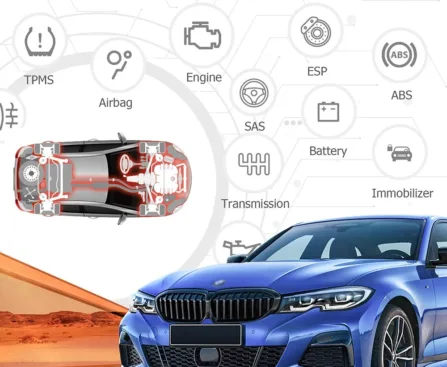
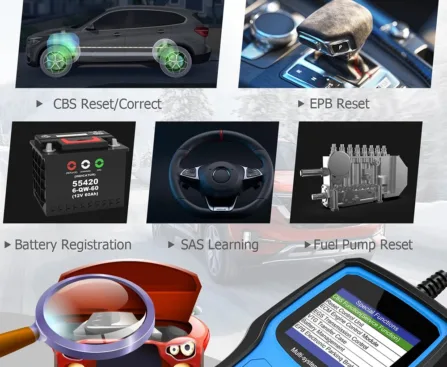
The OBD system needs to be checked during vehicle annual inspections. Generally, the vehicle management office uses an OBD diagnostic tool to read the vehicle’s OBD fault information and related data. If it cannot be detected, it may be due to a problem with the OBD diagnostic tool, incompatibility with the communication protocol used by the vehicle’s ECU system, or a fault in the vehicle itself. In such cases, the vehicle management office can replace the diagnostic tool with a new one. Various problems may also be encountered during OBD system testing, such as vehicle fault codes, OBD communication failures, and OBD connection failures. Below are some solutions; let’s take a look.
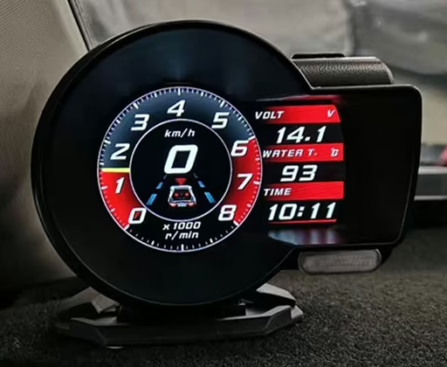
OBD, or On-Board Diagnostics, is a system that checks the engine’s operation and monitors vehicle emissions to ensure they don’t exceed standards. If emissions exceed limits, the OBD warning light will illuminate immediately. Therefore, when the OBD light is on, it indicates a problem with the vehicle’s emissions and requires immediate inspection. So, what causes the OBD indicator light to illuminate? And what should you do if the OBD indicator light is on? Let’s find out.
OBD stands for OnBoard Diagnostics, which means on-board automatic diagnostic system. The OBD system works by recording fault information and related codes when an emissions fault occurs. This information is then communicated to the driver via the malfunction indicator lamp (MIL) or the check engine warning light. Repair personnel use specialized equipment from the vehicle manufacturer to read the fault codes, quickly locating the fault and facilitating vehicle repair, significantly reducing the time required for manual diagnosis. Let’s learn more about the OBD system.