Fault code B007C, applicable to all automobile manufacturers, means “Second Row Right Seatbelt Pretensioner B Deployment Control (Subfault)”.


Unlimited Choices, Easy Shopping
Unlimited Choices, Easy Shopping
Fault code B007C, applicable to all automobile manufacturers, means “Second Row Right Seatbelt Pretensioner B Deployment Control (Subfault)”.

With the advancement of technology, streaming rearview mirrors have gradually appeared in the automotive products market. A streaming rearview mirror is a new type of rearview mirror. Compared with a dash cam, it has significant differences. Although streaming rearview mirrors have a wide field of view, so far they cannot replace dash cams because their recording capability is not sufficient. Next, this article will briefly introduce the differences between streaming rearview mirrors and dash cams, and discuss whether streaming rearview mirrors can replace dash cams. If you are interested, let’s take a look together!

Fault code P00BC, applicable to all vehicle manufacturers, indicates “Mass or Volume Air Flow ‘A’ Circuit Range/Performance – Air Flow Too Low” . This generic powertrain code signifies that the Engine Control Module (ECM) or Powertrain Control Module (PCM) has detected that the signal from the Mass Air Flow (MAF) sensor is outside the expected range, specifically indicating insufficient airflow into the engine .
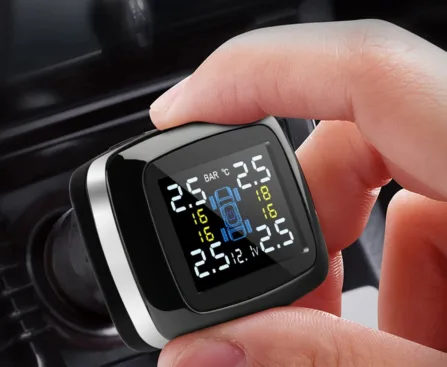
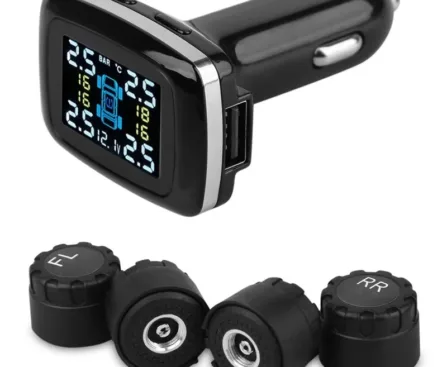
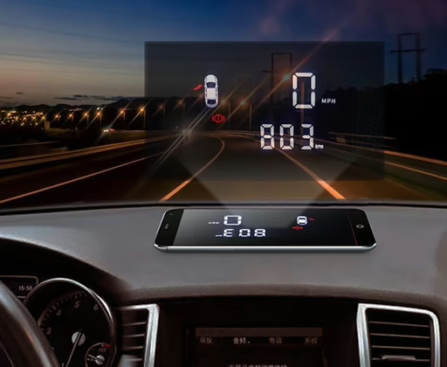
A TPMS (Tire Pressure Monitoring System) display that plugs into your vehicle’s cigarette lighter (also known as a 12V accessory socket) does not have a traditional “battery life” or “runtime.” Unlike battery-powered or solar-powered displays, it is designed to be powered directly by your vehicle’s electrical system. Its operation is entirely dependent on the power state of the cigarette lighter socket. Therefore, its effective “runtime” is either the duration of your drive or, in vehicles with always-live sockets, potentially until it contributes to draining the car battery over several days.
A 4-sensor Tire Pressure Monitoring System (TPMS) uses individual pressure sensors in each wheel to provide precise, real-time data. When the system detects an issue, it stores Diagnostic Trouble Codes (DTCs) that can be read with an OBD-II scanner. Understanding these codes is crucial for accurate diagnosis and repair. The most common codes relate to sensor communication failures, low battery warnings, and system malfunctions.
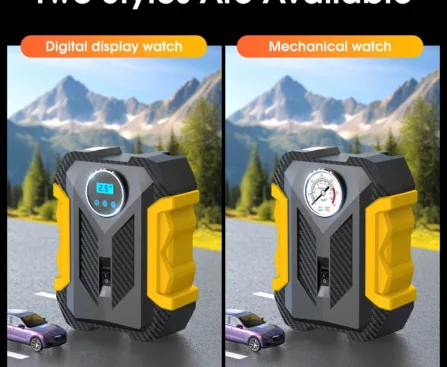
The specifications “12V” and “Cigarette Lighter” define the core power source, compatibility, and inherent performance boundaries of a portable tire inflator. Together, they mean the device is designed exclusively for use with a vehicle’s standard electrical system, offering ultimate convenience but with clear limitations on power and continuous operation compared to mains-powered or high-current models.
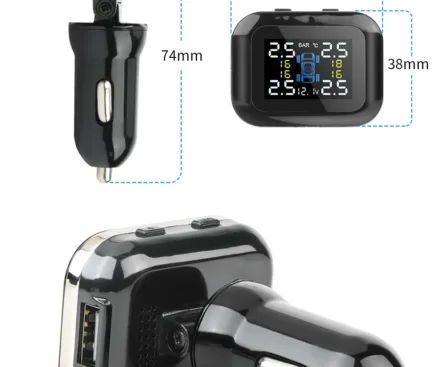
Replacing the sensors on an aftermarket cigarette lighter TPMS (Tire Pressure Monitoring System) involves two distinct phases: the physical replacement of the sensor hardware inside each tire, and the electronic pairing/relearning of the new sensors to the display unit. The process requires basic mechanical skill for tire work and careful attention to the specific relearn procedure for your TPMS kit. It is highly recommended to have a professional tire shop handle the tire dismounting and sensor installation to avoid damage; the pairing process can often be done by the user.
Fault code B007B, applicable to all automobile manufacturers, means “Second Row Left Seatbelt Pretensioner B Deployment Control (Subfault)”.
We use cookies to improve your experience on our site. By using our site, you consent to cookies.
Websites store cookies to enhance functionality and personalise your experience. You can manage your preferences, but blocking some cookies may impact site performance and services.
Essential cookies enable basic functions and are necessary for the proper function of the website.
These cookies are needed for adding comments on this website.
Google Tag Manager simplifies the management of marketing tags on your website without code changes.
Statistics cookies collect information anonymously. This information helps us understand how visitors use our website.
Google Analytics is a powerful tool that tracks and analyzes website traffic for informed marketing decisions.
Service URL: policies.google.com (opens in a new window)
SourceBuster is used by WooCommerce for order attribution based on user source.