Fault code B007F is a standardized OBD-II code applicable to all automobile manufacturers. Its precise definition is “Passenger Seatbelt Pretensioner C Deployment Control (Subfault)”. This code indicates a malfunction specifically within the circuit or component of the “C” pretensioner for the front passenger’s seatbelt, a critical element of the vehicle’s Supplemental Restraint System (SRS).

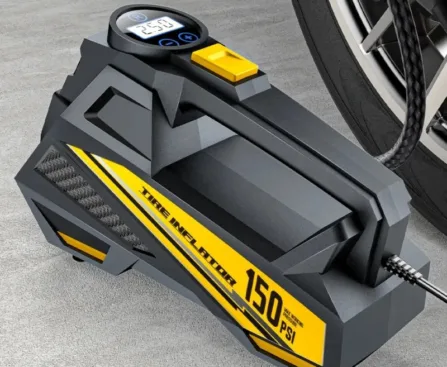
The 12V cigarette lighter air compressor is a compact and portable tire inflation device., portable device designed to inflate tires, sports equipment, and inflatables using your vehicle’s electrical system. Its core functionality relies on a precise integration of mechanical, electrical, and control components. Primarily, it consists of five key subsystems: the Electric Motor, the Compression Mechanism (Cylinder & Piston), the Cooling System, the Control & Measurement Unit (Pressure Switch, Gauge, Circuitry), and the Air Delivery System (Hose, Nozzle, Connectors).
Fault code B007E is a standardized OBD-II code applicable to all automobile manufacturers. Its precise definition is “Driver Seatbelt Pretensioner C Deployment Control (Subfault)”. This code signals a malfunction specifically within the circuit or component of the “C” pretensioner for the driver’s seatbelt, which is a critical part of the vehicle’s Supplemental Restraint System (SRS).
Maintaining correct tire pressure is not just about maintenance—it’s a critical safety practice for any motorcyclist. A Tire Pressure Monitoring System (TPMS) is an electronic aid that provides real-time monitoring, significantly enhancing your awareness and safety on the road.
Fault code P00BD, applicable to all vehicle manufacturers, indicates “Mass or Volume Air Flow ‘A’ Circuit Range/Performance – Air Flow Too High” . This generic powertrain code signifies that the Powertrain Control Module (PCM) has detected that the signal from the Mass Air Flow (MAF) sensor is outside the expected range, specifically indicating that the measured airflow is higher than the calculated value .
Fault code B007D, applicable to all automobile manufacturers, means “Second Row Center Seatbelt Pretensioner B Deployment Control (Subfault)”.
When a TPMS display shows garbled or scrambled information, professional-grade diagnostic tools are essential for isolating the fault. The most effective advanced tools fall into two main categories: dedicated TPMS diagnostic scanners and comprehensive automotive scanners with integrated TPMS functionality. A critical component in this process is the use of an OBD2 scanner to access the vehicle’s internal computer systems. These tools provide the system-level interrogation, live data, and module diagnostics needed to pinpoint issues within the sensor network, vehicle control module, or display unit itself.
To achieve a deep clean without damaging your car’s paint, you must master a combination of safe pressure settings, correct nozzle selection, proper technique, and a meticulous process—including the right use of a car wash gun. The core principle is to use the pressure washer’s force, delivered through the car wash gun, to lift and rinse away dirt, not to blast it against the surface, which can grind particles into the clear coat and cause scratches, chips, or even peel the paint. A safe and effective wash hinges on three pillars: using a moderate PSI (1200-1900 PSI) with your car wash gun, maintaining a safe distance (12-18 inches) between the car wash gun and the vehicle surface, and employing a wide-angle fan spray (25° or 40° nozzle) on the car wash gun at a consistent 45-degree angle to the surface.