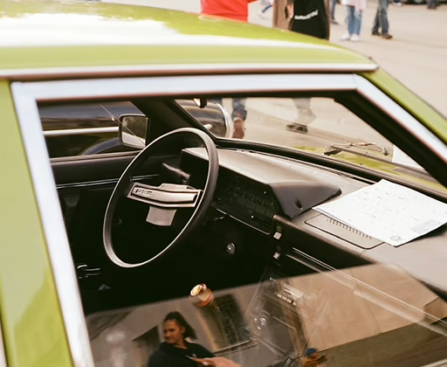
If a car window is damaged beyond repair, or if you want to use higher-performance glass, you can remove the old glass and replace it with a new one without affecting the car’s performance. Replacing a car window is not difficult. First, remove the door trim panel, then remove the glass fixing bolts, remove the old glass, clean out any glass shards from the inside of the window, and then install the new glass. Let’s learn how to replace a car window.

Car polishing wax is primarily used for polishing the paint surface of older vehicles, restoring shine and repairing minor scratches. The polishing process consists of three steps: coarse polishing, medium polishing, and fine polishing. To achieve optimal performance, a targeted polishing wax must be selected. The polishing wax should be chosen based on the specific condition of the car’s paint surface. Different polishing waxes should be used for air-dried paint and baked paint, and coarse polishing waxes should be carefully distinguished from fine polishing waxes. Polishing waxes for solid color paints and metallic paints should also be used separately.
The duration of a car wax’s effect depends on the quality of the wax. For vehicles parked in a garage, waxing every 3-4 months is ideal, while for vehicles parked outdoors, waxing every 2-3 months is best. The choice of car wax should be based on a combination of factors, including the vehicle’s condition and the weather.
During daily driving, you may encounter minor issues such as windows failing to roll up or down. If only part of the window is stuck, it might be due to a deformed or damaged glass rail, or loose screws securing the window regulator causing the glass to jam. If all windows fail to roll up or down, it could be due to a faulty window regulator motor, a malfunctioning overheat protection device, or a faulty or poorly connected relay. In this case, you will need to take your vehicle to a repair shop for inspection. Next, we will discuss what to do if your car windows fail to roll up or down.
Tire wax primarily restores tires to a new look, prevents UV damage, and avoids rubber aging, cracking, and discoloration, while also providing shine and protection. However, tire wax can also corrode aluminum alloys and damage rims; inferior tire wax can cause even greater damage. When using tire wax, it’s important to remember to clean the car’s exterior with car wash water to remove dirt and grime, and avoid using inferior tire wax.
Over time, cars often develop minor malfunctions, the most common being unusual noises from the windows. These noises typically occur when driving on bumpy roads or when the windows are raised or lowered. There are many possible causes, including aging window seals, debris in the window gaps, and loose seals. Addressing the specific cause will resolve the issue. Let’s take a look at some solutions for unusual noises from car windows.
A transmission oil leak is like blood loss in a person; it has a significant impact on a car. It can cause difficulty starting, slow acceleration, slippage, and in severe cases, abnormal noises from the transmission. There are many reasons for transmission oil leaks, such as worn or deformed oil seals, worn or dented journals, damage to the housing mating surfaces, or damaged gaskets. Prompt repair and maintenance are necessary to avoid driving with a leak.
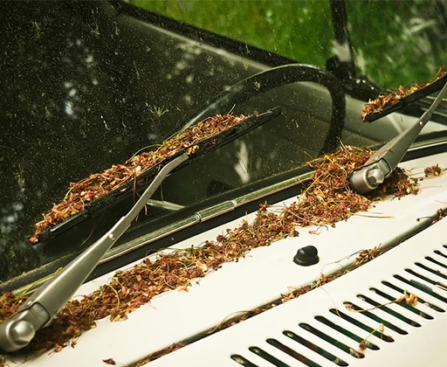
If car windows aren’t properly maintained, they can easily become corroded by substances containing corrosive components, such as exhaust fumes, cooking fumes, bird droppings, insect remains, or tree sap. This forms an oily film on the windshield surface, preventing the wipers from cleaning it properly. In such cases, it’s crucial to remove the oily film promptly to avoid creating a driving safety hazard. Common removal methods include wiping with dry newspaper, using dish soap, or a specialized oil film remover. If none of these work, the wiper blades need to be replaced. Let’s learn how to remove an oily film from car windows.