
Cigarette Lighter TPMS Display: Understanding “Runtime” and Power Supply
A TPMS (Tire Pressure Monitoring System) display that plugs into your vehicle’s cigarette lighter (also known as a 12V accessory socket) does not have a traditional “battery life” or “runtime.” Unlike battery-powered or solar-powered displays, it is designed to be powered directly by your vehicle’s electrical system. Its operation is entirely dependent on the power state of the cigarette lighter socket. Therefore, its effective “runtime” is either the duration of your drive or, in vehicles with always-live sockets, potentially until it contributes to draining the car battery over several days.
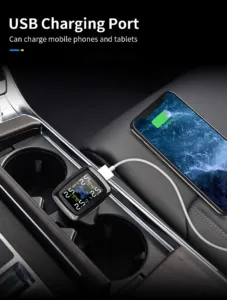
How a Cigarette Lighter TPMS Display Works
The display unit houses the receiver for the wireless signals from the tire sensors. It draws power (typically 12V DC) through the cigarette lighter plug. Therefore, its operational time is governed by one key factor: whether the vehicle’s accessory socket is receiving power.
- When the Vehicle is Running (Ignition ON/ACC or Engine ON): The socket is powered, and the TPMS display will operate continuously, providing real-time tire pressure and temperature readings.
- When the Vehicle is Off (Ignition OFF): The behavior varies significantly by vehicle make, model, and year. There are three common scenarios:
- Socket De-energized: In most modern vehicles, the cigarette lighter socket is switched and loses power shortly after the ignition is turned off. In this case, the TPMS display will turn off immediately or within a few minutes.
- Socket Remains Live (“Always-On” or Battery Power): In some vehicles, the socket is connected directly to the battery and remains powered at all times. If your TPMS display is plugged into such a socket, it will continue to operate and monitor tire pressure even when the car is parked and locked.
- Delayed Power-Off: Some vehicles provide power to the socket for a set period (e.g., 10-30 minutes) after the ignition is turned off before cutting power.
Key Consideration: Battery Drain Risk with “Always-On” Sockets
If your vehicle’s cigarette lighter socket is always live and you leave the TPMS display plugged in while the car is parked for an extended period, it will slowly drain the vehicle’s battery. The time it takes to drain the battery to the point where the car won’t start depends on two main factors:
- TPMS Display Power Consumption: A typical TPMS display unit consumes a relatively low amount of power, usually between 0.1A to 0.3A (approx. 1.2W to 3.6W at 12V).
- Vehicle Battery Capacity: A standard passenger car battery has a capacity between 45Ah to 70Ah.
Estimated Drain Time: Using a conservative estimate of 0.2A draw from the TPMS display and a 60Ah car battery, the theoretical continuous runtime before the battery is completely dead would be approximately 300 hours (60Ah / 0.2A = 300 hours, or about 12.5 days). However, a car battery is considered critically discharged and may fail to start the engine long before it is fully depleted. As a rule of thumb, if the battery’s state of charge drops below 50%, starting problems may occur. Therefore, the practical “safe” parking time with the display continuously powered is likely closer to 5-7 days for a healthy, fully charged battery.
Comparison with Other TPMS Display Power Types
To provide full context, here is how cigarette lighter-powered displays compare to other common power solutions for TPMS monitors.
| Power Source for TPMS Display | Typical “Runtime” / Operational Characteristic | Pros & Cons |
|---|---|---|
| Cigarette Lighter (12V Socket) | Operates only when the socket has power. No internal battery to charge or replace. | Pros: Simple, reliable power. No need to remember to charge. Often provides the brightest, most consistent display backlight. Cons: Occupies the accessory socket. Cable can be messy. Functionality depends on vehicle’s power scheme (may turn off with ignition). |
| Rechargeable Internal Battery (USB Charging) | Typically offers 30 to 45 days of operation on a single full charge. The display must be periodically recharged via a USB cable. | Pros: Portable, can be placed anywhere on the dash. Can often monitor tire pressure even when the vehicle is off (until its own battery dies). Cons: Requires regular charging. Display brightness or update frequency may decrease as the battery depletes. |
| Solar-Powered | Effectively permanent or indefinite runtime in normal daylight conditions. Uses a small solar panel to trickle-charge an internal battery. | Pros: Truly “fit and forget.” No wires or regular charging needed. Ideal for permanent dash mounting. Cons: May struggle to maintain charge if parked in a dark garage for weeks. Initial cost is often higher. |
| Standard Batteries (e.g., AA/AAA) | Varies by model and battery quality. Some models report runtimes of 6 months or more on a set of batteries. | Pros: Easy battery replacement. No charging required. Cons: Ongoing cost of batteries. Risk of display dying if batteries are not replaced proactively. |
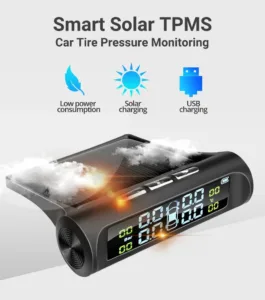
Recommendations for Cigarette Lighter TPMS Display Users
- Check Your Vehicle’s Socket Behavior: Consult your owner’s manual or test it yourself. Turn the car off, lock it, and see if the TPMS display remains on after 30-60 minutes. If it turns off, there is no battery drain risk.
- If the Socket is “Always-On”: Develop the habit of unplugging the TPMS display if you plan to park the vehicle for more than a few days. This prevents any risk of a dead battery.
- Use a Switched Power Source (Advanced): For a cleaner, permanent installation, the display can be hardwired to a fuse tap in the vehicle’s fuse box that only receives power when the ignition is on (ACC or ON position). This requires basic electrical knowledge or professional installation.
- Prioritize a Clean Installation: Use cable management clips to route the power cord neatly from the socket to the display’s location on the dash or windshield to avoid obstructing your view.
Summary: A cigarette lighter TPMS display does not have an independent battery. It works whenever your car’s 12V socket is powered. Its effective “runtime” is either the duration of your drive or, in vehicles with always-live sockets, potentially until it contributes to draining the car battery over several days. For worry-free, long-term parking monitoring, a display with its own rechargeable or solar-powered battery is a more suitable choice.