
How to Replace Sensors on a 4-Sensor Cigarette Lighter TPMS System
Replacing the sensors on an aftermarket cigarette lighter TPMS (Tire Pressure Monitoring System) involves two distinct phases: the physical replacement of the sensor hardware inside each tire, and the electronic pairing/relearning of the new sensors to the display unit. The process requires basic mechanical skill for tire work and careful attention to the specific relearn procedure for your TPMS kit. It is highly recommended to have a professional tire shop handle the tire dismounting and sensor installation to avoid damage; the pairing process can often be done by the user.
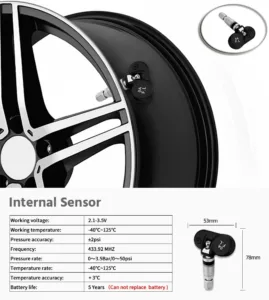
1. Understanding Your System: Display vs. Sensors
- Cigarette Lighter Display Unit: This is the monitor plugged into your 12V socket. It only receives and displays data. You do not replace this unit unless it is faulty.
- Tire Pressure Sensors (x4): These are the battery-powered units mounted inside each tire on the valve stem. They measure pressure/temperature and transmit data wirelessly to the display. These are the components you replace.
- Key Principle: Each sensor has a unique ID. The display unit must be taught to recognize the new sensor IDs after replacement.
2. Pre-Replacement Preparation
- Purchase Correct Replacement Sensors: You must buy sensors that are compatible with your specific TPMS kit model. Check the manufacturer’s website or manual for the exact part number. Sensors are not universal across brands.
- Consider “Pre-Programmed” Sensors: Some aftermarket sensors come “pre-programmed” or “cloneable” to match popular kit protocols, which can simplify pairing.
- Tools & Equipment Needed:
- Jack, jack stands, lug wrench, tire iron.
- Tire valve core tool.
- TPMS sensor nut wrench (often an 11mm deep socket).
- Tire mounting/dismounting machine (professional shop equipment).
- Tire balancer (professional shop equipment).
- Your TPMS display unit’s manual.
- Safety First: Always secure the vehicle on jack stands. Deflate tires completely before breaking the bead on a tire machine.
3. Step-by-Step: Physical Sensor Replacement
Note: This process is best performed by a professional tire technician. Incorrect dismounting can easily damage the wheel or the new sensor.
| Step | Action | Key Details & Tips |
|---|---|---|
| 1. Remove Wheel & Tire | Loosen lug nuts, lift vehicle, remove wheel. | Mark the wheel’s position (e.g., LF, RF) to reinstall in the same location if desired. |
| 2. Dismount Tire from Wheel | At a tire shop, the technician will use a tire machine to break the bead and separate the tire from the wheel rim. | CRITICAL: Inform the technician about the TPMS sensor. The machine’s tool must be positioned away from the sensor (usually at the 6 o’clock position when the valve stem is at 12 o’clock) to avoid striking and breaking it. |
| 3. Remove Old Sensor | Once the tire is off, locate the sensor attached to the valve stem inside the wheel. Unscrew the retaining nut (typically 8 Nm / 5.9 lbs-ft torque) and remove the sensor assembly. | The sensor and valve stem are often one integrated unit. The entire assembly is removed. Discard the old sensor. |
| 4. Install New Sensor | Insert the new sensor’s valve stem through the hole in the wheel from the inside. Hand-tighten the new retaining nut. | Ensure the sensor body sits flush against the wheel rim. Use a torque wrench to tighten the nut to the manufacturer’s specification (commonly 4-8 Nm). Do not overtighten. |
| 5. Remount & Balance Tire | The technician will remount the tire onto the wheel, inflate it to the correct pressure, and perform a dynamic balance. | Balancing is crucial after any tire service to prevent vibration. Ensure the new valve stem cap is installed (use plastic caps, not metal, to prevent corrosion). |
| 6. Reinstall Wheel | Mount the wheel back onto the vehicle and torque the lug nuts to the vehicle’s specification in a star pattern. | Repeat steps 1-6 for all four wheels. |
4. Step-by-Step: Relearning / Pairing New Sensors to the Display
This is the electronic setup. The method varies by kit brand. Consult your display unit’s manual for the exact procedure. Common methods include:
Method A: Automatic Relearn (Most Common for Aftermarket Kits)
- Ensure all four new sensors are installed and tires are inflated to the correct pressure.
- Plug the display unit into the cigarette lighter socket and turn on the vehicle’s ignition (or start the engine).
- The display may automatically enter “learning mode” upon power-up with new sensors detected. If not, press and hold a specific button (often “SET” or “PAIR”) as per the manual.
- Drive the vehicle. Typically, driving above 15-20 mph (25-32 km/h) for 5-10 minutes allows the display to automatically receive signals and pair with the new sensors.
Method B: Manual Triggered Relearn
- With the display powered on, access the settings menu (often by pressing a “M” or menu button).
- Navigate to a “Sensor Pairing,” “Relearn,” or “ID Registration” option.
- Select it. The display may show “Learning” or “Please Wait.”
- Sometimes, you need to deflate each tire slightly in a specific order (e.g., Left Front, Right Front, Right Rear, Left Rear) until the display beeps to confirm it has received that sensor’s signal. Re-inflate to proper pressure immediately after.
Method C: Using a TPMS Tool (For Advanced Users/Shops)
If the above methods fail, or if your kit requires it, a professional TPMS activation tool (like Autel MaxiTPMS) may be needed.
- Use the tool to “activate” or “wake up” each new sensor by holding it near the valve stem.
- The tool reads the sensor’s new ID.
- Some tools can then “clone” the old ID to the new sensor, or program the display unit via its OBD port or a specific procedure.
5. Post-Replacement Testing & Verification
- After the relearn process, verify that the display shows the correct pressure readings for all four tires.
- Drive for a short period and confirm the readings update and no warning lights appear on the display.
- If one sensor fails to register, repeat the relearn step for that specific wheel.
6. When to Seek Professional Help
- For the physical replacement: Highly recommended to use a tire shop. They have the proper machines and expertise to avoid damaging wheels or sensors.
- For the relearn process: If you cannot get the display to recognize the new sensors after following the manual, a professional with a TPMS scan tool can complete the pairing in minutes.
Summary of Key Points: Replacing sensors on a cigarette lighter TPMS is a two-part job. The mechanical installation inside the tire demands care and proper tools to prevent damage. The electronic pairing requires following your specific display unit’s instructions, typically involving a button press and a drive cycle. When in doubt, entrust the tire work to a professional and use the kit’s manual for the relearn procedure. Properly installed and paired, your new sensors should provide reliable service for 5-10 years.