Properly adjusting the water pressure and selecting the correct nozzle for your car wash gun is essential for effective cleaning while protecting your vehicle’s finish. The process involves understanding your equipment’s controls and matching the spray pattern to the task.
How to Adjust Water Pressure on a Car Wash Gun
Pressure adjustment isn’t always done directly on the gun itself; it often involves a combination of machine settings, nozzle choice, and technique.
- At the Pressure Washer Unit: Most electric or gas-powered pressure washers have a dial or unloader valve to regulate output PSI. For car washing, start at the lowest setting and increase only if necessary.
- Via Distance: The simplest method. Doubling the distance from the surface reduces impact force by approximately 75% . Keep the nozzle at least 18-24 inches (45-60 cm) away from painted surfaces.
- Using an Adjustable Spray Gun: Some advanced car wash gun models feature a dial on the handle to vary water flow and pressure. Rotate towards a lower setting for delicate areas.
- Thermal Management: On battery-powered units, continuous use can cause the motor to overheat and automatically reduce power. Allow short cooldown periods to maintain consistent pressure .
Nozzle Selection Guide: Color Codes & Spray Patterns
Nozzles are the primary tool for controlling pressure and spray pattern. They are typically color-coded for easy identification.
| Nozzle Color | Spray Pattern & Angle | Pressure & Best Use Case | Safe Distance for Cars |
|---|---|---|---|
| White or 40° Fan | Wide fan pattern | Low Pressure, High Flow. The safest and recommended choice for general rinsing and washing of painted surfaces, glass, and trim. | 18-24 inches (45-60 cm) |
| Green (or sometimes Black) | 25°-30° fan | Medium Pressure. For general purpose cleaning of driveways, siding, or heavily soiled wheel wells. Use on cars with extreme caution. | Not recommended for body panels. |
| Yellow | 15° pencil/stream | High Pressure, Medium Flow. For stripping old sealant, removing stubborn bugs/tar, or cleaning concrete. Risky for paint. | Avoid on paint. Use 12+ inches on tires only. |
| Red | 0°-5° pinpoint jet | Maximum Pressure, Low Flow. For paint removal, rust, or gum. NEVER use on any part of your car as it will instantly damage paint and glass. | Do not use on vehicles. |
| Black or Dedicated Foam Nozzle | Wide, low-pressure foam | Detergent Application Only. Designed to mix air and soap, creating thick foam. Provides almost no cleaning pressure. | 6-12 inches (15-30 cm) |
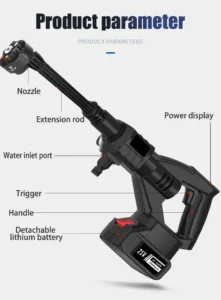
Step-by-Step: Using Your Car Wash Gun Safely
- Start with the Right Nozzle: Always begin with the white (40° fan) nozzle attached to your car wash gun. This is your default for 90% of the wash.
- Pre-Rinse: From a distance of 24 inches, rinse the car to loosen surface dirt.
- Apply Soap: Switch to the black foam nozzle or a dedicated foam cannon to apply shampoo.
- Wash & Rinse: Switch back to the white nozzle. Maintain a consistent 18-inch distance while rinsing. For very dirty wheels, you may briefly use the yellow nozzle from 12+ inches away, but avoid aiming at painted brake calipers.
- Final Rinse: Use the white nozzle or a dedicated “sheeting” nozzle for a spot-free rinse.
Key Recommendations for Vehicle Washing
- The Golden Rule: Use the widest nozzle (white/40°) and the lowest effective pressure. It’s safer to wash longer with low pressure than to risk damage with high pressure.
- Test First: Always test your setup on an inconspicuous area (like behind a door handle) before cleaning the whole car.
- Mind the Temperature: Avoid washing in direct sunlight. Heat causes water to evaporate quickly, leaving mineral deposits that can etch the clear coat.
- Upgrade for Control: Consider an aftermarket spray gun with a variable pressure trigger or a quick-connect system for easier nozzle changes.
By mastering pressure adjustment through distance and nozzle selection, your car wash gun becomes a precise tool, not a potential hazard. Remember: when in doubt, choose more distance and a wider spray pattern.