
What Does Fault Code P010D Mean?
Fault code P010D is a generic OBD-II diagnostic trouble code defined as “Mass or Volume Air Flow Sensor B Circuit High Input.” This indicates that the vehicle’s Powertrain Control Module (PCM) has detected that the voltage or frequency signal from the secondary circuit (“Circuit B”) of the Mass Air Flow (MAF) sensor is consistently above the expected normal operating range for a specified period .
Background: Modern engines rely on precise air mass measurement for optimal fuel delivery and emissions control. Many vehicles utilize MAF sensors with dual signal paths (Circuit A and Circuit B) for redundancy and self-diagnostic purposes. Code P010D specifically flags an abnormally high signal on the “B” circuit, which can lead to incorrect fuel calculations, poor performance, and increased emissions.
Symptoms of Fault Code P010D
- Illuminated Malfunction Indicator Lamp (MIL) or Check Engine Light.
- Rough engine idle, stumbling, or hesitation during acceleration.
- Black smoke from the exhaust due to an overly rich air/fuel mixture.
- Engine stalling, especially at idle or when coming to a stop.
- Noticeable lack of power and poor acceleration.
- Decreased fuel economy.
- In some cases, the vehicle may enter a reduced-power “limp-home” mode.
Main Causes of Fault Code P010D
- Faulty MAF Sensor: The internal circuitry or sensing element for “Circuit B” within the MAF sensor has failed, sending an erroneously high signal.
- Electrical Issues in the MAF Sensor Circuit: A short to power (12V) on the MAF sensor signal “B” circuit wire is a primary cause. This can be due to damaged insulation where the signal wire contacts a power source.
- Poor Ground Connection: A poor or corroded ground connection for the MAF sensor can cause voltage feedback, leading to a high signal reading at the PCM.
- Wiring or Connector Problems: Damaged, frayed, or corroded wiring and connectors in the MAF sensor harness can create cross-talk or short circuits, resulting in a high input condition.
- Faulty Powertrain Control Module (PCM): In rare instances, the PCM itself may have an internal fault causing it to misinterpret a normal sensor signal as high. This should be considered only after all other causes are ruled out.
- Aftermarket Modifications: The installation of certain aftermarket performance chips or incorrect wiring repairs can interfere with sensor signals.
How to Diagnose Fault Code P010D?
- Scan and Verify: Use an OBD2 scanner to confirm the presence of code P010D. Check for any related codes (e.g., P010A, P010B, P010C) and review freeze frame data to understand the conditions when the code set.
- Visual Inspection: Thoroughly inspect the MAF sensor, its wiring harness, and connectors. Look for chafed wires, pinched insulation, corrosion, or signs of previous repairs. Pay special attention to areas where the wiring might be near sharp edges or hot components.
- Check Voltage and Circuits: With the ignition ON (engine off) and the MAF sensor connector disconnected, use a digital multimeter to test at the harness connector:
- Signal Circuit: Check for voltage on the MAF sensor signal “B” wire. With the sensor disconnected, there should be little to no voltage present. Any significant voltage (e.g., 12V) indicates a short to power.
- Reference Voltage (VREF): Verify the 5-volt reference circuit is present and stable.
- Ground Circuit: Check for a clean ground with less than 5 ohms of resistance to the chassis.
- Monitor Live Data: Using a capable obd2 diagnostic scanner, observe the live data stream for the MAF sensor readings. Specifically, look at the values for the “B” circuit (if separately displayed). Compare them to the “A” circuit and manufacturer specifications. A persistently high or pegged reading confirms the fault.
- Component Testing: If wiring checks out, test the MAF sensor’s output per the vehicle’s service manual. This may involve checking the voltage or frequency change in response to applied airflow. Substituting with a known-good sensor is often the most conclusive test.
Possible Causes and Diagnostic Methods
Possible Cause | How to Check? |
|---|---|
Short to Power in Signal Wire | Disconnect the MAF sensor and PCM connectors. Check for continuity/resistance between the Signal B wire and any constant 12V source (e.g., battery positive). It should be infinite (OL). |
Faulty MAF Sensor | After confirming the wiring and connectors are good, test the sensor’s output with a multimeter or scan tool against specs, or swap with a known-good unit. |
Poor Ground Connection | Check the ground wire from the MAF sensor connector to the chassis/engine block. Resistance should be very low (under 5 ohms). Clean any corrosion at the ground point. |
Damaged Wiring Harness | Visually inspect the entire harness route. Use a multimeter to perform a “wiggle test” on the wires while monitoring resistance to check for intermittent shorts. |
Faulty PCM | A last-resort diagnosis. Verify all sensor inputs and outputs, and check for technical service bulletins (TSBs) related to PCM software updates before considering replacement. |
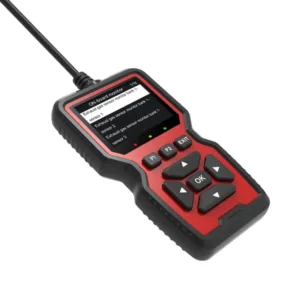
Required Tools: OBD2 diagnostic tool, digital multimeter (DMM), basic hand tools, vehicle-specific wiring diagrams/service information, obd reader for basic code reading and clearing.
How to Fix Fault Code P010D? (Solutions)
Simple Fixes:
- Repair Wiring: Locate and repair any short to power on the MAF sensor signal “B” wire. Use proper solder and heat-shrink tubing for a permanent fix. Ensure the harness is properly routed and secured away from hot or sharp objects.
- Clean and Secure Connections: Disconnect the MAF sensor and PCM connectors. Clean any corrosion from the terminals with electrical contact cleaner. Ensure all connectors are fully seated and locked.
In-Depth Diagnosis and Repair:
- Replace the MAF Sensor: If diagnostics confirm the sensor is faulty, replace it with a high-quality or OEM part. After replacement, clear the codes with your obd tool scanner and perform a test drive.
- Repair or Replace Wiring Harness: If the wiring damage is extensive, a section of the harness may need to be replaced. Always follow proper automotive wiring repair standards.
- Update or Replace the PCM: This is a costly last resort. A dealership may perform a software reflash if a TSB exists. Hardware replacement requires programming and should only be done after exhaustive testing.
Troubleshooting by Symptom
Symptom | Likely Solution |
|---|---|
Check Engine Light is on, but the vehicle runs normally. | Often an intermittent wiring fault or a sensor beginning to fail. Focus on wiring inspection and connector integrity. |
Rough idle, black smoke, and poor fuel economy. | The PCM is receiving a falsely high airflow reading, causing it to inject too much fuel. Diagnose for a short to power or a failed sensor. |
Code returns immediately after clearing with a scanner. | Indicates a persistent hard fault, such as a permanent short circuit or a completely failed sensor. |
Common Vehicles with Fault Code P010D
- Land Rover / Range Rover (e.g., LR4, Sport, Discovery): These vehicles are particularly sensitive to MAF sensor issues. Code P010D-17 (Circuit Voltage Above Threshold) is common . Diagnosis often requires a manufacturer-specific obd2 diagnostic scanner to monitor sensor adaptions and perform component tests. Wiring issues near the turbocharger or intercooler pipes are also frequent culprits due to heat and vibration.
- Volkswagen / Audi (e.g., 2.0T TSI/FSI engines, TDI models): Known for complex intake systems. A faulty MAF sensor is a common cause, but technicians must also check for vacuum leaks downstream of the sensor and inspect the wiring harness for chafing, especially near the engine cover or firewall.
- BMW / MINI (e.g., N54, N55, B48/B58 engines): The MAF sensor is critical for turbocharger boost control. A P010D code here can lead to severe drivability issues. It’s crucial to check the integrity of the intake system post-MAF (including charge pipes and intercooler connections) for leaks that could cause erratic readings.
- Mercedes-Benz (e.g., M276, OM642 engines): May log this code alongside other air-related faults. Special attention should be paid to the sensor’s electrical connector, which can suffer from moisture ingress or pin corrosion.
- General Motors (GM) Trucks & SUVs (e.g., Chevrolet Silverado/GMC Sierra with 5.3L/6.2L V8): While less common than P0103, P010D can occur. The focus should be on checking for a short to power in the sensor circuit, often caused by a pinched wire in the engine harness near the alternator or fuse box.
- Ford F-150 (with EcoBoost engines): The turbocharged engines are highly dependent on accurate MAF readings. A P010D code warrants a check for oil contamination in the intake tract (common with direct injection) and a thorough inspection of the sensor wiring for damage.
- Toyota/Lexus (Hybrid models like Prius, Camry Hybrid): The MAF sensor in these applications is very precise. A high circuit input is often traced back to a failing sensor or, less commonly, a problem in the hybrid vehicle’s inverter or related high-voltage system causing electrical interference.
- Porsche Cayenne/Macan: Requires precise diagnosis as the MAF sensor data is used for multiple engine management functions. A faulty sensor or a wiring issue can trigger this code and affect performance significantly.
- Jaguar (e.g., XF, XJ with V6/V8 engines): Similar to Land Rover, these vehicles share components and diagnostic procedures. The use of a high-level scan tool is recommended for live data analysis.
- Cars with Aftermarket Tunes or Performance Chips: Improperly installed or calibrated performance modifications can send incorrect signals to the PCM, mimicking a high MAF sensor input.
P010D Frequently Asked Questions
What exactly does “Circuit High” mean in code P010D?
It means the Powertrain Control Module (PCM) has detected that the voltage signal (or frequency) from the MAF sensor’s “B” circuit is consistently above the maximum expected threshold. This indicates an electrical fault where the signal is too high, often due to a short to a power source (12V) or a failing sensor.Is it safe to drive with a P010D code?
It is not recommended for extended driving. The engine control system is receiving incorrect, inflated airflow data, which will cause the PCM to over-fuel the engine. This can lead to poor performance, fouled spark plugs, damaged catalytic converters from unburned fuel, and significantly reduced fuel economy.What is the difference between P0103 and P010D?
P0103 indicates a “Mass Air Flow Circuit High Input” for the primary MAF sensor circuit (often referred to as Circuit A). P010D indicates the same fault but for the secondary “Circuit B” within a dual-circuit MAF sensor. The diagnostic approach is similar, but you must identify and test the correct “B” circuit wires.Can a dirty air filter cause P010D?
Typically, no. A dirty air filter restricts airflow, which would more likely cause a low airflow reading and potentially a code like P010B (Range/Performance) or P0102/P010C (Circuit Low). A “Circuit High” code is almost always an electrical issue.How much does it cost to fix a P010D code?
Costs vary:- DIY (Wiring Repair Only): 50 for materials.
- DIY (Sensor Replacement): 400 for the MAF sensor part.
- Professional Repair: 800+. This includes diagnostic labor (1-2 hours at 200/hr) plus the part cost. Complex wiring repairs or PCM issues will increase the cost.
Why did my P010D code appear after I worked on my battery or alternator?
If the battery was disconnected or the alternator was replaced, a voltage spike or incorrect reconnection could have momentarily sent a high voltage signal through the vehicle’s electrical system, potentially damaging the sensitive MAF sensor or its circuit.Can a bad alternator cause P010D?
Yes, absolutely. A failing alternator that is overcharging (producing more than ~14.5 volts) can send excessive voltage through the vehicle’s electrical system. This can cause various sensors, including the MAF, to send out-of-range high signals, triggering codes like P010D. Always test the charging system voltage if you get a “high circuit” code.Do I need to use an OEM (Original Equipment Manufacturer) MAF sensor to fix P010D?
It is highly recommended, especially for European luxury vehicles (BMW, Mercedes, Porsche, Land Rover) and hybrids. These sensors are precisely calibrated. Cheap aftermarket sensors may not match the output characteristics, leading to persistent codes or poor driveability.After replacing the MAF sensor, the P010D code came back immediately. What’s wrong?
This strongly indicates the problem was never the sensor itself. The fault lies in the wiring harness—likely a short to power on the signal wire—or, less commonly, a faulty PCM. The new sensor is simply reading the same faulty circuit condition.Will disconnecting the battery reset and fix P010D?
Disconnecting the battery will clear the code and turn off the Check Engine Light temporarily by resetting the PCM’s memory. However, if the underlying electrical fault (short circuit, bad sensor) is not repaired, the code will return once the PCM completes its drive cycle and re-detects the problem.Does the MAF sensor need to be programmed or calibrated after replacement?
For most vehicles, no programming is required. The PCM will learn the new sensor’s baseline. However, some European models (e.g., certain BMW, Volkswagen, Mercedes) may require a reset or adaptation procedure using a professional obd2 diagnostic scanner. Always consult service information for your specific model.Can a vacuum leak cause P010D?
Unlikely. Vacuum leaks typically cause unmetered air to enter the engine, which usually results in a lowMAF reading (as the sensor doesn’t measure that extra air) and codes like P0171 (System Too Lean). A “Circuit High” code is specifically an electrical signal fault.
Related OBD2 Fault Codes
- P010A – Mass Air Flow Sensor B Circuit
- P010B – Mass Air Flow Sensor B Circuit Range/Performance
- P010C – Mass Air Flow Sensor B Circuit Low Input
- P0103 – Mass Air Flow Circuit A High Input
- P0102 – Mass Air Flow Circuit A Low Input
Important Note!Code P010D is specifically an electrical circuit fault indicating a high signal, not a performance issue. The most effective repair involves methodical electrical diagnosis, starting with checking for a short to power in the wiring harness. Using a multimeter to test circuits is more critical than simply swapping parts. Ignoring this code can lead to costly damage to the catalytic converter and oxygen sensors due to prolonged rich running conditions.