
What does the fault code B0080 mean?
Fault code B0080 is a standardized OBD-II code applicable to all automobile manufacturers. Its precise definition is “Driver Seatbelt Load Limiter Deployment Control (Subfault)”. This code indicates a malfunction specifically within the circuit or component of the load limiter for the driver’s seatbelt, a critical part of the vehicle’s Supplemental Restraint System (SRS) that works in tandem with airbags and pretensioners.
Background: Modern seatbelt systems often include a load limiter (or force limiter). During a collision, after the pretensioner removes slack, the load limiter allows a controlled amount of seatbelt webbing to spool out under high force. This “give” helps manage the energy transferred to the occupant’s chest, reducing the risk of rib fractures and internal injuries. The load limiter can be a torsion bar, a folded metal strip, or a pyrotechnic device that releases at a specific force threshold. Code B0080 signals a fault in the circuit that controls the deployment or activation of this specific “C” stage or sub-component of the driver’s side load limiter.
Symptoms of Fault Code B0080:
- Illuminated Airbag/SRS Warning Light: A steady warning light on the instrument cluster is the primary and most common symptom.
- Audible Warning Chime: The vehicle may accompany the light with a repeated chime or a message like “Service Restraint System” or “Airbag Fault.”
- No Obvious Physical Symptoms: Unlike mechanical issues, there are typically no drivability problems or unusual noises. The seatbelt may still function normally for daily use, locking and retracting as expected.
- Scanner Confirmation: The code B0080 will be stored in the SRS control module’s memory and can be retrieved using a professional-grade OBD2 scanner capable of accessing SRS codes. A basic car code reader for engine faults will not access this code.
Main Causes of Fault Code B0080:
- Faulty Driver Seatbelt Load Limiter Assembly: The internal pyrotechnic igniter or mechanical component within the seatbelt retractor that controls the load limiting function has failed. An open circuit in the igniter is a common failure.
- Damaged Wiring or Connectors: The wiring harness under the driver’s seat leading to the seatbelt retractor assembly can be cut, pinched by seat track movement, or corroded from moisture or spilled liquids.
- Open or Short Circuit: An electrical break (open) or an unintended connection to power or ground (short) in the load limiter’s control circuit, preventing proper signal transmission.
- Corroded or Loose Connectors: The electrical connectors under the driver’s seat, typically yellow for SRS components, can become loose, dirty, or water-damaged, creating high resistance or an intermittent connection.
- Faulty SRS/Airbag Control Module: In rare cases, the module that sends the deployment signal to the load limiter is defective and generating an erroneous fault.
- Previous Deployment: The load limiter may have been activated in a prior collision (even a minor one) and requires replacement, as these components are single-use.
How to Diagnose Fault Code B0080?
WARNING: The SRS system contains explosive devices. Incorrect handling can cause accidental deployment, resulting in serious injury or death. Diagnosis and repair should be performed by qualified professionals only.
- Retrieve Codes with an Advanced Scanner: Use a professional OBD2 diagnostic scanner or a dedicated vehicle diagnostics tool with full SRS capabilities. Confirm B0080 and note any other related codes (e.g., B007E, B0081).
- Visual Inspection (Post-Safety Disable): After following proper safety procedures (disconnecting battery and waiting), inspect the wiring harness and yellow connectors under the driver’s seat leading to the seatbelt retractor. Look for obvious damage, chafing, or corrosion.
- Check Electrical Connectors: Carefully disconnect the connector at the seatbelt retractor and inspect the terminals for bent pins, green/white corrosion, or moisture.
- Measure Component Resistance: Using a digital multimeter, measure the resistance across the terminals of the load limiter component within the retractor. CAUTION: Refer to the vehicle’s service manual for exact specifications and procedures. An infinite (OL) reading typically indicates an open circuit and a failed component. A reading of 0 ohms indicates a short.
- Perform Circuit Testing: With a wiring diagram, check for continuity in the wires from the seatbelt retractor connector back to the SRS control module. Also test for shorts to ground or battery voltage.
Possible Causes and Diagnostic Methods
Possible Cause | How to Check? |
|---|---|
Open Circuit in Load Limiter | Measure resistance directly at the load limiter’s electrical connector. OL (Over Limit) reading suggests internal failure. |
Open or Short in Wiring Harness | Check continuity and resistance to ground/power for each wire in the circuit under the seat. |
High-Resistance Connection | Check for excessive voltage drop across connectors or inspect for corrosion on terminals. |
Faulty Clock Spring | If the wiring passes through the clock spring (steering column), diagnose it for opens, especially if horn or steering wheel buttons also malfunction. |
Failed SRS Control Module | A last-resort diagnosis after all other components and wiring are verified as good. Requires advanced scan tool data analysis and module coding knowledge. |
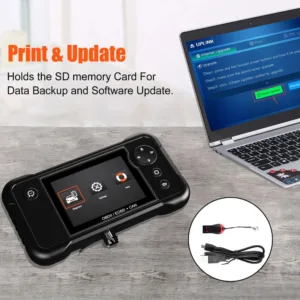
Tools Needed: A professional vehicle diagnostics tool with SRS capabilities, digital multimeter, basic hand tools for trim/seat removal, and vehicle-specific service information/wiring diagrams.
How to Fix Fault Code B0080? (Problem Solutions)
For Technicians Only:
- Repair Wiring: If damage is isolated to a few wires under the seat, repair them using solder and heat-shrink tubing, following SRS wiring repair guidelines. Never use twist-on connectors.
- Clean/Replace Connectors: Use electrical contact cleaner on corroded terminals. Replace the connector if terminals are damaged or pushed out.
Standard Professional Repairs:
- Replace Driver Seatbelt Retractor Assembly: This is the most common fix. The load limiter is integrated into the seatbelt retractor and is replaced as a complete assembly. Part Cost: 600+.
- Replace SRS Wiring Harness Section: For extensive wiring damage, a harness segment may need replacement, which can be labor-intensive.
- Replace/Reprogram SRS Control Module: Required only if diagnostics conclusively prove the module is faulty. The new module must be programmed/coded to the vehicle.
Repair Based on Symptoms
Symptom | Likely Cause & Solution |
|---|---|
Persistent SRS light with B0080 | High probability of a hard fault like an open circuit in the load limiter. Requires retractor assembly replacement. |
Intermittent SRS warning light | Often caused by a loose, corroded, or intermittently shorting connector under the driver’s seat. Inspect and clean connectors. |
Code appears after seat adjustment or interior work | Wiring was likely pinched or disconnected. Perform a thorough visual inspection of the harness under the seat. |
Code B0080 with other SRS codes | May indicate a problem with a shared power, ground, or communication circuit. Diagnose the common point. |
Fault Code B0080 in Common Vehicles
B0080 is a generic SAE code and can appear in any modern vehicle equipped with a driver’s seatbelt load limiter. It is commonly encountered in models from:
- General Motors (GM, Chevrolet, Cadillac, Buick, GMC)
- Ford, Lincoln
- Stellantis (Jeep, Dodge, Chrysler, Ram)
- Toyota, Lexus, Honda, Acura, Nissan, Infiniti, Subaru, Mazda
- BMW, Mercedes-Benz, Audi, Volkswagen, Volvo
- Hyundai, Kia, Genesis
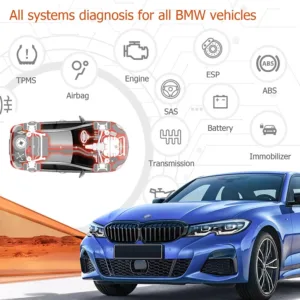
Note: The exact configuration and naming (“C” subfault) can vary. Always verify the code’s specific definition for your vehicle using a professional car scanner and factory service information.
B0080 FAQ
What exactly is a seatbelt load limiter and what does it do?
A load limiter is a safety device inside your seatbelt retractor. In a crash, after the pretensioner pulls you tight, the load limiter allows the belt to spool out a little in a controlled manner. This reduces the peak force on your chest, helping to prevent rib fractures and internal injuries. Think of it as a “controlled give” in the system.
Is it illegal or will my car fail inspection with the B0080 code and SRS light on?
In most regions, yes. A lit SRS/Airbag warning light is an automatic failure for safety inspections (like state emissions/safety inspections in the US or MOT tests in the UK). The vehicle is considered to have a disabled or faulty safety system. You must get it repaired to pass.
Can I temporarily clear the code to pass inspection?
This is highly discouraged and often doesn’t work. Most SRS systems run a self-check every time you start the car. If the fault is still present (e.g., a broken wire), the light and code will return within seconds or minutes of driving. Inspection stations are also aware of this tactic.
My seatbelt works fine. Why is this a big deal? Can’t I just ignore it?
No, you should not ignore it. While the seatbelt will still lock in a sudden stop, the load-limiting function is compromised. In a moderate to severe crash, you could experience significantly higher chest forces, leading to more serious injuries. The SRS light means a confirmed fault exists.
How is B0080 different from B007E or other seatbelt codes?
- B007E: Fault in the driver’s seatbelt pretensionercircuit (the device that pulls you tight at the start of a crash).
- B0080: Fault in the driver’s seatbelt load limitercircuit (the device that lets out belt webbing afterthe pretensioner fires).They are separate components that work sequentially. Your vehicle may have one, both, or multiple stages of each.
Can I fix this myself if I’m handy with cars?
Extreme caution is advised. While you can diagnose wiring issues with a multimeter, working on SRS components carries the risk of accidental deployment, which is like a small explosion. Replacing the seatbelt assembly often requires special tools (like Torx security bits) and proper handling procedures. One mistake can cause injury. Most professionals recommend leaving SRS work to trained technicians.
Does this mean my airbags won’t deploy?
Not necessarily. The load limiter circuit is separate from the airbag inflator circuits. However, a fault in one part of the SRS can sometimes affect the system’s overall readiness. The SRS module may still deploy airbags in a crash, but the seatbelt system may not provide optimal protection.
Could this be caused by something simple like a blown fuse?
It’s possible but less common for this specific code. SRS circuits often have multiple fuses. A blown fuse could cause a loss of power to the SRS module or the seatbelt circuit, triggering this or other codes. Checking fuses is always a recommended first diagnostic step for any electrical fault.
My car was in a minor fender bender years ago. Could this be related?
Absolutely. Even a minor collision can be enough to deploy the pretensioner and/or load limiter. If the vehicle was repaired but the seatbelt assembly was not replaced (a common oversight in cheap repairs), the deployed component will show as an open circuit, triggering this code.
Is there a recall or Technical Service Bulletin (TSB) for B0080 on my car?
It’s possible. Some manufacturers have had issues with wiring harnesses under seats or specific seatbelt retractor batches. You should check your Vehicle Identification Number (VIN) on the National Highway Traffic Safety Administration (NHTSA) website (USA) or your regional equivalent to see if there’s an open recall or investigation related to your restraint system.
Will disconnecting the battery reset the code for good?
No. Disconnecting the battery may clear the code from temporary memory, but it will not fix the underlying fault. The SRS module performs a system check every ignition cycle. If the fault is still present (e.g., a broken wire in the load limiter), the code and warning light will return immediately.
How urgent is this repair? Can I drive for a few weeks?
It is a high-priority repair. You are driving with a known fault in a critical safety system. While the car will operate, you are at increased risk of injury in a collision. It is recommended to address it as soon as possible and avoid long trips or carrying passengers until fixed.
Cost to Diagnose B0080 Code
Professional diagnosis typically takes 0.5 to 1.0 hour of labor. Shop rates in North America and Europe generally range from 180 per hour. This diagnostic fee is usually applied to the total repair cost if you proceed with the repair at the same shop.
Cost to Fix B0080
Costs are vehicle-dependent, with luxury brands typically costing more.
- Parts (Retractor/Load Limiter Assembly): 600+
- Labor: 1.0 – 2.0 hours (360)
- Total Estimated Cost: 1,000+
Related OBD2 Fault Codes:
- B007E: Driver Seatbelt Pretensioner C Deployment Control
- B0081: Driver Seatbelt Load Limiter Deployment Control (Different Subfault)
- B0010: Driver Frontal Airbag Deployment Control
- B0090: Driver Side Impact Sensor Circuit
- U0155: Lost Communication With Instrument Panel Cluster (IPC) Control Module (can sometimes cause SRS light)
IMPORTANT SAFETY PRECAUTIONS!
SRS components are pyrotechnic devices. Improper handling can cause violent, unexpected deployment.
- Disable the System: Before any work, turn the ignition OFF and remove the key. Disconnect the negative battery cable, then the positive. Tape the cable ends to prevent accidental contact. Wait the manufacturer-specified time (typically 3-10 minutes, sometimes longer) for the SRS backup power supply to discharge fully.
- Never Test with Power: Do not use a test light or apply power/ground directly to any airbag, pretensioner, or load limiter connector. This will cause immediate deployment.
- Handle with Care: When replacing a seatbelt retractor with a live load limiter/pretensioner, keep it facing away from your body and avoid sharp impacts, heat, or punctures.
- Use New, OEM Parts: For safety systems, always use new, OEM-specification replacement parts. Do not install used components from salvage yards, as their history and condition are unknown.
- Seek Professional Service: If you are not a trained automotive technician with specific SRS experience, do not attempt this repair. A vehicle code reader can identify the fault, but the repair requires specialized knowledge, tools (like a car code scanner with SRS bidirectional controls), and procedures to be performed safely and correctly. Your safety is worth the professional service cost.