
What is the P00AD Trouble Code?
The P00AD trouble code, applicable to all automobile manufacturers, means: “Intake Air Temperature Sensor 1 Circuit High (Bank 2)“.
Background Knowledge:The function of the Intake Air Temperature (IAT) sensor is to send the engine’s intake air temperature as a voltage signal to the Engine Control Unit (ECU), providing a reference for fuel injection correction. This code sets if the ECU detects the signal voltage from the IAT Sensor 1 on Bank 2 is above the self-test maximum value (typically corresponding to a signal for approximately -50°C / -58°F).
P00AD OBD-II Trouble Code Symptoms:
- Reduced fuel efficiency
- Engine performance issues, such as rough idle or stalling
- Check Engine Light (CEL) illuminated
- Increased emissions potentially due to improper air-fuel ratio
- Variation in engine temperature readings
P00AD OBD-II Trouble Code Common Causes:
- Faulty Intake Air Temperature (IAT) sensor
- Damaged wiring or connectors in the IAT circuit
- Short circuit or open circuit in the sensor wiring
- Engine Control Module (ECM) problem
- Poor contact or corrosion at connection points
Diagnosis for Code P00AD:
Diagnosing P00AD requires a systematic approach to rule out wiring, sensor, and ECU faults.
- Visual Inspection: Check the wiring harness leading to the IAT sensor for damage, corrosion, or disconnection.
- Check Sensor Connection: Ensure connectors are firmly attached and free of dirt or corrosion.
- Check for Damaged Wiring: Look for broken, worn, or burnt wires that could cause a short circuit.
- Test Sensor Resistance: Use a multimeter to measure the sensor’s resistance, comparing it to the manufacturer’s specifications (if available).
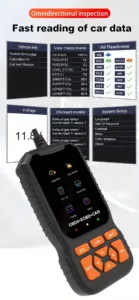
- Live Data Reading: Use an OBD2 scanner to monitor the IAT sensor’s voltage reading during operation to assess if it remains within the expected range.
- Clear Fault Code and Retest: Clear the fault code after repair and check if it returns during normal driving.
Possible Repairs for Code P00AD:
Once diagnosis points to a specific cause, the repair can proceed accordingly.
- Replace the Faulty IAT Sensor: If the sensor is confirmed defective, replacement is a straightforward process considered a basic repair—often suitable for DIY or professional technicians.
- Repair or Replace Wiring and Connectors: Fix broken wires, corrosion, or loose connections. This is an intermediate-level repair requiring careful handling of electrical components.
- Address Shorts or Open Circuits: Identify and repair wiring faults, which may involve splicing or replacing a section of the harness.
- Check and Reset the ECU: In rare cases, a software update or ECU reset may be needed if a fault is suspected.
- Address Environmental Issues or Sensor Exposure: Ensuring the sensor is correctly installed and protected from extreme conditions can prevent future failure.
Common Errors Leading to Misdiagnosis or Improper Repair of P00AD:
- Misinterpreting Sensor Signals: Relying solely on live data without cross-checking sensor resistance or wiring can lead to false conclusions.
- Ignoring Wiring Issues: Focusing only on the sensor may overlook connector faults or damaged wiring leading to high voltage readings.
- Replacing the Sensor Prematurely: Changing the sensor without confirming the root cause may not resolve the issue.
- Overlooking Environmental Factors: External conditions like extreme heat or chemical contamination can affect the sensor’s accuracy and are sometimes missed in diagnosis.
- Improper DTC Clearing After Repair: Not clearing the fault code or failing to confirm its removal can lead to misdiagnosis or unnecessary further repairs.
Vehicles Commonly Affected by Code P00AD:
This fault can appear in various brands and models, especially those with engine management systems that integrate a digital intake air temperature sensor.
- Volkswagen / Audi: 1.4 TSI, 2.0 TFSI, EA111, EA888 engines
- BMW: N20, N55 engines
- Ford: EcoBoost engines, 1.0L, 1.5L, 2.0L versions
- Peugeot / Citroën: EP6 engines, PureTech series
- Mercedes-Benz: M270, M274 engines
- Lincoln: Some models(Note: These associations are based on common diagnostic data and may vary by specific model year and configuration.)

Frequently Asked Questions about Code P00AD:
How severe is the risk of fault code P00AD?
The presence of P00AD indicates a moderate level of risk to vehicle operation. As the IAT sensor plays a key role in air-fuel mixture adjustment, an erroneous reading can lead to inefficient combustion, increased emissions, and poor fuel economy.
Will this code disappear on its own?
Unlikely.A P00AD fault typically persists until the underlying electrical or sensor fault is fixed. Intermittent signals might clear temporarily, but they tend to return if the root cause exists.
Can I still drive the car?
It is possible,but not recommended. While the vehicle may be operable, continuing to drive with this fault can lead to reduced performance, higher emissions, and even long-term damage. It’s best to diagnose and fix it promptly.
Why does the code return after clearing?
Because the root problem—such as a damaged sensor, faulty wiring, or a circuit short—remains unresolved, the ECU redetects the high voltage condition, causing the code to reappear. Ensuring a proper fix for the root cause will prevent recurrence.
How much does it cost to diagnose a P00AD code?
Diagnosing a P00AD code typically requires about 1.0 hour of labor. Rates vary by location, vehicle, and repair shop. Many shops charge between 150 per hour; dealerships and metropolitan areas may be higher, while independent shops may be lower.
P00AD Related Trouble Codes:
- P00AA – Intake Air Temperature Sensor 1 Circuit Bank 2
- P00AB – Intake Air Temperature Sensor 1 Circuit Range/Performance Bank 2
- P00AC – Intake Air Temperature Sensor 1 Circuit Low Bank 2
- P00AE – Intake Air Temperature Sensor 1 Circuit Intermittent/Erratic Bank 2
P00AD is just one of many OBD-II trouble codes that may indicate a problem with your car’s engine. If you receive this code, it’s important to have it diagnosed and repaired by a qualified technician to ensure your vehicle is in top condition. Understanding what the code means and its causes will help you better comprehend the issue and explain it to your mechanic with more confidence.