
What is the P00AB Trouble Code?
The P00AB trouble code, applicable to all automobile manufacturers, means: “Intake Air Temperature Sensor 1 Circuit Range/Performance (Bank 2)“.
Background Knowledge:The function of the Intake Air Temperature (IAT) sensor is to send the engine’s intake air temperature as a voltage signal to the Engine Control Unit (ECU), providing a reference for fuel injection correction. After the engine has been off for a certain period (typically 6 hours), the ECU checks the rationality of the IAT sensor by comparing its reading to that of the Engine Coolant Temperature (ECT) sensor. If the difference between the IAT sensor reading and the ECT sensor reading upon the next engine start exceeds a calibrated threshold (usually 17°C), this trouble code will set.
P00AB OBD-II Trouble Code Symptoms:
- Check Engine Light illuminated on the instrument panel
- Poor engine performance or hesitation during acceleration
- Reduced fuel efficiency
- Rough idle or stalling
- Engine overheating in some cases
P00AB OBD-II Trouble Code Common Causes:
- Faulty Intake Air Temperature (IAT) sensor
- Damaged wiring or connectors in the IAT sensor circuit
- Engine Control Module (ECM) problem
- Intake air leak affecting temperature readings
Diagnosis for Code P00AB:
- Visual Inspection: Check the wiring harness and connectors for damage, corrosion, or disconnection. Inspect the sensor for oil, dirt, or physical damage.
- Test Sensor Wiring Continuity: Use a multimeter to confirm there are no open circuits in the wiring between the IAT sensor and the ECU.
- Check Sensor Resistance: Measure the IAT sensor’s resistance with a multimeter at different temperatures to ensure it meets the manufacturer’s specifications.
- Test Live Data: Use an OBD2 scanner to view the IAT sensor’s readings in real-time; compare them to ambient air temperature.
- Check Related Sensors and Circuits: Since the IAT sensor is part of the intake system, inspect other related sensors for associated or faults.
- Clear Fault Code and Retest: After repairs, clear the fault code and take a test drive to confirm the issue is resolved.
Possible Repairs for Code P00AB:
Fixing P00AB typically involves repairing or replacing the faulty component causing the sensor reading issue. Here are potential repairs from basic to advanced:
- Clean the Sensor: Remove dirt, oil, or debris from the IAT sensor element (basic repair – suitable for DIY).
- Secure or Replace Wiring and Connectors: Repair or replace damaged wiring or connectors (requires technical skill).
- Replace the IAT Sensor: If the sensor is faulty or damaged, installing a new OEM sensor ensures accurate readings (recommended professional repair).
- Repair or Replace Related Wiring: Fix harness issues that may be causing wiring problems (professional repair).
- Reprogram or Update the ECU: In rare cases, a software update or ECU reflash may be required (professional diagnosis).
Common Errors Leading to Misdiagnosis or Improper Repair of P00AB:
- Ignoring wiring problems: Replacing the sensor without checking the wiring can lead to a persistent fault.
- Assuming sensor failure without testing: Sometimes, the real cause is a wiring or connector issue, not the sensor itself.
- Failing to clear the fault code after repair: Recurring faults may be overlooked or misdiagnosed if the code is not reset.
- Overlooking environmental damage: Factors like rodent damage or corrosion often cause circuit issues.
Vehicles Commonly Affected by Code P00AB:
While this code can appear across different brands and models, it is more commonly associated with P00AB in certain vehicle groups. Specific occurrences depend mainly on vehicle age, model, and engine type. Typically, vehicles equipped with electronic throttle control and sensor systems are more prone to this.
- Volkswagen Group models: Including Volkswagen Golf, Polo, Passat, Skoda Octavia, SEAT Leon
- Ford: Focus, Fiesta, Mondeo
- Mercedes-Benz: A-Class, C-Class, E-Class
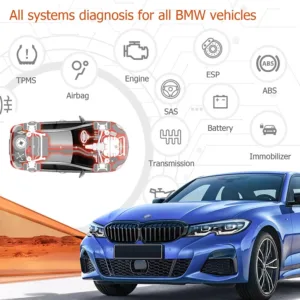
- BMW: 1 Series, 3 Series, X Series
Frequently Asked Questions about Code P00AB:
How severe is the risk of fault code P00AB?
P00AB is generally classified as a moderate issue. If left unresolved, it can lead to driveability problems like engine lag, sluggish acceleration, and poor fuel economy. In extreme cases, inaccurate air temperature readings can cause the engine to run too rich or too lean, potentially damaging the catalytic converter or exhaust system.
Will this code disappear on its own?
Yes, but only temporarily. If the cause of the fault is not resolved, the code may reappear after resetting or when the vehicle’s system detects other abnormalities.
Can I still drive the car?
Limited – it’s usually safe to drive short distances to a repair shop. However, prolonged driving may lead to decreased engine performance, increased emissions, and potential long-term damage.
Why does the code return after clearing?
The root problem—such as a faulty sensor or bad wiring—remains unresolved. The code reappears when the vehicle’s ECU redetects the issue.
How much does it cost to diagnose a P00AB code?
Diagnosing a P00AB code typically requires about 1.0 hour of labor. Rates vary by location, vehicle, and repair shop. Many shops charge between 150 per hour; dealerships and metropolitan areas may be higher, while independent shops may be lower.
P00AB Related Trouble Codes:
- P00AA – Intake Air Temperature Sensor 1 Circuit Bank 2
- P00AC – Intake Air Temperature Sensor 1 Circuit Low Bank 2
- P00AD – Intake Air Temperature Sensor 1 Circuit High Bank 2
- P00AE – Intake Air Temperature Sensor 1 Circuit Intermittent/Erratic Bank 2
P00AB is just one of many OBD-II trouble codes that may indicate a problem with your car’s engine. If you receive this code, it’s important to have it diagnosed and repaired by a qualified technician to ensure your vehicle is in top condition. Understanding what the code means and its causes will help you better comprehend the issue and explain it to your mechanic with more confidence.