
What is the P00A9 Trouble Code?
The P00A9 trouble code, applicable to all automobile manufacturers, means: Intake Air Temperature (IAT) Sensor 2 Circuit Intermittent/Erratic (Bank 2).
Background Knowledge:The function of the Intake Air Temperature (IAT) sensor is to send the engine’s intake air temperature as a voltage signal to the Engine Control Unit (ECU), providing a reference for fuel injection correction. This code sets if the ECU detects a sudden, erratic change in the signal voltage from the IAT Sensor 2.
P00A9 OBD-II Trouble Code Symptoms
- Check Engine Light illuminated
- Reduced fuel efficiency
- Rough idle
- Engine stalling
- Problems starting the vehicle
P00A9 OBD-II Trouble Code Common Causes
- Faulty Intake Air Temperature sensor
- Intermittent connection or wiring issues
- Faulty Engine Control Module (ECM)
- Problems in the IAT sensor circuit
- Environmental factors affecting sensor readings
Step-by-Step Diagnosis for Code P00A9
To correctly diagnose P00A9, you need a structured and safe approach. The process involves visual inspection and live data analysis:
- Visual Inspection: Check the wiring harness leading to the IAT 2 sensor for damage, corrosion, or disconnection.
- Inspect Connector Contacts: Ensure they are clean, tight, and free of corrosion.
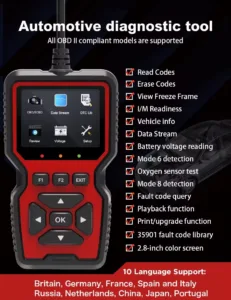
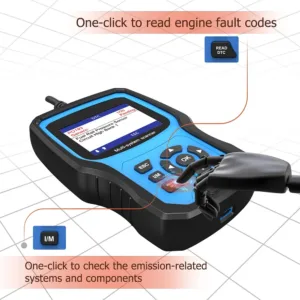
- Verify Sensor Operation: Using an OBD2 scanner, monitor the sensor’s temperature readings in real-time and compare them to ambient temperature.
- Test Sensor Resistance: If possible, use a multimeter to measure the sensor’s resistance, referring to manufacturer specifications.
- Check Related Wiring: Look for signs of damage, wear, or grounding issues.
- Scan for Other Codes: Identify if other related sensors or circuits are affected.
- Perform a Continuity Test: Verify wiring continuity from the sensor to the ECU.
- Clear DTC and Test Drive: After repairs, clear the fault code and take a test drive to see if the code returns.
Possible Repairs for Code P00A9
Based on the root cause identified during diagnosis, potential fixes include:
- Clean or replace the wiring harness and connectors: A basic repair that often solves intermittent problems. Suitable for DIY or by a qualified technician.
- Replace IAT Sensor 2: If the sensor is faulty, a new OEM sensor is recommended. This is usually a straightforward fix.
- Repair or replace damaged wiring or connectors: Requires some electrical knowledge; may need a professional if damage is extensive.
- Reset the ECU and test drive: Clear the fault code after repair to ensure it does not return.
- Address potential electrical interference or grounding issues: May require professional inspection for persistent or complex faults.
Common Errors Leading to Misdiagnosis or Improper Repair of P00A9:
- Ignoring wiring and connector health: Assuming the sensor itself is always at fault without checking circuit integrity.
- Replacing the sensor without proper testing: Blindly changing parts can lead to unnecessary costs.
- Overlooking related sensor inputs or an ECU fault: The problem may originate from other engine management components.
- Not performing a thorough test drive after repair: Failing to confirm the issue is resolved.
- Using incompatible or counterfeit parts: Leading to a persistent fault code and reliability problems.
Vehicles Commonly Affected by Code P00A9
- Volkswagen Group (VW, Audi, Skoda, SEAT): Known in models with advanced intake management systems.
- BMW: Some models equipped with multiple intake air temperature sensors.
- Ford: Certain models with turbocharged engines.
- Peugeot / Citroën: Common in vehicles with complex emission control systems.
- Vehicles from other brands may also experience similar issues, especially if they use multiple IAT sensors.
Frequently Asked Questions about Code P00A9
How severe is the risk of fault code P00A9?
This code is generally considered moderate in severity. While it doesn’t pose an immediate threat to the engine or safety, it can lead to decreased engine performance, irregular fuel consumption, and increased emissions due to inaccurate air temperature readings.
Can this code disappear on its own?
Typically, no. Once the circuit fault occurs, it will persist until the underlying issue is resolved. However, if the cause is temporary (e.g., a loose connector), re-seating the connector might clear the code.
Can I still drive the car?
In many cases, yes. The vehicle may still operate, but persistent issues can affect engine efficiency and emissions. It is recommended to address the fault in a timely manner to prevent further complications.
Why does the code return after being cleared?
The code often reappears during testing or driving because the original cause—such as damaged wiring, a faulty sensor, or an intermittent fault—still exists or was not properly repaired.
How much does it cost to diagnose a P00A9 code?
Diagnosing a P00A9 code typically requires about 1.0 hour of labor. Rates vary by location, vehicle, and repair shop. Many shops charge between 150 per hour; dealerships and metropolitan areas may be higher, while independent shops may be lower.
P00A9 Related Trouble Codes:
- P00A5: Intake Air Temperature Sensor 2 Circuit Bank 2
- P00A6: Intake Air Temperature Sensor 2 Circuit Range/Performance Bank 2
- P00A7: Intake Air Temperature Sensor 2 Circuit Low Bank 2
- P00A8: Intake Air Temperature Sensor 2 Circuit High Bank 2
P00A9 is just one of many OBD-II trouble codes that may indicate a problem with your car’s engine. If you receive this code, it’s important to have it diagnosed and repaired by a qualified technician to ensure your vehicle is in top condition. Understanding what the code means and its causes will help you better comprehend the issue and explain it to your mechanic with more confidence.