
What does the P009D trouble code mean?
The P009D trouble code, applicable to all car manufacturers, means “Fuel Pressure Relief Control Circuit High“.
Background Information: The fuel system pressure relief valve’s function is to release fuel line pressure when the pressure becomes too high due to a clogged fuel filter, blocked lines, etc. This trouble code will appear if the fuel pressure relief control circuit voltage is higher than the calibrated maximum value.
Common Symptoms of Trouble Code P009D
Vehicles registering a P009D code may exhibit several symptoms. Some are subtle, while others can significantly impact performance. These symptoms are often early warning signs that the fuel pressure system is not operating as expected.
- Check Engine Light (CEL) or Malfunction Indicator Lamp (MIL)
- Engine may run rough or hesitate during acceleration
- Significant decrease in fuel efficiency
- Hard starting or extended cranking time
- Engine may stall, especially under load
- Occasional fuel smell around the engine compartment
Possible Causes of Trouble Code P009D
Several potential problems can cause the ECM to detect high voltage in the fuel pressure relief control circuit. The following are the most common causes, listed in order of probability:
- Faulty fuel pressure relief valve (electrical or mechanical failure)
- Voltage short in the control circuit wiring or connector
- Corroded or damaged wiring harness related to the fuel pressure system
- Faulty ECM or PCM (rare, but possible if other conditions are normal)
- Poor ground connection affecting the control circuit
How to Diagnose P009D Code
To properly diagnose the P009D code, follow these steps:
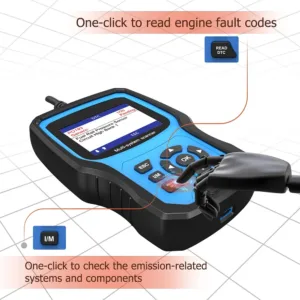
- Connect a professional-grade OBD2 scanner to confirm the presence of P009D. Record freeze frame data for later analysis.
- Visually inspect the fuel pressure relief valve, related wiring, and connectors for damage, corrosion, or loose connections.
- Use a digital multimeter to measure circuit voltage. Look for voltage shorts or abnormal readings compared to factory specifications.
- Test the resistance and operation of the fuel pressure relief valve (see factory specifications). Replace if out of range.
- Check the ECM/PCM connector for bent pins, water intrusion, or corrosion.
- If all components test normal, perform a continuity test on the wiring harness between the ECM and the relief valve.
- As a last resort, consult OEM Technical Service Bulletins (TSBs) for known issues, or perform ECM/PCM diagnostics.
Common Repairs for P009D Code
- To address the P009D code, common repairs may include:
- Replacing a faulty fuel pressure relief valve
- Repairing or replacing damaged wiring or connectors in the circuit
- Cleaning corroded electrical contacts
- Ensuring or restoring proper ground connections
- In rare cases, replacing or reprogramming the ECM/PCM if it is confirmed to be defective
Common Vehicles Affected by Code P009D
P009D is most commonly found in vehicles equipped with advanced electronic fuel systems. The following makes and model years are more likely to experience this DTC:
- Ford F-Series (especially 2015–2022 diesel models)
- Chevrolet Silverado and GMC Sierra (2016–2023)
- Ram 2500/3500 (Cummins diesel engines 2017–2023)
- Volkswagen Passat and Golf (TDI engines, 2015–2020)
- BMW 3 Series and X5 (diesel and turbocharged gasoline, 2014+)
Note: This is not an exhaustive list, and many OEM vehicles using electronically controlled fuel pressure release systems may also experience P009D.
P009D Frequently Asked Questions
Will the P009D code always cause drivability issues?
Not always, but it can lead to unpredictable engine behavior or poor performance over time. Early intervention is best.
If my vehicle seems fine, can I clear the code and keep driving?
Clearing the code without addressing the cause is risky. The problem may recur or worsen, eventually leading to more serious issues.
Is it safe to drive with a P009D code?
Driving with a P009D code is generally not recommended. While the engine may still run, unresolved issues in the fuel pressure release circuit can lead to unstable performance, engine stalling, or even internal damage from excessive fuel pressure. It’s best to diagnose and repair the problem as soon as possible to avoid further complications or costly repairs.
How serious is the P009D code?
The P009D code is classified as urgent. It indicates that immediate attention is required to prevent serious damage to the vehicle or potential harm to the driver and passengers. Ignoring these codes can lead to significant engine performance issues and safety risks.
How much does it cost to diagnose the code?
Diagnosing a P009D code typically requires 1.0 hour of labor. Rates vary depending on location, vehicle, and repair shop. Many shops charge between $80 and $150 per hour; dealerships and metropolitan areas may have higher rates, while independent shops may be lower.
How much does it cost to fix the P009D code?
The cost to fix a P009D code will vary depending on the specific cause of the problem and the labor rates in your area. Generally, replacing a faulty fuel pressure relief valve or repairing wiring issues costs between $150 and $400, while replacing the fuel pump can cost between $300 and $800, depending on your vehicle’s make and model.
Can I fix the P009D code myself?
While some DIY enthusiasts with automotive experience might attempt to fix the P009D code by checking wiring or replacing the fuel pressure regulator, it is generally recommended to consult a professional technician. Proper diagnosis and repair are crucial to avoid further complications and ensure vehicle safety.