
In what order should a vehicle be rinsed?
The Correct Order for Rinsing a Vehicle
When rinsing your vehicle, following the correct sequence not only improves cleaning efficiency but also effectively protects the car paint. The core principle is “top to bottom, outside to inside”—addressing less dusty areas first before moving to muddier parts to avoid cross-contamination .
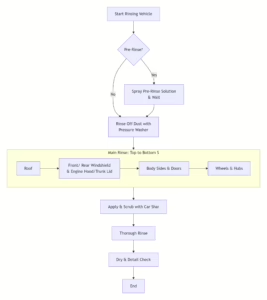
The flowchart below outlines the recommended rinsing sequence and key steps for a clear overview.
Detailed Steps Explained
The process is interconnected. Here are the key details for each step shown in the flowchart:
- Step 1: Pre-Rinse (Key Step)Before formal rinsing, a pre-rinse is highly recommended. Use a high-pressure car wash gun to evenly wet the entire car. The purpose is to soften and rinse away surface dust and dirt. Alternatively, spray a dedicated pre-rinse solution and let it sit for 1-2 minutes. It effectively decomposes and loosens stubborn grime (like bird droppings, tree sap), making it easier to wash away, providing lubrication for subsequent scrubbing and significantly reducing the risk of scratching the paint .
- Step 2: Sectional Rinse from Top to BottomAfter the pre-rinse, start the main rinse with the pressure washer, strictly following the top-to-bottom order .
- Roof and Glass: Start from the highest point—the roof. Pay special attention to seams around the sunroof to ensure water doesn’t seep inside .
- Windshields, Engine Hood, and Trunk Lid: Next, rinse the front and rear windshields, engine hood, and trunk lid. When rinsing the engine hood, avoid the radiator vent and air intake grille to prevent water from entering the engine bay .
- Body Sides and Doors: Rinse the doors, waistline, etc. Areas around door handles and waistline corners tend to accumulate grime and may need extra attention .
- Wheels and Hubs: Leave the dirtiest part for last. Due to brake dust and sticky grime, stronger water pressure and a dedicated wheel brush might be needed for focused cleaning .
- Step 3: Applying Car Shampoo and ScrubbingAfter the entire vehicle is rinsed and wet, dilute the dedicated car shampoo as directed and use a soft sponge or wash mitt to evenly wipe the body from top to bottom . It’s best to prepare two different sponges: one for the upper body (relatively clean) and another for the lower body and wheels (more silt), to avoid cross-contamination and paint scratches .
- Step 4: Thorough Rinsing and DryingAfter scrubbing, use the pressure washer to thoroughly rinse off all shampoo . The rinsing order should match the main rinse. Immediately after rinsing, use a clean, dry microfiber towel to dry the body . If the washer has a “spray-suction sync” function, it works even better by minimizing water residue .
Important Considerations
- Water Pressure and Angle: Keep the nozzle 10-15 cm (about 4-6 inches) from the car body, and water pressure should not be too high . Keep the water stream at a small angle or perpendicular to the paint surface to avoid damage from direct impact .
- Choosing the Right Car Shampoo: Always use a neutral, dedicated car shampoo . Do not use laundry detergent, dish soap, or other strong alkaline cleaners, as they can corrode the paint and accelerate aging .
- Avoid Unsuitable Conditions:
- Avoid Washing Under Hot Sun: Rapid water evaporation can leave unsightly water spots on the paint, and the lens effect of water droplets might locally scorch the paint .
- Avoid Rinsing a Hot Engine: Washing a hot engine with cold water can cause deformation or damage to engine components due to temperature difference .
- Mind Water in Seams: After washing, be sure to carefully dry the door seams, window edges, trunk seams, and other areas where water easily accumulates using a towel or a car vacuum cleaner with a blow-drying function to prevent rust.
Summary
Following the correct rinsing sequence, combined with appropriate tools and meticulous operation, will not only make your car shine but also better protect its paint. The key lies in pre-rinsing to soften dirt, working from top to bottom, using separate tools for different areas, and drying promptly .