
Car Wash Gun Guide
This guide aims to help you quickly grasp the essential knowledge about car wash guns. The table below summarizes the characteristics and suitable scenarios for five common types of car wash guns, making it easier for you to compare and choose.
Type | Working Principle / Characteristics | Applicable Scenarios |
|---|---|---|
Pressure Washing Gun | Connects to a high-pressure cleaner, providing a powerful, adjustable water stream. | Deep cleaning of the car body, tires, chassis, and other stubborn dirt. |
Foam Gun / Foam Lance | Mixes car shampoo with air to spray thick foam that envelops and breaks down stains. | Pre-wash phase to lubricate the surface and reduce the risk of scratches. |
Air-Powered Cleaning Gun (Tornador type) | Connects to an air compressor, using high-pressure airflow and cleaning fluid to create a vortex for cleaning gaps. | Interior detailing, air vents, door seams, and other intricate areas. |
Garden Hose Nozzle | Connects to a standard garden hose, offers multiple spray patterns with relatively low pressure. | Daily quick rinses, watering. |
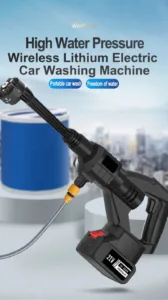
Electric Car Wash Gun | Battery or mains-powered, portable, does not require an external high-pressure water source. | Environments without a high-pressure water source (e.g., apartments, residential complexes). |
Key Selection Factors
When choosing a car wash gun, the following points should be considered comprehensively:
- Pressure and Flow Rate: High pressure (e.g., 1000–2000 PSI / 70–140 Bar) helps remove stubborn stains, but care must be taken regarding the paint’s tolerance. Flow rate (GPM / LPM) affects rinsing efficiency; a higher flow rate is better for quickly rinsing large areas.
- Material and Durability: Nozzles and gun bodies made of metal (e.g., zinc alloy, copper) are more durable, while plastic materials are lighter but may have a shorter lifespan.
- Nozzle Type and Spray Pattern: Adjustable nozzles can switch between different patterns, such as jet (for focused cleaning), fan (for general washing), and mist (for wetting or waxing), to adapt to different cleaning needs.
- Ergonomic Design: A comfortable grip, non-slip surface, and a trigger lock can reduce fatigue during prolonged use.
- Compatibility and Accessories: Confirm whether the gun is compatible with your existing equipment (high-pressure cleaner or hose connection). Some models come with practical accessories like foam cannons and extension rods.
Correct Usage Steps
The correct sequence can enhance cleaning effectiveness and protect the car paint:
- Pre-rinse: Start by rinsing the vehicle with water or a low-pressure setting to remove loose contaminants, reducing friction during the next steps.
- Apply Foam: Use a foam gun to evenly cover the car body with shampoo, let it sit for a few minutes to break down the dirt.
- Top-Down Washing: Wash from the roof down to prevent dirty water from flowing back onto cleaned areas.
- Maintain Safe Distance: Keep the nozzle approximately 15–30 cm away from the car body to avoid damaging the paint or components with the high-pressure jet.
- Care for Delicate Areas: For areas like wheels and grilles, switch to a low-pressure or wide-fan pattern.
Maintenance and Common Troubleshooting
Proper maintenance extends the tool’s lifespan:
- Clean After Use: Rinse the gun and hose with clean water immediately after use to prevent shampoo residue from clogging the system.
- Regularly Check Seals: Inspect O-rings and connections for wear and tear, and replace them promptly if leaks are found.
- Proper Storage: Store in a dry place, avoiding direct sunlight or freezing temperatures. Especially in winter, drain any residual water from the hose after use to prevent freezing and damage.
- Common Troubleshooting:
- Reduced Water Flow: Often caused by a clogged nozzle; it can be removed for cleaning.
- Leaking: Check and tighten connections, or replace the seal ring.
Summary: How to Choose Based on Needs?
- General Household Use: Garden hose nozzles or portable electric wash guns are economical and convenient.
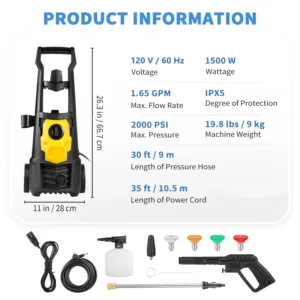
- Car Enthusiasts / Deep Cleaning: A combination of a high-pressure washer and a foam gun offers good results while protecting the paint.
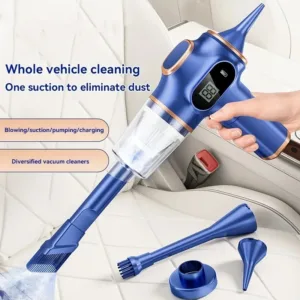
- Professional Detailing: Having a car vacuum cleaner on hand is effective for cleaning the interior and hard-to-reach crevices.
Choosing and using a car wash gun correctly not only improves cleaning efficiency but also better protects your vehicle. Hope this information helps you find the right tool