
How can you tell if a tire needs to be replaced, rather than just inflated?
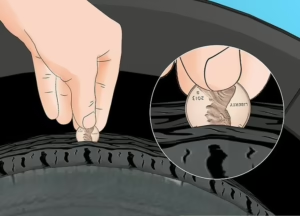
There are several key indicators that tell you a tire needs to be replaced, not just inflated. The table below summarizes the main signs to look for.
Sign | What to Look For | Why It Means Replacement (Not Inflation) |
|---|---|---|
Insufficient Tread Depth | Tread is worn down to the wear indicator bars (level with the tread) or fails the “penny test” (you can see the top of Lincoln’s head). | Worn tread cannot provide adequate traction, especially on wet roads, leading to longer stopping distances and a high risk of hydroplaning. No amount of air can restore tread depth. |
Visible Structural Damage | Cracks, cuts, or especially bulges and blisters on the tire’s sidewall. | This indicates the tire’s internal structure (the cords and belts) is compromised. It can lead to a sudden blowout, a safety risk that inflation cannot fix. |
Persistent Air Loss | A tire that consistently loses air pressure and needs frequent inflation, even when no obvious puncture is found. | This suggests damage to the tire’s bead (seal against the rim) or internal deterioration, problems that cannot be resolved by simply adding air. |
Tire Age | Crazing (many small cracks) in the rubber, even if the tread looks good. Check the DOT code on the sidewall; tires are generally recommended for replacement every 6-10 years. | Over time, tire rubber degrades and loses elasticity, becoming brittle and unsafe regardless of tread depth or air pressure. |
Uneven Wear Patterns | Severe wear on only one edge of the tire (indicating misalignment) or cupped/scalloped wear patterns (indicating suspension issues). | While the cause (alignment/suspension) must be fixed, the tire itself is now misshapen and will not make even contact with the road, affecting handling and safety. |
How to Perform a Quick Check
You can easily perform two critical checks at home:
- The Penny Test: Take a penny and insert it into the tread groove with Lincoln’s head upside down and facing you. If you can see the entire top of Lincoln’s head, the tread depth is at or below 2/32 of an inch, and the tire should be replaced immediately.
- Visual Inspection: Walk around your car and carefully examine each tire. Look for the signs mentioned above, like cracks, bulges, or objects embedded in the tread. Don’t forget to check the sidewalls.
Important Considerations
- Vibrations While Driving: If you feel excessive vibrations through the steering wheel or the car’s floor, it could be a sign of an internal tire failure or that a tire is out of balance. This requires professional inspection, as it’s a safety issue beyond inflation.
- When to Replace in Pairs: For better handling and safety, it’s ideal to replace tires in pairs (both fronts or both rears). If only one tire is damaged but the others are also worn, replacing at least the pair on the same axle is strongly recommended.
In short, if the problem can be solved by adding air, the tire pressure monitoring system (TPMS) light will usually go off after inflation. However, if you observe any of the signs above—especially low tread, structural damage, or persistent air loss—the tire itself has failed and needs to be replaced to ensure your safety on the road.I hope this helps you make an informed decision. For a professional assessment, it’s always a good idea to consult a trusted tire service center.