
How to Remove the Nozzle of a Pressure Washer
Between the hose and the nozzle of the pressure washer, there is a shut-off connector. Simply twist with both hands in opposite directions to unscrew it, and the high-pressure washer nozzle can then be detached.
Main Components of a High-Pressure Washer
- NozzleA relatively small and inconspicuous part of the high-pressure washer is the nozzle. This component does not clog during use because the water is expelled under high pressure internally. Therefore, the nozzle won’t get blocked, but care should be taken to prevent losing it.
- HoseThe part connected to the nozzle of the high-pressure washer is the hose. These hoses come in different diameters. Some models have thicker hoses, while home-use versions typically have thinner ones. Thus, the thickness affects the performance and function of the washer.
- Gun/LanceThe gun (or lance) is the main part we focus on—the section held in hand that resembles a gun. This part is the main body of the device, housing many internal core components. Be careful not to knock or bump the nozzle of the high-pressure washer during use.
- HandleThe handle of the high-pressure washer is located near the gun body. The design of this component is very important as it directly affects comfort during use. Especially for car wash professionals who use the washer for extended periods, the comfort of the handle directly impacts work efficiency.
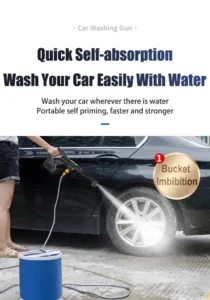
Precautions for Washing Cars with a High-Pressure Washer
- Do Not Carelessly Wash the Engine BayThe engine bay is filled with components like circuit boards. A slight mishap can easily damage the ignition coil, circuit boards, etc. Therefore, be extremely careful about this when washing your car yourself, and especially avoid spraying directly with a high-pressure washer.
- Don’t Use One Bucket of Water for the Entire WashUsing the same bucket of water from start to finish allows dirt washed off the car to be carried into the bucket by the towel. After rinsing the towel in the muddy water, it then grinds the sediment against the car’s surface again, with predictable consequences. So, change the water frequently when washing your car yourself.
- Do Not Use Cleaning Agents ArbitrarilyMany car washes rinse off dust first and then spray cleaning agents on the car. Many car owners imitate this, thinking it cleans better. However, unbeknownst to them, some cleaners are not pH-neutral but are acidic or alkaline, which can harm the car. Long-term use can damage the paint’s gloss, resulting in more loss than gain.
- Do Not Blast the Car Surface Forcefully with the WasherProfessional car washing should include a pre-wash step: using professional equipment to spray a special pre-wash solution on the car body and letting it sit for a minute or two. After soaking, most sand and dirt will detach from the paint. Rinsing with the pressure washer afterward can avoid the risk of scratching the paint with grit when applying the main wash solution.
- Pay Attention to the Washing SequenceFollow the washing order of “top to bottom, front to back, outside to inside.” Clean in sequence from the roof, front hood, trunk, body sides, lights, bumper to the wheels, and finally clean the interior.