
What is the P008F fault code?
The P008F fault code applies to all vehicle manufacturers and means “Engine Coolant Temperature/Fuel Temperature Correlation.”
Background Information: The Engine Coolant Temperature (ECT) sensor transmits the temperature of the engine coolant to the Engine Control Unit (ECU) as an electrical signal via the principle of a thermistor. This signal is used as a basis for adjusting fuel injection and ignition timing. The ECU detects that the difference between the signals from the Engine Coolant Temperature (ECT) sensor and the Fuel Temperature (FT) sensor exceeds the calibrated maximum allowable range.
What are the possible symptoms of P008F?
- Engine hesitation, backfiring, or unstable acceleration
- The engine may show signs of overheating
- The torque converter clutch may fail to engage or disengage, leading to inability to move
- The transmission may overheat
What are the possible causes of P008F?
- Low engine coolant level
- Faulty Engine Coolant Temperature (ECT) sensor
- Faulty engine coolant thermostat
- Open or short circuit in the Engine Coolant Temperature (ECT) sensor wiring harness
- Poor circuit connection in the Engine Coolant Temperature (ECT) sensor circuit
- Rust and/or corrosion in the engine coolant
- Faulty or corroded Engine Coolant Temperature (ECT) wiring or connections
How to diagnose code P008F?
Diagnosing P008F requires a methodical approach to isolate the faulty component or wiring. Here is the recommended step-by-step process:
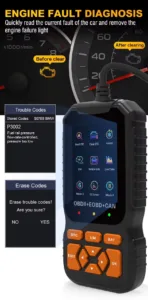
- Use an OBD2 scanner to confirm the presence of P008F and check for other related codes (especially sensor or temperature-related codes).
- Record and compare the live data readings from the Engine Coolant Temperature sensor and the Fuel Temperature sensor. Look for illogical or vastly different readings.
- Inspect the wiring and connectors for both sensors. Look for signs of corrosion, wear, or loose connections.
- Test the ECT and Fuel Temperature sensors separately using a digital multimeter, checking for appropriate resistance per OEM specifications.
- Check the sensor ground and voltage supply on the wiring harness side.
- If the sensors and wiring are normal, consider possible cooling system issues, such as a stuck thermostat or clogged passages.
- As a last resort, after eliminating all other possibilities, check for ECM updates (TSBs) or internal ECM faults.
How to repair code P008F?
Once the root cause is identified, repairing P008F may involve:
- Replacing a faulty ECT sensor
- Replacing a faulty Fuel Temperature sensor
- Repairing or replacing damaged wiring/connectors
- Cleaning corroded electrical connections
- Repairing or improving sensor grounds
- Flushing or repairing the engine cooling system if physical issues are found
- Updating or reprogramming the ECM with OEM-certified software, only if necessary
Vehicles most commonly affected by code P008F
This specification is most commonly used in vehicles equipped with advanced fuel management systems, especially diesel engines. Manufacturers known to have occurrences of P008F include:
- Ford (Transit, F-series, Focus, Mondeo)
- General Motors/Chevrolet (Duramax engines)
- Renault/Nissan (various diesel models)
- Mercedes-Benz (Sprinter, Bluetec engines)
- BMW (some diesel models)
However, any modern vehicle equipped with these sensors and a sophisticated engine management system could potentially develop this issue.
P008F Frequently Asked Questions
Can you drive with code P008F?
Proceed with caution: While many vehicles may still operate with P008F present, it is not advisable to continue driving for extended periods. Inaccurate temperature readings can lead to poor fuel mixture, overheating, or hard starting, especially in extreme weather. Ignoring this code can potentially cause engine damage or more severe drivability issues, so timely diagnosis and repair are strongly recommended.
Can low coolant level trigger P008F?
Yes, insufficient coolant can lead to abnormal high or low coolant temperature readings, which could cause a correlation fault between the sensors.
Will replacing the ECT sensor automatically fix the fault code?
Not always. You must confirm whether the ECT or Fuel Temperature sensor is faulty, or if the problem lies in the wiring or the ECU itself. Do not replace parts blindly—always diagnose first.
Can this code cause long-term engine damage?
If ignored, yes. Erroneous temperature data can lead to improper fuel mixture or overheating, both of which are harmful in the long run.
How much does it cost to diagnose the P008F code?
Diagnosing the P008F code typically requires 1.0 hour of labor. Labor rates vary by location, vehicle, and repair shop. Many shops charge between 150 per hour; dealerships and shops in metropolitan areas may charge more, while independent shops may charge less.
How much does it cost to repair P008F?
The cost to repair the P008F engine fault code can vary depending on the specific cause of the problem. On average, replacing a faulty sensor and fixing the wiring issue, including parts and labor, costs between 500. However, additional costs may arise if further diagnostics or repairs are needed. It is recommended to consult a qualified mechanic or auto repair shop for a more accurate estimate based on your vehicle’s make and model. Keep in mind that labor rates can vary, so it’s essential to factor these in when budgeting for repairs.