
What is Error Code P006F?
The P006F fault code, applicable to all car manufacturers, means “Turbocharger/Supercharger Boost Control A Supply Voltage Circuit High“.
Background Information: A turbocharger uses the inertial force of exhaust gases from the engine to drive a turbine, which in turn drives a coaxial impeller to pressurize the intake air, thereby increasing the car’s power. A supercharger is an air compressor used to increase the intake air of an internal combustion engine. More intake air provides the engine with more oxygen, allowing the control module to supply more fuel, thus increasing output power. The turbocharger/supercharger boost controller’s function is to, when the boost pressure reaches a set value, use air pressure to push a wastegate actuator (pneumatic mechanical type) to bypass some exhaust gases from the turbine, thereby reducing turbine speed and controlling the boost level. This fault code indicates that the turbocharger/supercharger boost control A supply voltage is higher than the calibrated maximum value.
What are the common symptoms of code P006F?
Vehicles storing the P006F code may exhibit a range of symptoms, from subtle performance changes to more noticeable warning signs. These symptoms are usually related to the engine’s ability to properly generate and regulate boost pressure. Please note the following:
- Engine Malfunction Indicator Light (CEL): The most direct and easily identifiable sign.
- Reduced Engine Power: The vehicle may enter a “paralyzed” or reduced power mode.
- Engine Delay or Acceleration: Noticeable delay or irregular acceleration when pressing the accelerator.
- Poor Fuel Economy: Increased fuel consumption due to inefficient air-fuel mixture.
- Lack of Boost: The turbocharger/supercharger is not providing the expected power.
- Abnormal Sounds: Whistling, humming, or hissing sounds from the turbocharger/supercharger area.
What are the most likely causes of P006F?
The P006F fault code can be triggered by a variety of problems, most of which affect the power supply to the boost control actuator. The most common causes, in order of probability, are:
- Boost Control Solenoid or Actuator Failure: The electronic actuator controlling boost pressure may have an internal fault or short circuit.
- Wiring Harness Problem: Damaged, corroded, or short-circuited wiring between the PCM and the boost control actuator.
- Poor electrical connection: The connector at the actuator or PCM is loose, dirty, or corroded.
- PCM power supply problem: There is a problem with the PCM voltage reference or grounding circuit.
- PCM defective: Although rare, it is possible if other causes are ruled out.
How to diagnose P006F?
Diagnosing P006F requires a methodical approach, ruling out common problems before replacing expensive parts. Please follow these steps:
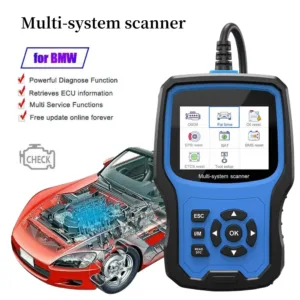
- Code verification: Use an OBD2 scanner to confirm the presence of P006F and check for related DTCs.
- Visual inspection: Inspect the wiring and connectors of the boost control actuator and PCM for signs of damage, corrosion, or loose connections.
- Actuator operation test: Use a multimeter to check if the voltage at the actuator connector is correct (refer to original manufacturer specifications).
- Check wiring continuity: With ignition off, test for continuity and short circuits between the PCM and actuator wiring.
- Check PCM grounding and power supply: Ensure the PCM voltage and ground reference are appropriate.
- Test Actuator Resistance: Compare the booster actuator’s resistance value to the original manufacturer’s specifications.
- Replace with a Known Good Actuator (if possible): Replace with a known working actuator and see if the code returns.
- Clear Codes and Retest: After repair, clear the fault codes and perform a road test to confirm the problem.
How to Repair P006F?
Depending on the root cause, resolving P006F may require a simple repair or a more in-depth repair. Typically, these solutions directly address the underlying problem:
- Replace the Faulty Booster Control Actuator/Solenoid Valve: If the actuator is defective or short-circuited.
- Repair or Replace Damaged Wiring: Repair any worn, corroded, or short-circuited wiring in the circuit.
- Clean or Tighten Connectors: Address any loose or corroded electrical connections.
- Restore PCM Power/Ground Circuit: Repair any faults in the PCM voltage supply or ground path.
- Replace the PCM: Only do this if all other possibilities have been ruled out and the PCM is confirmed to be faulty.
Vehicles Most Frequently Affected by P006F
While P006F can occur in a variety of turbocharged or supercharged vehicles equipped with electronic boost control, the most common sources of reports are:
- Ford F-Series (EcoBoost engine)
- Volkswagen Golf/Passat (TSI/TDI engine)
- Mercedes-Benz C/E/GLA-Class (turbocharged models)
- GM Silver Lado/Sierra (2.7-liter turbocharged, supercharged Cadillac models)
- Chrysler/Jeep (2.0-liter turbocharged, 3.0-liter fuel-efficient diesel)
- Hyundai/Kia (1.6-liter turbocharged, 2.0-liter turbocharged engine)
Frequently Asked Questions about P006F
Will P006F cause my vehicle to fail emissions tests?
Yes, in most OBD-II emissions checks, engine failure and boost control malfunctions can lead to immediate failure.
Can I fix the P006F fault code myself?
While some DIY enthusiasts may be able to handle simple repairs, such as replacing a faulty solenoid or fixing wiring issues, professional help is recommended for more complex diagnostics and repairs, especially when dealing with PCMs.
Is it safe to drive with code P006F?
Limitations: While some vehicles may still experience reduced power when using code P006F, prolonged driving is not recommended. The engine may lack proper boost, leading to performance degradation and potentially further damage to the turbocharger/supercharger system. It’s best to address this issue promptly to avoid costly repairs.
How much does it cost to diagnose a code P006F?
Diagnosing a code P006F typically requires 1 hour of labor. Rates vary depending on location, vehicle, and repair shop. Many shops charge between $80 and $150 per hour; dealerships and metropolitan areas may have higher rates, while independent auto shops may have lower rates.
How much does it cost to fix a code P006F?
Repair costs for a code P006F vary widely, typically ranging from $100 to $1000. The total cost depends on the specific repair, such as parts replacement or labor costs.
How serious is the P006F code?
The P006F code is classified as a moderately serious problem. While it may not immediately threaten the vehicle’s safety or functionality, prompt diagnosis is recommended. Ignoring this problem could lead to more serious engine problems over time.