
What does the P005E fault code mean?
The P005E fault code, applicable to all car manufacturers, means “Turbocharger/Supercharger Boost Control B Supply Voltage Circuit Low“.
Background Information: A turbocharger uses the inertial force of the exhaust gases from the engine to drive a turbine, which in turn drives a coaxial impeller to pressurize the intake air, thereby increasing the car’s power. A supercharger is an air compressor used to increase the intake air to an internal combustion engine. More intake air provides the engine with more oxygen, allowing the control module to supply more fuel, thus increasing output power. The turbo/supercharger boost controller’s function is that when the boost pressure reaches a set value, the air pressure pushes the wastegate actuator (pneumatic-mechanical) to bypass some of the exhaust gas around the turbine, thereby reducing the turbine speed and controlling the boost level. This fault code indicates that the turbo/supercharger boost control B supply voltage is below the calibrated minimum value.
Symptoms of P005E OBD II Fault Code:
- Low, unstable, and/or abnormal power
- Poor overall driving performance
- Reduced throttle response
- Difficulty driving uphill
- Vehicle enters “limp mode” (i.e., failsafe)
- Intermittent driving symptoms
Common Causes of P005E OBD II Fault Code:
- Defective or damaged boost control solenoid (e.g., lever stuck, broken, bent, etc.)
- High resistance due to corrosion (e.g., connectors, pins, ground, etc.)
- Wiring problems (e.g., wear, open circuit, short to power, short to ground, etc.)
- Internal ECM (Engine Control Module) problem
- Excessive exhaust soot in the boost vanes, leading to stagnant, low, or incorrect boost levels
- Boost control module problem
- Exhaust leak
Simple Diagnosis of Engine Fault OBD Code P005E:
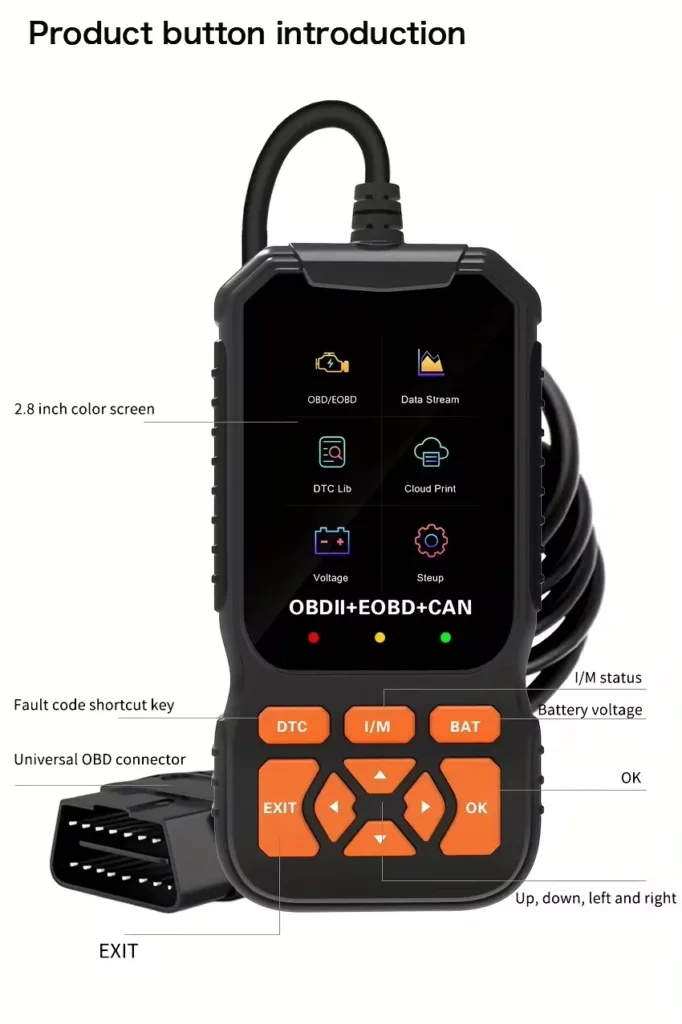
An OBD2 scanner may be used during this process. You must keep in mind that the induction system generates dangerous heat, and you can get burned if you don’t protect your skin properly. This is why the boost control solenoid should be visually located first. Once found, the next step is to ensure its mechanical function is up to standard. The reason behind this is that it mechanically controls your charger and boost pressure. It’s possible to manually move the lever from the solenoid valve to the charger housing. This may or may not be possible in some systems. The adjustable lever from the solenoid valve is very helpful for finding the “optimal” point. This may vary between manufacturers, so you must do thorough research first. The module can be directly installed onto the boost control, depending on the specific setup. Just make sure there are no signs of water ingress. If there are any signs of corrosion, water stains, or any damage, the component should be replaced with a brand new one. Pay close attention to the wiring harness directly connected to the boost control solenoid valve.
How to correct fault code P005E?
- You should try replacing the turbocharger bypass valve.
- Damaged vacuum lines should be repaired or replaced as needed.
- The boost pressure sensor should be replaced.
- Sometimes the wiring/connector may be severely damaged, so the best option is to replace it with a brand new one.
- Replace the boost controller.
- The powertrain control module should be replaced as soon soon as possible.
Severity of P005E OBD II Fault Code
The severity is rated as medium to high. When there is a problem with the forced induction system, you risk altering the air-fuel ratio. If ignored or left untreated, this can lead to serious engine damage. Not only can this potentially damage internal engine components, but fuel economy will be very poor, so fixing any malfunctions within the forced induction system is in your best interest.