
The Difference Between Dual-Lens and Single-Lens Dashcams
The difference between dual-lens and single-lens dashcams lies in the fact that dual-lens dashcams have an additional rear camera to monitor the situation behind the car. Many car owners want to buy a dual-lens dashcam because it can record both the front and the back. However, some people say that there’s no need to buy a dual-lens dashcam, as dual-lens dashcams have both advantages and disadvantages.
The rear lens of a dual-lens dash cam typically has lower resolution and a narrower field of view. If the front lens is 1080P with a 140-degree wide angle, then the rear lens might only be 720P with a 100-degree wide angle.
Dual-lens dashcams require more powerful processing chips. The chip is the core component of a dashcam and also the most expensive part.
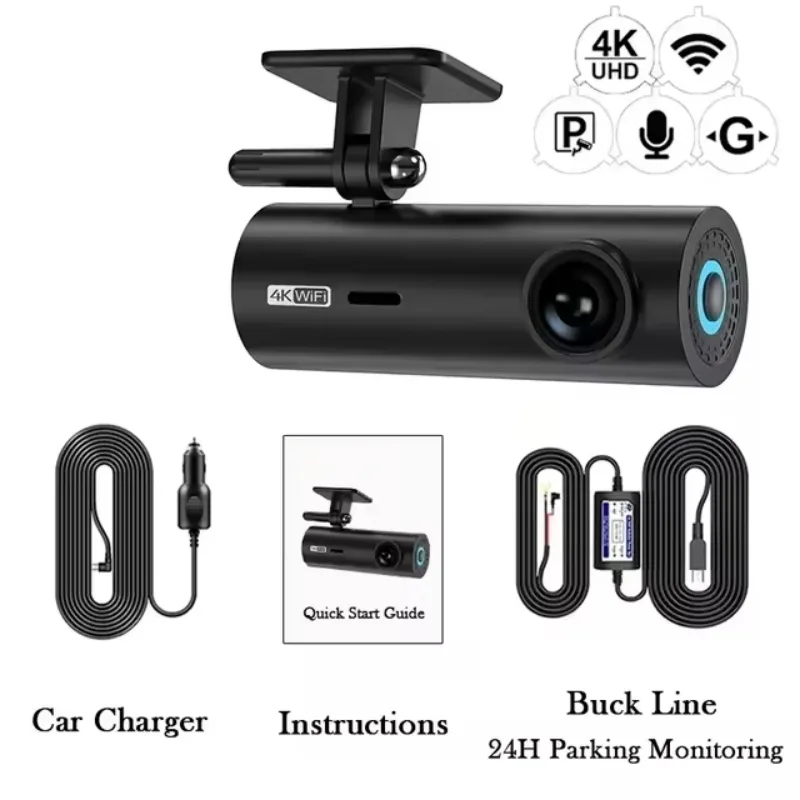
Which is better: a dual-lens or a single-lens dashcam?
Single-Lens Dashcams
This is the most common and original form. It has one device and one lens. We know that dashcams are responsible for recording driving footage to preserve evidence, so the wider the field of view, the better, as it’s less likely to miss any footage. Although each lens has a wide angle, under normal circumstances, the maximum wide angle can only reach about 150 degrees; exceeding this range will result in serious distortion of the video footage.
Dual-Lens Dashcams
To solve the problem of distortion caused by the wide angle of single-lens dashcams, some dashcam brands have launched dual-lens dashcams. The wide angle of a single lens is lower, but the cost is also significantly reduced. The combined monitoring range of two lenses is far greater than that of a single-lens dashcam, and the recorded video footage will not show any distortion.
In terms of convenience, a dual-lens dashcam is the best choice. If you don’t consider the monitoring range and focus on functions and performance, a single-lens dashcam is more suitable, as it won’t affect the aesthetics of the car’s interior.