
What does the P0048 code mean?
The P0048 fault code is a generic OBD-II code that means “Turbocharger/Supercharger Boost Control A Circuit High“.
Background Information: This code indicates the Powertrain Control Module (PCM) or Engine Control Module (ECM) has detected that the voltage in the primary boost control solenoid circuit (Circuit A) is higher than the normal operating range. The PCM monitors the electrical signal used to control the boost control solenoid, which regulates turbocharger or supercharger boost pressure via a wastegate or variable geometry mechanism. A “High” circuit condition typically points to a short to power (battery voltage), an open circuit with induced voltage, or a faulty component that is causing the circuit voltage to be pulled up. This prevents the PCM from properly commanding the boost control system, potentially leading to uncontrolled overboost, engine knocking, severe engine damage, and the activation of a limp mode.
Symptoms of Error Code P0048
Signs of error P0048 may include:
- Illuminated Check Engine Light (MIL).
- Loss of engine power or erratic performance – the turbocharger may produce excessive or uncontrolled boost.
- Engine knocking or pinging sounds (detonation) due to overboost conditions.
- Engine entering a “limp home” or reduced power mode to prevent catastrophic damage.
- Black smoke from the exhaust (especially in diesel engines) from an overly rich air-fuel mixture during overboost.
- Possible overboost code P0234 may also be stored.
- Unstable engine idle or hesitation during acceleration.
Main Causes of Error Code P0048
- Short to Voltage in Wiring Harness: The control wire for the boost solenoid has damaged insulation and is touching a live power wire (e.g., battery positive).
- Open Circuit with Induced Voltage: A broken wire in the control circuit can act as an antenna, picking up stray voltage from nearby components.
- Faulty Boost Control Solenoid/Actuator: An internal failure within the solenoid, such as a short between the coil and the power supply terminal.
- High Resistance or Poor Ground Connection: A poor ground connection for the solenoid or the ECM driver circuit can cause reference voltage to rise.
- Faulty Engine Control Module (ECM/PCM): An internal failure in the module’s driver circuit, causing it to output a constant high signal (less common).
- Problem with Integrated Turbo Actuator Control Module: On modern vehicles with electronic actuators, a failed internal circuit can cause a high signal condition.
How to Diagnose Error Code P0048?
- Use an obd2 scanner to confirm the P0048 code and check for any related codes (e.g., P0045, P0046, P0047, P0234). Note the freeze frame data, especially engine load and RPM when the code set.
- Perform a thorough visual inspection of the boost control solenoid wiring harness and all connectors. Look for chafed wires that could be touching power sources, especially near the battery, alternator, or fuse box.
- Locate the boost control solenoid (refer to service manual). It is often mounted on the turbocharger, intake manifold, or firewall.
- With the ignition OFF and the solenoid disconnected, use a digital multimeter to check for a short to power. Test for voltage between the solenoid control pin (signal wire) and the vehicle chassis with the ignition ON. The presence of battery voltage indicates a short to power.
- Measure the resistance of the solenoid coil across its two terminals. Compare to manufacturer specifications (typically between 10-30 ohms). An infinite (OL) reading indicates an open coil.
- Check for proper ground at the solenoid connector. With the ignition OFF, test for continuity between the ground terminal and a clean chassis ground. High resistance indicates a bad ground.
- Using a capable car scanner with bidirectional controls, attempt to command the boost control solenoid ON and OFF while observing related PIDs (like desired boost pressure or solenoid duty cycle). If the PID shows a high value when commanded off, it confirms the circuit is stuck high.
- If the solenoid and wiring test good, suspect a faulty ECM. Professional diagnosis, potentially checking the control signal at the ECM connector with an oscilloscope, is required to confirm.
Possible Causes and Diagnostic Methods
| Possible Cause | How to Check? |
| Wiring Short to Power (B+) | Disconnect the solenoid and PCM. With ignition ON, check for voltage on the control wire. Repair any found short. |
| Faulty Boost Control Solenoid | Measure solenoid resistance. An infinite reading (OL) indicates an open coil internally. |
| Open Circuit in Wiring | Perform a continuity test on the control circuit wires between the solenoid connector and the ECM connector. |
| Faulty ECM Driver Circuit | Back-probe the ECM connector pin for the control circuit. With ignition ON and engine off, measure voltage. A constant high voltage (e.g., 12V) when not commanded suggests a faulty ECM. |
| Poor Ground Connection | Perform a voltage drop test on the ground circuit for the solenoid and the ECM during operation. |
Tools needed: A reliable obd2 code reader (with live data and bidirectional controls), digital multimeter (DMM), basic hand tools, vehicle-specific wiring diagrams, safety glasses.
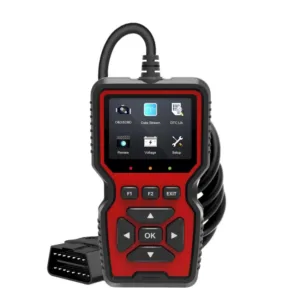
How do I fix error code P0048? (Solutions to the Problem)
Simple Fixes
- Repair wiring damage: If a short to power is found, carefully repair the damaged section of wire using solder and heat-shrink tubing. Ensure the harness is properly routed and secured away from power sources and sharp edges.
- Clean and secure connectors: Disconnect, clean with electrical contact cleaner, apply dielectric grease, and reconnect all associated electrical connectors firmly. Pay special attention to ground connections.
- Fix poor ground connections: Clean and tighten ground points for the solenoid and the ECM. Ensure metal-to-metal contact is clean and secure.
In-depth Diagnosis and Repair Solutions
- Replace the faulty boost control solenoid/actuator: This is a common repair if internal resistance is out of specification (open circuit). Ensure the replacement part meets OEM specifications.
- Repair or replace the wiring harness section: For extensive damage or an open circuit, a new harness section may be necessary.
- Replace the Engine Control Module (ECM/PCM): This is a last-resort, costly repair. It should only be done after all other components and wiring have been conclusively verified as functional. The new module requires programming and VIN matching.
- After repairs, use your vehicle diagnostics tool to clear all codes and perform a test drive. Monitor boost pressure PIDs to ensure the system is responding correctly and the code does not return.
Troubleshooting Based on Symptoms
| Symptom | Possible Solution |
| Check Engine Light on with P0048, engine knocking. | Immediate concern for overboost. Diagnose for a hard short to power or stuck solenoid. |
| Code is intermittent, appears during specific maneuvers. | Look for an intermittent short caused by a moving harness touching a power wire. |
| Code returns immediately after clearing. | Indicates a persistent hard fault like a permanent short to power or a completely failed (open) component. |
| Vehicle has no power, stuck in limp mode. | The PCM has likely disabled boost control to protect the engine. Focus on electrical diagnosis of the control circuit. |
Common Error Code P0048 in Vehicles
Ford P0048 (EcoBoost engines – 1.5L, 2.0L, 2.3L, 2.7L, 3.5L): Common in F-150, Explorer, Mustang EcoBoost, Focus ST. The turbocharger wastegate solenoid or electronic wastegate actuator circuit can short to power. Wiring harnesses near the battery or fuse box are susceptible to damage. Diagnosis requires a professional obd2 scanner to monitor boost solenoid duty cycle and command tests.
Volkswagen/Audi P0048 (TSI/TFSI engines – EA888, EA211): Frequent in Golf GTI, Audi A4, Q5. The N75 boost pressure control solenoid or the integrated turbo actuator on newer models can develop internal faults leading to a high circuit condition. VAG-specific diagnostics (VCDS/OBDeleven) are essential for reading specific measuring values and performing output tests.
General Motors (GM) P0048 (Duramax Diesel L5P, LML, 2.0L Turbo LTG): In Chevrolet Silverado/Sierra HD, Cadillac ATS, Camaro 2.0T. On Duramax trucks, this often points to a fault in the Variable Geometry Turbo (VGT) actuator control circuit, specifically a short to voltage. A bidirectional scan tool is crucial for commanding vane position and monitoring feedback sensor voltage.
BMW P0048 (N54, N55, B58 engines): In 335i, 540i, X3 M40i. The electronic wastegate actuator (EWG) motor or its integrated control module can fail, sending a high signal. Diagnosis typically requires ISTA software for guided functions and checking the actuator supply and signal voltages.

Mercedes-Benz P0048 (OM642, OM654, M276 turbo engines): In E350 BlueTEC, C300, GLC300. Can be caused by a faulty boost pressure control solenoid valve (Y77/1) or a short in the wiring to the charge pressure actuator. STAR Diagnostic is necessary for reading live data and actuating components to isolate the fault.
Toyota/Lexus P0048 (2GR-FSE, 8AR-FTS engines): In Lexus IS350, GS350, Toyota Supra (B58), Highlander 2.4T. Check the turbocharger wastegate actuator solenoid and its wiring for shorts to the 12V supply. Consult TSBs for known issues with connector corrosion.
Honda/Acura P0048 (1.5L L15B7, 2.0L K20C1 turbo engines): In Civic Si/Type R, Accord 2.0T, RDX. The wastegate valve actuator or the boost control solenoid valve circuit can short to power. A capable vehicle code reader can access the PCM to monitor solenoid command vs. feedback.
Subaru P0048 (FA20DIT, FA24DIT engines): In WRX, STI, Ascent, Outback XT. The turbocharger wastegate control solenoid is a common culprit. Inspect the wiring, especially where it passes through the firewall or near the turbo heat shield, for damage that could cause a short to power.
Hyundai/Kia P0048 (Theta II 2.0T, Smartstream 2.5T engines): In Sonata N-Line, Kia Stinger, Sorento X-Line. Check the turbocharger wastegate actuator and the associated control solenoid wiring. Issues often arise from harness chafing against the engine cover or bracket.
Chrysler/Dodge/Jeep P0048 (2.0L Turbo, 3.0L EcoDiesel): In Jeep Wrangler 2.0T, Ram 1500 EcoDiesel. On the EcoDiesel, this code frequently relates to the VGT turbo actuator control circuit shorting to voltage. On the 2.0L, inspect the wastegate solenoid power circuit.
Nissan/Infiniti P0048 (VR30DDTT, MR16DDT engines): In Nissan Z, Infiniti Q50/Q60 Red Sport, QX55. Diagnose by checking circuit voltage with a multimeter. The turbocharger actuator control module can be a fault point.
P0048 Frequently Asked Questions
What is the first thing I should do when I see code P0048?
The first step is to use an obd2 scanner to confirm the code and check for any other related codes, especially P0234 (Overboost). Do not ignore it, as it indicates a potential overboost condition that can cause severe engine damage. Avoid aggressive driving.
Is it safe to drive my car with the P0048 code?
It is not recommended. The vehicle will likely be in limp mode with reduced power. More critically, an unresolved high circuit condition could lead to uncontrolled overboost, causing engine knocking and potentially catastrophic engine failure (e.g., blown head gasket, damaged pistons).
How much does it typically cost to repair a P0048 error?
Costs vary: Wiring repair might be $200-$500. Replacing a boost control solenoid typically costs $300-$700 including labor. If the turbo actuator or ECM needs replacement, costs can range from $1,200 to over $3,500 including parts, labor, and programming.
Can I fix a P0048 code myself?
Yes, if you are comfortable with advanced electrical diagnostics. You’ll need a multimeter, basic tools, and an obd2 code reader with live data capability. The process involves testing for shorts to power and checking component continuity. Replacing a solenoid is often straightforward, but ensure the battery is disconnected and you follow safety procedures.
What’s the difference between P0045, P0046, P0047, and P0048?
All relate to the “Boost Control A Circuit.” P0045: Open Circuit. P0046: Range/Performance. P0047: Circuit Low (short to ground/low voltage). P0048: Circuit High (short to power/high voltage). P0048 specifically indicates the control circuit is reading higher voltage than commanded.
Will disconnecting the battery clear the P0048 code?
It may turn off the light temporarily, but the code remains stored in the ECM’s non-volatile memory. To properly clear it, you must use a vehicle diagnostics tool after the repair is complete. Some vehicles may require a drive cycle to fully reset.
Can a bad turbocharger cause code P0048?
Indirectly. A mechanically seized turbo actuator could cause the control motor to stall, potentially leading to a current spike and an electrical fault that the ECM interprets as a high circuit condition. However, P0048 primarily indicates an electrical fault in the control circuit itself.
My car failed emissions inspection with P0048. Will fixing it guarantee a pass?
Yes, once the code is repaired, cleared, and the vehicle completes a drive cycle to reset all readiness monitors (including the comprehensive component monitor), it should pass the OBD-II scan portion of the test, provided no other monitor is incomplete or failed.
After replacing the boost control solenoid, do I need a relearn or adaptation?
On most vehicles, clearing the code is sufficient. However, on many European (VW/Audi, BMW, Mercedes) and some modern vehicles, a turbo actuator adaptation or calibration procedure using a professional-level car scanner is required to teach the ECM the actuator’s end stops.
What does “Circuit High” specifically mean electrically?
It means the Powertrain Control Module detects that the voltage on the control circuit is higher than expected for the commanded state. This is usually due to a short to a power source (like the battery positive), an open circuit that is picking up induced voltage, or a faulty driver inside the ECM that is stuck “on”.
How can I prevent P0048 from happening again?
Ensure all wiring harnesses are properly secured with clips and away from hot exhaust components, sharp edges, and primary power cables. Use protective conduit or loom in high-heat and high-vibration areas. Regularly inspect under-hood wiring during maintenance.
Can a basic code reader diagnose P0048?
A basic vehicle code reader can confirm the code’s presence. For diagnosis, you need a scanner that can read live data (especially boost solenoid duty cycle and desired/actual boost pressure) and preferably command components, making a more advanced obd2 scanner highly recommended.
Could a problem with the alternator or battery cause P0048?
Unlikely directly. However, severe voltage spikes from a failing alternator could theoretically induce voltage in an open circuit. More commonly, a poor battery connection might cause erratic ECM operation, but it would likely set multiple codes, not just P0048.
P0048 Related OBD2 Errors
- P0045 – Turbocharger/Supercharger Boost Control A Circuit Open
- P0046 – Turbocharger/Supercharger Boost Control A Circuit Range/Performance
- P0047 – Turbocharger/Supercharger Boost Control A Circuit Low
- P0049 – Turbocharger/Supercharger Boost Control A Circuit Intermittent
- P0234 – Turbocharger/Supercharger Overboost Condition
- P003A – Turbocharger/Supercharger Boost Control “A” Position Exceeded Learning Limit
- P2564 – Turbocharger Boost Control Position Sensor “A” Circuit
Important Note: Code P0048 indicates a fault that can lead to dangerous overboost conditions and severe engine damage. Diagnosis should begin with a careful visual inspection for wiring damage, especially shorts to power sources. Using a professional-grade vehicle diagnostics tool greatly aids in diagnosis. If you are not confident in performing advanced electrical diagnostics, seeking assistance from a qualified technician is strongly advised. Always disconnect the negative battery terminal and wait before working on electrical systems.