
What does the P0046 code mean?
The P0046 fault code is a generic OBD-II code that means “Turbocharger/Supercharger Boost Control A Circuit Range/Performance“.
Background Information: This code indicates the Powertrain Control Module (PCM) or Engine Control Module (ECM) has detected that the electrical signal or performance of the boost control solenoid circuit (Circuit A) is outside the expected operating range. Unlike an “open” or “short” circuit code, P0046 specifically indicates that the circuit is functioning but not within the manufacturer’s specified parameters. The boost control solenoid regulates boost pressure by controlling a wastegate or variable geometry turbine (VGT) vanes. When the PCM commands a specific duty cycle, it expects a corresponding change in boost pressure or actuator position. If the actual response deviates significantly, P0046 is set, leading to improper boost pressure.
Symptoms of Error Code P0046
Signs of error P0046 may include:
- Illuminated Check Engine Light (MIL) on the dashboard.
- Reduced engine power and sluggish acceleration – loss of “turbo kick” under load.
- Decreased fuel economy due to inefficient boost control.
- Engine entering “limp mode” – PCM limits RPM and power to prevent damage.
- Abnormal turbo noises – whistling, whooshing, or fluttering sounds.
- Black smoke from the exhaust from an overly rich air-fuel mixture.
- Engine hesitation or surging as boost pressure fluctuates.
- Potential for engine knocking (detonation) if overboost occurs.
Main Causes of Error Code P0046
- Faulty Boost Control Solenoid/Actuator – Most common cause; internal coil out of spec, valve sticking, or clogged with carbon.
- Wiring or Connector Issues – High resistance, corroded pins, or loose connections causing signal problems.
- Vacuum Leaks (in vacuum-controlled systems) – Cracked or disconnected hoses preventing proper boost control.
- Faulty Turbocharger Vane Position Sensor (on VGT turbos) – Provides inaccurate feedback on vane position.
- Faulty Manifold Absolute Pressure (MAP) Sensor or Boost Pressure Sensor – Incorrect readings sent to the PCM.
- Mechanical Turbocharger Issues – Carbon buildup on VGT vanes, binding wastegate linkage, or excessive shaft play.
- Faulty PCM/ECM – Rare internal fault in the control module’s driver circuit.
- Low System Voltage – Weak battery or failing alternator causing voltage fluctuations.
How to Diagnose Error Code P0046?
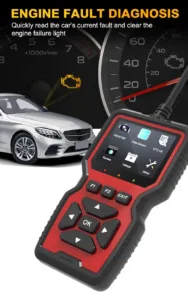
- Use a professional obd2 scanner to confirm P0046 and check for related codes. Note freeze frame data (RPM, load, temperature).
- Perform a thorough visual inspection of all wiring, connectors, and vacuum lines in the boost control system.
- Inspect the boost control solenoid and its ports for carbon clogging or damage.
- With ignition OFF and solenoid disconnected, measure the solenoid’s coil resistance with a multimeter. Compare to specs (typically 10-30 ohms).
- Check for power and ground at the solenoid connector with ignition ON (should be ~12.6V).
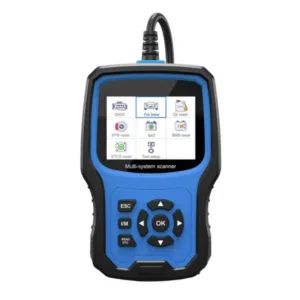
- Using a bidirectional obd2 diagnostic scanner, command the solenoid to different duty cycles while monitoring live data like “Desired Boost,” “Actual Boost,” and “Boost Solenoid Duty Cycle.”
- Check for vacuum leaks using a vacuum pump/gauge. Test the wastegate actuator’s ability to hold vacuum.
- For VGT turbos, manually check the freedom of movement of the actuator arm or vanes (engine OFF and cool).
- Test the MAP/boost sensor readings at idle and under load, comparing to known-good values.
- If all tests pass, consider a faulty PCM or the need for a turbocharger relearn procedure via a professional scan tool.
Possible Causes and Diagnostic Methods
| Possible Cause | How to Check? |
| Faulty Boost Control Solenoid | Measure resistance and bench test with 12V for an audible click. Check for carbon in ports. |
| High Resistance in Wiring | Perform a voltage drop test across the solenoid’s power and ground circuits under load. |
| Vacuum Leak | Use a smoke machine or propane tool to locate leaks in the intake/vacuum system. |
| Sticking Turbo Vane Mechanism | With actuator disconnected, manually move the lever. It should move freely. |
| Faulty MAP/Boost Sensor | Compare sensor reading at key-on-engine-off to barometric pressure from the scan tool. |
| Software/Adaptation Issue | Use an obd2 diagnostic tool to check for TSBs and perform an actuator adaptation if supported. |
Tools needed: obd2 scanner (with bidirectional controls and live data), digital multimeter (DMM), vacuum pump/gauge, basic hand tools, vehicle-specific service manual, safety glasses.
How do I fix error code P0046? (Solutions to the Problem)
Simple Fixes
- Clean the boost control solenoid. Remove and clean its internal valve and ports with throttle body cleaner.
- Repair wiring and connectors. Clean corroded pins, apply dielectric grease, and ensure firm connections.
- Replace damaged vacuum lines. Use proper vacuum-rated hose.
- Clear adaptations and perform a relearn. Use an obd reader to clear adaptations and complete a drive cycle.
- Clear the code with your scanner and test drive.
In-depth Diagnosis and Repair Solutions
- Replace the boost control solenoid/actuator. Use an OEM or high-quality replacement if faulty.
- Replace the turbo vane position sensor or MAP/boost sensor if readings are incorrect.
- Clean carbon from a variable geometry turbo (VGT). May require specialized in-situ cleaning or removal.
- Replace the turbocharger assembly if mechanically failed (seized vanes, damaged wastegate).
- Repair or replace the PCM. Last resort after verifying all other components and wiring.
- Update PCM software. Check for TSBs regarding calibration updates.
- After repair, use an obd tool scanner to clear codes, perform adaptations, and verify the fix with live data.
Troubleshooting Based on Symptoms
| Symptom | Possible Solution |
| Check Engine Light on, noticeable lack of power, no strange noises. | Focus on electrical/sensor issues: test solenoid resistance and MAP sensor. |
| Code is intermittent during hard acceleration or in cold weather. | Suggests a sticking solenoid or binding actuator. Clean and check mechanical movement. |
| Loud whistling/hissing under acceleration with P0046. | Indicates a boost leak. Inspect all intercooler piping and couplers. |
| P0046 appears with overboost (P0234) or underboost codes. | Fundamental boost control system failure. Diagnose solenoid, actuator, and vacuum system. |
| Vehicle goes into limp mode immediately. | Severe performance fault. Likely complete solenoid failure, major vacuum leak, or seized turbo. |
Common Error Code P0046 in Vehicles
Ford P0046 (EcoBoost engines): Common in Focus ST, Fiesta ST, Escape, Mustang EcoBoost, F-150. Carbon buildup from direct injection can clog the wastegate solenoid ports. Wiring near the turbo suffers heat degradation. An obd2 diagnostic scanner is key for monitoring desired vs. actual boost pressure.
Volkswagen/Audi P0046 (TSI/TDI engines): Frequent in Golf GTI, A4, Q5. The N75 valve (vacuum solenoid) is a common failure point. VCDS or OBDeleven tools are essential for output tests and checking boost deviation values.
General Motors (GM) P0046 (Duramax Diesel, 2.0L Turbo): In Silverado/Sierra Duramax, Equinox, Malibu. On Duramax, often relates to VGT actuator performance or soot-stuck vanes. A bidirectional scan tool is needed to command vane position.
BMW P0046 (N54, N55, B58 engines): In 335i, X5, etc. Requires ISTA software for guided tests on the boost pressure control valve. Sticking wastegate flappers or failing electronic actuators are common.
Mercedes-Benz P0046 (OM642, M276 engines): In C300, E-Class, Sprinter. Requires STAR Diagnostic to actuate the boost control solenoid. Check intricate vacuum lines and check valves.
Subaru P0046 (FA20DIT, FA24DIT engines): In WRX, Ascent, Outback XT. Common issue is a cracked vacuum hose between the solenoid and wastegate actuator.
Hyundai/Kia P0046 (Theta II 2.0T, Gamma 1.6T): In Sonata 2.0T, Sportage Turbo. Check for TSBs for updated solenoid parts or PCM reflash campaigns.
Nissan/Infiniti P0046 (MR16DDT, VR30DDTT engines): In Juke, Q50 Red Sport. The electric wastegate actuator motor or its integrated position sensor can fail.
Honda/Acura P0046 (K20C1, J30A engines): In Civic Type R, RDX. Carbon buildup on the wastegate flapper or a failing actuator motor are common causes.
Land Rover/Jaguar P0046 (Ingenium engines): In Evoque, Discovery Sport, F-PACE. Prone to VGT actuator motor performance issues. Requires specialized tools for actuator calibration.
Mazda P0046 (SkyActiv-G 2.5T): In CX-5 Turbo, CX-9. Check the boost control solenoid and vacuum lines. Inspect charge air cooler piping for leaks.
Volvo P0046 (Drive-E T5, T6 engines): In S60, XC90. Best diagnosed with Volvo’s VIDA system to monitor target vs. actual boost.
Chrysler/Dodge/Jeep P0046 (2.0L Turbo, 3.0L EcoDiesel): In Wrangler 2.0T, Ram EcoDiesel. On EcoDiesel, carbon buildup on VGT vanes is a frequent issue.
P0046 Frequently Asked Questions
What is the first thing I should do when I see code P0046?
Use a reliable obd2 scanner to confirm the code and check for related codes. Record freeze frame data. Then, perform a detailed visual inspection of all wiring, connectors, and vacuum lines in the boost control system.
Is it safe to drive my car with the P0046 code?
You can drive cautiously for a short distance, but it’s not recommended. The engine is likely in limp mode. More importantly, if the cause is overboost, you risk severe engine damage. Diagnose promptly.
How much does it typically cost to repair a P0046 error?
Costs vary: cleaning/repair ($100-$300), replacing a solenoid/sensor ($200-$500), cleaning a VGT turbo ($300-$800), full turbo replacement ($1,500-$4,000+). An accurate diagnosis with an obd2 diagnostic tool can save money.
Can I fix a P0046 code myself?
Yes, with intermediate skills. You’ll need basic tools, a multimeter, and an OBD2 scanner with live data. Cleaning a solenoid is straightforward; diagnosing a sticking turbo is more advanced. Let the turbo cool and disconnect the battery first.
What’s the difference between P0045, P0046, P0047, and P0048?
All relate to “Boost Control A Circuit.” P0045: Open circuit. P0046: Range/Performance problem. P0047: Low circuit condition. P0048: High circuit condition. P0046 is a performance issue within a working circuit.
Will disconnecting the battery clear the P0046 code?
It may turn off the light, but the code remains stored. To properly clear it, you must use an OBD2 diagnostic scanner after fixing the issue.
Can a bad turbocharger cause code P0046?
Indirectly. A sticking VGT or worn wastegate actuator can prevent the system from reaching the commanded position, which the PCM sees as a performance fault.
My car failed emissions inspection with P0046. Will fixing it guarantee a pass?
Yes, once the code is repaired, cleared, and a full drive cycle is completed to set all OBD-II monitors, it should pass the OBD-II portion, provided no other faults exist.
After replacing the boost control solenoid, do I need a relearn?
Often, clearing the code is enough. But on many modern vehicles (especially European brands), a specific actuator adaptation via a professional obd2 diagnostic scanner is required.
What does “Circuit Range/Performance” specifically mean?
The circuit works, but its electrical characteristics (resistance, current draw) or the resulting boost pressure/actuator position feedback are outside the expected normal operating range.
Could a dirty air filter cause P0046?
Not directly. P0046 is an electrical/performance fault in the control circuit. A restricted filter could cause low boost, triggering other codes, but not P0046 specifically.
How can I prevent P0046 from happening again?
Use quality OEM parts. Secure wiring away from heat. Perform regular oil changes with correct oil to minimize carbon buildup. Fix boost/vacuum leaks promptly.
Is P0046 more common on diesel or gasoline engines?
Common on both. Diesel VGTs often fail from carbon on vanes. Gasoline turbos often fail from faulty solenoids or vacuum leaks.
Can I use a generic OBD2 code reader to diagnose P0046?
A basic obd reader can confirm the code. To diagnose it, you need a scanner that can read live data (boost pressure, duty cycle) and perform bidirectional tests. A professional-grade obd2 diagnostic scanner is recommended.
P0046 Related OBD2 Errors
- P0045 – Turbocharger/Supercharger Boost Control A Circuit Open
- P0047 – Turbocharger/Supercharger Boost Control A Circuit Low
- P0048 – Turbocharger/Supercharger Boost Control A Circuit High
- P0234 – Turbocharger/Supercharger Overboost Condition
- P0235 – Turbocharger Boost Sensor A Circuit Malfunction
- P0243 – Turbocharger Wastegate Solenoid A Malfunction
- P2563 – Turbocharger Boost Control Position Sensor Circuit
- P2564 – Turbocharger Boost Control Position Sensor Circuit Range/Performance
Important Note! Code P0046 indicates the boost control system is not operating within specifications, which can lead to reduced performance, poor fuel economy, and potential engine damage. Diagnosis should start with a thorough visual inspection. Using a professional-grade obd2 diagnostic tool with live data and bidirectional controls is crucial. When working near the turbo, allow components to cool completely. If unsure, consult a qualified technician.