
What does the P0007 code mean?
The P0007 is a generic OBD-II (Onboard Diagnostics II) trouble code. Its official definition is “Fuel Shutoff Valve A Control Circuit High“.
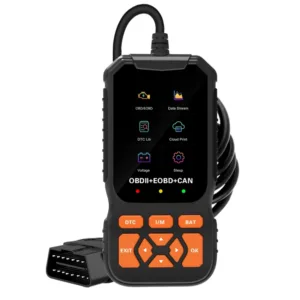
This code indicates that the vehicle’s Powertrain Control Module (PCM) or Engine Control Module (ECM) has detected an abnormally high voltage signal, typically a short to power (battery voltage), in the control circuit for Fuel Shutoff Valve ‘A’. This valve is a critical safety and control component, commonly found in modern vehicles with Gasoline Direct Injection (GDI), diesel common rail systems, and bi-fuel (LPG/CNG) setups. Its primary function is to act as an electrically controlled shutoff, stopping fuel flow to the engine when the ignition is turned off. A “high circuit” condition means the control wire is likely shorted to a 12-volt source, preventing the PCM from properly commanding the valve. The first step in diagnosis is always to use a professional obd2 scanner to confirm the code and check for related faults.
Symptoms of Error Code P0007
Signs of error P0007 may include:
- Illuminated Check Engine Light (MIL) or Malfunction Indicator Lamp.
- Engine starting difficulties, extended cranking, or a no-start condition.
- Rough, unstable, or fluctuating idle speed.
- Noticeable loss of engine power, hesitation, or stumbling during acceleration.
- Poor fuel economy and increased fuel consumption.
- Engine may stall unexpectedly while driving or at idle.
- In some cases, the engine may continue to run briefly after the ignition is turned off (run-on condition).
Main Causes of Error Code P0007
- Short to Voltage in Wiring: The control circuit wire is pinched, frayed, or damaged and making contact with a live 12-volt power source.
- Faulty Electrical Connector: Corroded, oxidized, or loose pins at the fuel shutoff valve connector or the PCM connector.
- Internal Fault in Fuel Shutoff Valve Solenoid: The valve’s internal coil or circuitry has failed, creating an internal short to power.
- Blown Fuse or Relay Issue: A faulty relay or related circuit causing incorrect voltage feed.
- Failing Powertrain Control Module (PCM): A rare internal failure in the PCM’s driver circuit, causing it to output an incorrect signal or fail to control the circuit properly.
How to Diagnose Error Code P0007?
- Safety First: Disconnect the negative battery terminal. For any fuel system work, consult the service manual for proper depressurization procedures.
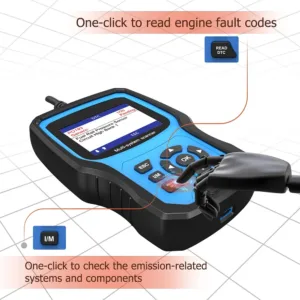
- Use an advanced obd2 scanner or vehicle diagnostics tool to confirm code P0007 is present and active. Check for any related codes (like P0005 or P0006) and note the freeze frame data, which captures conditions when the fault occurred.
- Perform a thorough visual inspection of the entire wiring harness and connectors leading to the Fuel Shutoff Valve (common locations: on the high-pressure fuel pump, fuel rail, or near the fuel filter). Look for physical damage, chafing, melted insulation, or signs of contact with hot or sharp components.
- Inspect Electrical Connectors: Carefully disconnect the valve connector and the corresponding PCM connector. Check for corrosion (green/white powder), bent pins, moisture ingress, or poor terminal tension. Clean with electrical contact cleaner if necessary.
- Test the Circuit and Component (with battery disconnected):
- Disconnect the fuel shutoff valve’s electrical connector.
- Using a digital multimeter, measure the resistance across the two terminals of the valve solenoid. Compare to manufacturer specifications (typically between 5 and 20 ohms). A reading of 0 ohms indicates a dead short, while an infinite reading indicates an open circuit.
- With the valve connector still disconnected from the valve but connected to the harness, reconnect the battery. Use the multimeter to check the voltage on the control wire (harness side). With the ignition on (engine off), you should see a very low voltage (likely under 1 volt) if the PCM is not commanding the valve. If you see full battery voltage (around 12V), it confirms a short to power in the wiring.
- Check the relevant fuse and relay in the engine bay fuse/relay box.
- If the wiring shows a short to voltage, trace and repair the damaged section of the harness.
- If the wiring tests good but the valve resistance is incorrect, the Fuel Shutoff Valve is faulty and requires replacement.
Diagnostic Table: Possible Causes and Checks
| Possible Cause | How to Check? |
| Short to Power (12V) in Wiring | With the valve disconnected, measure voltage on the control circuit wire (harness side). Presence of ~12V with ignition on indicates a short to power. |
| Faulty Fuel Shutoff Valve (Internal Short) | Measure resistance at the valve terminals. A reading of 0 ohms confirms an internal short circuit to power. |
| Corroded or Damaged Connector | Visual inspection for corrosion, bent pins, or cracked housing. Check for moisture and terminal tension. |
| Faulty Relay or Blown Fuse | Locate and test the fuse for the fuel shutoff valve circuit. Swap the relay with a known good one of the same type. |
| Faulty PCM Driver Circuit | Last resort. If wiring, valve, fuse, and relay are perfect, use an oscilloscope to check the control signal from the PCM. A constant high signal may indicate PCM failure. |
Tools needed: A quality OBD2 scanner or car scanner, a digital multimeter, basic hand tools, electrical contact cleaner, and vehicle-specific wiring diagrams.
How do I fix error code P0007? (Solutions to the Problem)
Simple Fixes
- Replace a blown fuse or faulty relay: If found, replace with a component of the exact same amperage/rating. Investigate why it failed.
- Repair damaged wiring or clean connectors: For a shorted wire, repair using solder and heat-shrink tubing. For corrosion, clean terminals thoroughly with contact cleaner and apply dielectric grease.
In-depth Diagnosis and Repair Solutions
- Replace the faulty Fuel Shutoff Valve: This is a common repair. Use an OEM or high-quality equivalent part. Always follow proper fuel system safety procedures (depressurization) before replacement.
- Repair or replace the wiring harness section: For extensive wire damage or a hard-to-locate short to power, replacing the affected harness section is the most reliable long-term fix.
- Address PCM/ECM issues: If all other components and wiring check out perfectly, the PCM may need reprogramming (software update) or replacement, which requires professional equipment and coding.
- After any repair, clear all codes with your obd2 code reader or vehicle code reader. Perform a test drive that includes several ignition cycles, then re-scan to ensure the P0007 code does not return.
Common Error Code P0007 in Vehicles
General Motors (Duramax Diesel L5P, LML; EcoTec3 with Active Fuel Management): Common in Chevrolet Silverado 2500/3500 HD, GMC Sierra Denali, Cadillac Escalade. On Duramax diesels, the Fuel Control Actuator (FCA) on the CP4 high-pressure pump can develop internal shorts to power. On gasoline trucks, wiring to the fuel management solenoids for AFM/DFM can chafe against the engine block or frame.
Ford (Power Stroke Diesel 6.7L; EcoBoost 2.7L, 3.5L): Seen in F-250/F-350 Super Duty, F-150 Raptor, Ford Transit Custom. In the 6.7L Power Stroke, the Fuel Pressure Control Valve (FPCV) circuit is prone to shorts where the wiring passes near the turbocharger or exhaust manifold. EcoBoost engines may have issues with the fuel pressure sensor or control valve circuits shorting to nearby power feeds.
Ram/Cummins (6.7L Cummins Turbo Diesel in Ram 2500/3500): P0007 often relates to the Fuel Control Actuator (Fuel Metering Valve) on the CP3 or CP4 pump. The wiring harness near the fuel pump can suffer from heat degradation and insulation breakdown, leading to shorts against adjacent power cables.
Volkswagen/Audi Group (2.0L TSI, 3.0L TFSI, 2.0L/3.0L TDI – EA888, EA839, EA897 engines): In VW Golf R, Audi A4/S4, Q7/SQ7, Porsche Macan. The fuel pressure regulator valve (N276) or the fuel pressure control valve circuit is a known point of failure. Connectors can suffer from moisture intrusion leading to corrosion and short circuits. Diagnosis is best performed with VCDS, ODIS, or a capable aftermarket scanner.
BMW (N47/N57 Diesel, B48/B58/B58TU Gasoline): In BMW 330d, 540d, X5 M50d, and gasoline models like the M340i, M440i. For diesel engines, the quantity control valve (QCV) on the high-pressure fuel pump can short internally. On gasoline engines, the high-pressure fuel system’s electronic pressure control valve (part of the HPFP) is the suspect. Wiring issues are common near the eccentric shaft sensor on some models.
Mercedes-Benz (OM642 3.0L V6 Diesel, OM651 2.1L I4 Diesel, M276/M278 Gasoline): In Mercedes Sprinter 316CDI, E350 BlueTEC, ML350, S550. The fuel quantity control valve (Y94) on the high-pressure pump is a common failure item. The wiring harness, especially near the engine block and fuel filter housing, can also develop shorts due to vibration and exposure to high temperatures.
Toyota/Lexus (1KD-FTV, 2GD-FTV D-4D Diesel in Hilux, Land Cruiser Prado, Lexus IS 220d): The Suction Control Valve (SCV) on the fuel pump is notorious for electrical failures, including internal shorts that trigger P0007. This is a frequent issue in high-mileage vehicles.
Honda/Acura (Earth Dreams 1.5L Turbo L15B7, 2.0L Turbo K20C1 in Civic Type R, Accord 2.0T, Acura RDX): While less frequent, P0007 can appear in direct injection engines. Focus on the high-pressure fuel pump control solenoid and its wiring, which may route near the turbocharger.
Nissan/Infiniti (VR30DDTT 3.0L Twin-Turbo in Infiniti Q50 Red Sport, Nissan Z; VQ37VHR in 370Z): For direct injection gasoline engines, inspect the circuits for the high-pressure fuel sensor and the fuel pressure control valve for shorts. Pay attention to the harness near the intake manifold.
Subaru (FA20/FB25 DIT Turbo in WRX, STI, Ascent, Outback XT): The fuel pressure control solenoid valve circuit can develop shorts, especially where the wiring routes near the turbocharger heat shield or the intercooler.
Mazda (Skyactiv-G 2.5T Turbo in Mazda CX-5, CX-9, Mazda3 Turbo): The high-pressure fuel pump’s control valve circuit is critical. Mazda’s proprietary M-MDS diagnostics can command the valve for testing. Check for chafing near the camshaft position sensor connector.
Hyundai/Kia (Smartstream G1.6T/G2.5T, CRDi Diesel in Sonata N-Line, Kia Sorento, Telluride): P0007 can be set by a short circuit in the Fuel Pressure Control Valve (FPCV) solenoid wiring or a failed valve. This is common in vehicles with the GDI Theta II and Smartstream engines.
Stellantis (Jeep 3.0L EcoDiesel in Grand Cherokee, Ram 1500 EcoDiesel): Similar to Ram HD trucks, focus on the fuel metering valve and its harness. The wiring may be vulnerable near the diesel particulate filter (DPF) due to extreme heat.
Volvo (VEA Diesel D4/D5 and Gasoline T5/T6 Engines in XC60, XC90, S90): The fuel pressure control valve is part of the high-pressure pump assembly. Wiring issues and valve failures are documented, particularly in earlier VEA engine models.
Land Rover/Jaguar (Ingenium Diesel D180/D240, AJ-V8 Gasoline in Range Rover Sport, Discovery, F-PACE, XF): Known for complex electrical systems. Diagnosis requires checking not just the valve but also related control modules (like the Fuel Pump Control Module – FPCM) and ensuring all system grounds are perfect to rule out voltage feedback issues.
Mitsubishi (4N1 2.2L Diesel in Outlander, ASX, Eclipse Cross PHEV): The fuel suction control valve circuit on the common rail pump can develop shorts. The harness may be exposed to road debris and moisture.
Peugeot/Citroën (BlueHDi 1.6L/2.0L Diesel, PureTech 1.2L Turbo in 3008, 5008, C5 Aircross): The high-pressure fuel system uses a pressure regulator valve. Electrical connectors in the engine bay can suffer from corrosion, leading to short circuits.
Suzuki (Vitara, S-Cross with 1.4L Boosterjet Turbo, 1.6L DDiS Diesel): Similar to other GDI systems, the fuel pressure control circuit is susceptible to shorts, especially in regions with high humidity or road salt use.
P0007 Frequently Asked Questions
What is the first thing I should do when I see code P0007?
Use a reliable obd2 scanner to confirm the P0007 code is present and active, and check for any related codes. Then, safely disconnect the battery and perform a detailed visual inspection of all wiring and connectors associated with the fuel shutoff valve, which is often located on or near the high-pressure fuel pump. Check the relevant fuse and relay first, as they are the simplest and quickest potential fixes.
Is it safe to drive my car with the P0007 code?
No, it is not recommended. The most likely symptoms include stalling, difficulty starting, and poor performance, which could create dangerous situations in traffic. Furthermore, a short to power in the fuel control circuit could potentially cause electrical damage to other components. Driving with a known fault in this critical safety circuit is unwise.
How much does it typically cost to repair a P0007 error?
Costs vary significantly: Diagnostic fee: $100 – $250. A new Fuel Shutoff Valve: $200 – $600 depending on the vehicle (luxury/performance parts are more expensive). Labor for replacement: 2 – 4 hours ($200 – $600). Wiring harness repair: $250 – $500. If the PCM needs replacement/reprogramming: $1,000 – $3,000+. Total repair costs typically range from $400 for a simple wiring fix to over $4,000 for a complex repair on a European luxury vehicle.
Can I replace the fuel shutoff valve myself to fix P0007?
This is an intermediate to advanced repair. It requires working on the fuel system, which is often under extremely high pressure (over 2,000 psi/138 bar in GDI systems). You MUST follow the manufacturer’s procedure to safely depressurize the system before disconnecting any lines. Additionally, accurate electrical diagnosis is required to confirm the valve is the true culprit and not just a wiring short. If you are not comfortable with fuel system work and advanced electrical diagnostics, this job is best left to a professional technician.
Will disconnecting the battery clear the P0007 code?
Disconnecting the battery may temporarily clear the code and turn off the Check Engine Light. However, if the underlying electrical fault (like a shorted wire to power) is still present, the code will return as soon as the PCM runs its self-tests, usually within one or two drive cycles. A proper fix requires addressing the root cause of the high voltage condition.
What’s the difference between P0005, P0006, and P0007?
All three codes relate to Fuel Shutoff Valve ‘A’. P0005 = “Control Circuit/Open” (a break in the circuit, high resistance). P0006 = “Control Circuit Low” (a short to ground, voltage pulled to 0V). P0007 = “Control Circuit High” (a short to battery voltage, voltage stuck at ~12V). P0007 specifically indicates the control wire is seeing full battery voltage when it should be at a low voltage controlled by the PCM.
My car passed its state inspection with the Check Engine Light on for P0007. Is that okay?
In most U.S. states, Canada, the EU, and other regions with strict emissions testing (MOT, TÜV, etc.), an illuminated Check Engine Light (MIL) for any powertrain code is an automatic failure. The vehicle should not pass inspection with an active P0007 code, as it indicates a fault in the emissions-related fuel control system that affects tailpipe emissions.
After fixing the wiring or replacing the valve, do I need a special tool to reset the light?
Yes. You will need an OBD2 scanner, car scanner, or vehicle diagnostics tool with the ability to clear powertrain (P) codes. Most code readers have a “clear codes” or “erase DTCs” function. After clearing, the light should turn off immediately if the repair was successful. Some advanced systems may require a specific drive cycle to complete readiness monitors.
Could a bad relay really cause the P0007 code?
Yes, absolutely. A faulty relay with welded contacts can cause a constant power feed to the fuel shutoff valve circuit, creating the “high circuit” condition that triggers P0007. Always check and swap the relevant relay as part of basic diagnostics.
How critical is it to use OEM parts for the Fuel Shutoff Valve repair?
For critical fuel system and safety components like the fuel shutoff valve, using genuine OEM or high-quality, certified OEM-equivalent parts is highly recommended. These components have precise electrical specifications (resistance, current draw) and mechanical flow rates. Cheap aftermarket parts may not meet these specs, leading to poor performance, incorrect fuel pressure, or a quick return of the fault code.
My code is intermittent – the light comes on and off. What does that mean?
An intermittent P0007 almost always points to a wiring problem rather than a failed component. A wire may be frayed, making intermittent contact with a nearby power wire or terminal when the vehicle vibrates, goes over bumps, or during temperature changes. A connector may be loose. Diagnosis involves carefully wiggling wires and connectors while monitoring the code status or related live data parameters (like fuel pressure control duty cycle) with your obd2 code reader.
Can a failing alternator or voltage regulator cause a P0007 code?
It’s unlikely to be the direct cause. P0007 is specifically about a short to voltage in the control circuit wiring. However, a failing alternator producing excessive voltage (over 15 volts) could theoretically stress the entire electrical system and contribute to other issues, but it wouldn’t typically create a direct short in a specific control wire.
What tools do I absolutely need to diagnose P0007 myself?
At a minimum: A capable OBD2 scanner or vehicle code reader to read/clear codes and view live data. A high-quality digital multimeter for measuring resistance, continuity, and voltage. Basic hand tools (wrenches, screwdrivers). Electrical contact cleaner. For advanced diagnosis, an oscilloscope is extremely helpful to visualize the PCM’s control signal but is not essential for most DIYers. A quality wiring diagram for your specific vehicle is crucial.
Why is P0007 considered a “short to power” or “short to voltage” code?
In automotive electrical diagnostics, a “high” circuit condition for a control output from the PCM means the voltage on that wire is being held at or near battery voltage (e.g., 12V) when it should be at a low voltage (often below 1V) as commanded by the PCM. This happens when there is an unintended electrical connection (a “short”) between the control wire and a constant or switched 12-volt source in the vehicle’s wiring harness. The PCM detects this because it expects to be able to pull the voltage low when it activates the internal driver transistor.
My scan tool shows “P0007 – Fuel Shutoff Valve A Control Circuit High”. Does this always mean the valve is bad?
No. While a failed valve with an internal short to power is a possible cause, wiring problems are more common. A pinched wire making contact with a nearby power feed, a corroded connector creating a conductive bridge to a 12V pin, or damage to the harness insulation will produce the exact same code. Proper step-by-step electrical diagnosis (checking for voltage with the component disconnected) is essential to avoid unnecessary and costly part replacement.
Can this code cause damage to the Engine Control Module (ECM/PCM)?
Potentially, yes. If the short to power is severe and the PCM’s internal driver transistor is constantly trying to pull the line low against a hard 12V source, it can overheat and fail. This is why it’s important to diagnose and repair the issue promptly, not just clear the code and continue driving.
Is there a specific drive cycle to reset the monitors after fixing P0007?
Yes, most vehicles require a specific drive cycle to complete the OBD-II readiness monitors after clearing codes. This typically involves a mix of city and highway driving at various speeds and engine loads. Consult your vehicle’s service manual or use your scanner’s “readiness monitor” function to check status. Some monitors, like the fuel system monitor, may run quickly, while others take longer.
Does P0007 affect vehicles with both gasoline and diesel engines equally?
The code can appear in both, but it is more commonly reported in modern diesel engines with common rail systems and in gasoline direct injection (GDI) engines. These systems rely on precise electronic control of high-pressure fuel, making the fuel shutoff/control valve circuit critical and more susceptible to electrical faults.
P0007 Related OBD2 Errors
- P0005: Fuel Shutoff Valve A Control Circuit/Open
- P0006: Fuel Shutoff Valve A Control Circuit Low
- P0008: Fuel Shutoff Valve B Control Circuit/Open
- P0009: Fuel Shutoff Valve B Control Circuit Low
- P0010: Fuel Shutoff Valve B Control Circuit High
- P0087: Fuel Rail/System Pressure – Too Low
- P0088: Fuel Rail/System Pressure – Too High
- P0190: Fuel Rail Pressure Sensor Circuit Malfunction
- P0191: Fuel Rail Pressure Sensor Circuit Range/Performance
- P0192: Fuel Rail Pressure Sensor Circuit Low Input
- P0193: Fuel Rail Pressure Sensor Circuit High Input
- P062E: Fuel Injector Control Pressure Too High
- P062F: Fuel Injector Control Pressure Too Low
Important Safety Warning: The modern high-pressure fuel system, especially in GDI and common rail diesel applications, operates under extremely high pressure (often exceeding 2,000 psi / 138 bar, and up to 29,000 psi / 2,000 bar in some diesels). Always consult the vehicle’s service manual and follow the manufacturer’s specific procedure to safely depressurize the fuel system before attempting any disassembly or component replacement. Wear appropriate eye protection. If you are not confident in your skills or lack the proper tools, consult a qualified automotive technician. Ignoring a P0007 code can lead to unsafe vehicle operation, unexpected stalling, and further damage to expensive fuel system and electrical components.