
What does the P0001 code mean?
The P0001 is a generic OBD-II (Onboard Diagnostics II) trouble code. Its official definition is “Fuel Volume Regulator Control Circuit/Open“.
This code indicates that the vehicle’s Powertrain Control Module (PCM) has detected an electrical open circuit or a significant malfunction in the control circuit for the Fuel Volume Regulator (FVR), also known as the Fuel Volume Control Valve (FVCV). This component is a critical part of modern high-pressure fuel systems, particularly in Common Rail Diesel (CRD) and Gasoline Direct Injection (GDI) engines. Its primary function is to regulate the volume of fuel delivered from the low-pressure transfer pump to the high-pressure pumping elements, ensuring precise fuel rail pressure. When the PCM cannot properly command or monitor this circuit due to an open connection, it sets code P0001 and illuminates the Check Engine Light (MIL). The first step in addressing this issue is to use a professional-grade obd2 scanner to confirm the code and check for any related faults like P0002, P0003, or P0004.
Symptoms of Error Code P0001
Drivers may notice one or more of the following symptoms when P0001 is active:
- Illuminated or Flashing Check Engine Light (MIL): This is the most common and immediate symptom.
- Engine Performance Issues: Significant loss of power, hesitation under acceleration, or the vehicle entering a reduced-power “limp mode”.
- Starting Problems: Difficulty starting the engine, especially when warm, or a complete no-start condition.
- Poor Fuel Economy: A noticeable decrease in miles per gallon (MPG) due to inefficient fuel delivery.
- Rough Idle or Stalling: The engine may idle erratically or stall, particularly at low speeds or when coming to a stop.
- Excessive Exhaust Smoke: In diesel engines, incorrect fuel volume can lead to black or white smoke from the exhaust.
Main Causes of Error Code P0001
- Faulty Fuel Volume Regulator (FVR/FVCV) Solenoid: Internal electrical failure of the solenoid valve on the high-pressure fuel pump is the most common cause.
- Wiring or Connector Issues: An open circuit, short to ground, short to power, or high resistance in the wiring harness connecting the FVR to the PCM. Corrosion, frayed wires, or loose connections are typical culprits.
- Blown Fuse: A blown fuse protecting the FVR control circuit.
- Faulty Powertrain Control Module (PCM): Although rare, the engine computer itself could have an internal fault preventing it from properly controlling the circuit.
- Failed High-Pressure Fuel Pump (HPFP): Mechanical failure of the pump itself can sometimes manifest as a circuit fault.
- Poor Fuel Quality or Contamination: Dirty fuel can clog or damage the regulator valve, leading to electrical feedback issues.
How to Diagnose Error Code P0001?
- Confirm the Code and Freeze Frame Data: Use an advanced car scanner or obd2 code reader to read the P0001 code and any other related codes. Note the freeze frame data to see the conditions (engine RPM, temperature, load) when the code was set.
- Check for Technical Service Bulletins (TSBs): Consult manufacturer resources for any known issues or software updates related to the fuel volume regulator on your specific vehicle model.
- Visual Inspection: With the engine off, locate the Fuel Volume Regulator on the high-pressure fuel pump. Inspect all associated wiring, connectors, and the harness for obvious damage, corrosion, chafing, or disconnections.
- Electrical Circuit Testing:
- Disconnect the electrical connector at the FVR.
- Using a digital multimeter, check for power (typically 12V with ignition on) at the appropriate pin on the harness connector.
- Check for a good ground circuit.
- Perform a continuity test on the signal wire back to the PCM connector.
- Check for shorts to ground or battery voltage on all circuit wires.
- Component Testing: Measure the resistance (ohms) across the two terminals of the FVR solenoid. Compare the reading to the manufacturer’s specifications (commonly between 3-10 ohms, but varies). A reading of infinite resistance (OL) confirms an open solenoid.
- Active Control Test: With a bidirectional scan tool, command the FVR on and off while monitoring live data for fuel rail pressure. You should see a corresponding change in pressure or duty cycle.
Possible Causes and Diagnostic Methods
| Possible Cause | How to Check? |
| Faulty Fuel Volume Regulator Solenoid | Measure solenoid resistance with a multimeter. An open circuit (OL) indicates failure. Use a scan tool to command the solenoid and listen for an audible click. |
| Open Circuit in Wiring | Perform a continuity test on the wires between the PCM and the FVR connector. Repair any broken wires. |
| Short Circuit or Corroded Connector | Inspect the connector for green/white corrosion or bent pins. Clean with electrical contact cleaner and apply dielectric grease. |
| Blown Fuse | Locate and check the fuse for the fuel pump or fuel injection control circuit in the vehicle’s fuse box. |
| Faulty PCM | This is a last resort. If all wiring and the component test perfectly, and communication with the PCM is good, a faulty control driver within the PCM is possible. Professional reprogramming or replacement may be needed. |
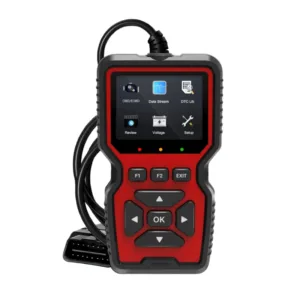
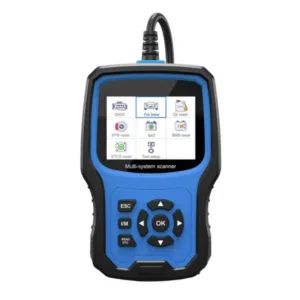
Tools needed: A professional vehicle code reader with bidirectional capabilities, a digital multimeter, basic hand tools, electrical contact cleaner, and vehicle-specific wiring diagrams from a service manual.
How do I fix error code P0001? (Solutions to the Problem)
Simple Fixes
- Repair Wiring/Connectors: If inspection reveals damaged wiring or a corroded connector, repair it using proper solder and heat-shrink tubing. Ensure all connections are clean and tight.
- Replace a Blown Fuse: If found, replace the fuse with one of the correct amperage rating and investigate why it blew (possible short circuit).
In-depth Diagnosis and Repair Solutions
- Replace the Fuel Volume Regulator: If resistance testing confirms the solenoid is open, the FVR must be replaced. This often requires removing the high-pressure fuel pump. Always use an OEM or high-quality equivalent part.
- Repair or Replace the Wiring Harness: For extensive wire damage, replacing the affected harness section is the most reliable repair.
- Address PCM Issues: If all other possibilities are eliminated, the PCM may require reprogramming (reflashing) or replacement. This is a complex procedure that typically requires a professional with specialized vehicle diagnostics tool.
- After any repair, clear all codes with your scanner, perform a test drive, and monitor to ensure the P0001 code does not return.
Common Error Code P0001 in Vehicles
Ford (EcoBoost engines, Power Stroke Diesel – F-150, Super Duty, Transit): Very common in 2010-2016 F-150 EcoBoost models. The fuel volume regulator on the high-pressure pump is a known failure point. Diagnosis requires monitoring desired vs. actual fuel rail pressure with a capable scanner.
General Motors (Duramax Diesel, Ecotec engines – Chevrolet Silverado, GMC Sierra, Cadillac CT6): Prevalent in Duramax diesel trucks (LML, L5P). Issues often stem from the Fuel Volume Control Valve (FVCV) on the CP4 or CP4.2 high-pressure pump. Wiring chafing near the pump is also common.
Ram/Cummins (6.7L Cummins Turbo Diesel): A frequent code in Ram 2500/3500 trucks. Often related to the Fuel Control Actuator on the high-pressure pump. The actuator’s internal coil can fail, causing an open circuit.
Volkswagen/Audi Group (TDI Diesel, TSI/TFSI GDI – Golf, Jetta, Passat, A4, Q7): Common in 2.0L TDI and 2.0L TSI engines. The fuel metering valve (N290) on the high-pressure pump is a common culprit. Diagnosis is best performed with VCDS or ODIS for specific measuring values.
BMW (N47, N57 diesel engines, B48/B58 gasoline engines – 3 Series, 5 Series, X3, X5): Seen in diesel models with the N57 engine. The quantity control valve on the high-pressure pump can fail. On gasoline models like the B58, the high-pressure fuel sensor or its circuit can trigger related issues.
Mercedes-Benz (OM642, OM651 diesel engines – Sprinter, E-Class, ML/GLE): The fuel quantity control valve (Y94) on the high-pressure pump is a known wear item. Failure causes poor starting, lack of power, and sets P0001.
Toyota/Lexus (D-4D diesel, D-4S GDI – Hilux, Land Cruiser, IS, GS): In diesel models like the 1KD-FTV, the suction control valve (SCV) on the fuel pump is a common failure that triggers this code. Requires a professional scanner for Toyota-specific diagnostics.
Honda/Acura (Earth Dreams GDI engines – Civic, Accord, CR-V): Less common but can occur. Check the low-pressure fuel sensor circuit and the high-pressure fuel pump control system using the Honda Diagnostic System (HDS) or an advanced aftermarket tool.
Nissan/Infiniti (YD25 diesel, VR30DDTT – Navara, Q50, QX80): In the YD25 diesel engine, the fuel suction control valve is a typical point of failure. On the VR30 twin-turbo gasoline engine, check the high-pressure fuel system sensors and wiring.
Subaru (Boxer Diesel, FA/FB DIT engines – Outback, Forester, WRX): In diesel models (EE20), the fuel metering valve on the pump can fail. In turbocharged gasoline DIT engines, monitor fuel pressure parameters closely.
Peugeot/Citroën (DV/DLD diesel engines – 308, 508, C4 Picasso): The fuel doseur valve on the high-pressure pump (often Siemens) is a very common failure, leading to P0001 and drivability issues.
Opel/Vauxhall (CDTI diesel engines – Astra, Insignia, Zafira): The fuel pressure regulator (Bosch 0281006075) is a frequent failure on models like the Astra J. Fluctuating fuel pressure is a key symptom.
Renault/Dacia (K9K, M9R diesel engines – Megane, Duster, Trafic): Often caused by open or corroded contacts in the fuel pump connector under the rear seat or in the engine bay. A visual inspection is crucial before replacing components.
Land Rover/Jaguar (Ingenium diesel, AJ-V8 – Range Rover, Discovery, XF): The Ingenium diesel engines are prone to high-pressure fuel system issues. The fuel metering valve and its control circuit require careful electrical diagnosis.
Mazda (Skyactiv-D diesel, Skyactiv-G turbo – CX-5, Mazda6): In Skyactiv-D models, the fuel supply control valve is a critical component. Failure leads to hard starting and lack of power.
Hyundai/Kia (CRDi diesel, Smartstream GDI – Santa Fe, Sorento, Stinger): Common in CRDi diesel engines. The fuel control valve on the high-pressure pump can fail. Use a professional scanner to check fuel system live data.
P0001 Frequently Asked Questions
What is the first thing I should do when I see code P0001?
The first step is to use a reliable obd2 code reader or vehicle code reader to confirm the P0001 code is present and check for any other related codes (like P0002, P0003, P0004, or fuel pressure sensor codes). Do not ignore it, as driving with a faulty fuel volume regulator can lead to poor performance, stalling, or engine damage.
Is it safe to drive my car with the P0001 code?
It is not recommended. The vehicle may be in limp mode, have difficulty starting, or stall unexpectedly, creating a safety hazard. Furthermore, incorrect fuel pressure can potentially damage expensive components like the high-pressure fuel pump, injectors, or catalytic converter.
My code is P0001. What do the related codes P0002, P0003, and P0004 mean?
These are all part of the same diagnostic family for the Fuel Volume Regulator “A” circuit. P0002 indicates a “Range/Performance” problem (the signal is out of expected range). P0003 indicates a “Circuit Low” condition (signal voltage too low). P0004 indicates a “Circuit High” condition (signal voltage too high). P0001 specifically means “Circuit/Open”.
Will disconnecting the battery clear the P0001 code?
Disconnecting the battery may clear the code and turn off the light temporarily, but it will almost certainly return once the PCM completes its self-tests during the next drive cycle if the underlying electrical fault is still present.
How much does it typically cost to repair a P0001 error?
Costs vary significantly: Diagnostic fee: $100-$200. A new Fuel Volume Regulator: $150-$400. Labor for replacement (often requires removing the HPFP): 2-4 hours ($200-$600). If the high-pressure fuel pump itself is damaged: $1,500-$3,000+. Total can range from $300 for a simple wiring repair to over $3,500 for a full pump replacement.
Can I replace the fuel volume regulator myself to fix P0001?
This is an advanced repair. It requires working on the high-pressure fuel system, which operates at extreme pressures (up to 30,000 psi in diesels). You must follow strict safety procedures to depressurize the system. Additionally, special tools are often needed to remove the pump. If you are not experienced, this job is best left to a qualified technician.
Why is P0001 more common in diesel vehicles?
Modern diesel engines use a Common Rail fuel system that relies on extremely high pressure. The Fuel Volume Regulator is a critical, electronically controlled valve on the high-pressure pump that manages this pressure. It is a high-wear component subject to electrical stress and fuel contamination, making it a common failure point.
Can bad fuel or a clogged fuel filter cause code P0001?
Indirectly, yes. Contaminated fuel can cause the Fuel Volume Regulator valve to stick or become damaged, leading to an electrical fault. A severely clogged fuel filter can create excessive backpressure or starvation, causing the regulator to work outside its normal parameters, which may be interpreted as a circuit problem by the PCM.
What’s the difference between a Fuel Volume Regulator and a Fuel Pressure Regulator?
The Fuel Volume Regulator (FVR) controls the *amount* of fuel entering the high-pressure pump on the low-pressure side. The Fuel Pressure Regulator (often on the fuel rail) controls the *pressure* of fuel on the high-pressure side after the pump. P0001 relates to the FVR circuit.
My car scanner shows “P0001 – Fuel Volume Regulator Control Circuit/Open”. Does this always mean the regulator is bad?
No. “Circuit/Open” specifically points to an electrical discontinuity. While the regulator solenoid itself could be open, the problem is just as likely (if not more so) to be a broken wire, corroded connector, or blown fuse in the circuit between the PCM and the regulator.
After fixing the wiring, do I need to do anything special to reset the system?
Clear the codes with your scanner. The vehicle may need to complete a few “drive cycles” (specific patterns of driving conditions) for the PCM to run all its self-tests and confirm the repair. Some vehicles may also require a PCM adaptation or learning procedure after replacing the FVR, which your vehicle diagnostics tool should be able to perform.
How can I prevent the P0001 code from happening again?
Use high-quality fuel from reputable stations, change fuel filters at the manufacturer’s recommended intervals, and ensure any repairs to the fuel system wiring are done properly with sealed connectors. For diesel vehicles, using a fuel additive designed to lubricate and clean the injection system can help prolong the life of the FVR.
My code is intermittent—the light comes on and off. What does that mean?
An intermittent P0001 almost always indicates a wiring problem—a loose connector, a wire that is frayed and occasionally making/breaking contact, or an internally failing component that works intermittently. The diagnostic steps are the same, but you may need to wiggle wires and connectors while monitoring live data to reproduce the fault.
P0001 Related OBD2 Errors
- P0002: Fuel Volume Regulator Control Circuit Range/Performance
- P0003: Fuel Volume Regulator Control Circuit Low
- P0004: Fuel Volume Regulator Control Circuit High
- P0087: Fuel Rail/System Pressure – Too Low
- P0088: Fuel Rail/System Pressure – Too High
- P0191: Fuel Rail Pressure Sensor Circuit Range/Performance
- P0093: Fuel System Large Leak Detected
Important Safety Warning: The high-pressure fuel system is dangerous. Never attempt to disconnect fuel lines while the system is pressurized. Always consult the vehicle’s service manual for the proper depressurization procedure. If you are not confident in your diagnostic and repair skills, seeking help from a professional automotive technician is strongly advised.