he P0150 is a generic OBD-II powertrain trouble code. Its official definition is “O2 Sensor Circuit (Bank 2, Sensor 1)”.
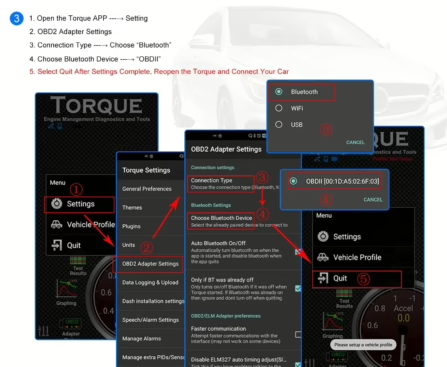

Unlimited Choices, Easy Shopping
Unlimited Choices, Easy Shopping
he P0150 is a generic OBD-II powertrain trouble code. Its official definition is “O2 Sensor Circuit (Bank 2, Sensor 1)”.

The P014F is a generic OBD-II powertrain trouble code. Its official definition is “O2 Sensor Slow Response – Lean to Rich (Bank 2, Sensor 1)”.

The P014E is a generic OBD-II powertrain trouble code. Its official definition is “O2 Sensor Slow Response – Rich to Lean (Bank 2, Sensor 1)”.
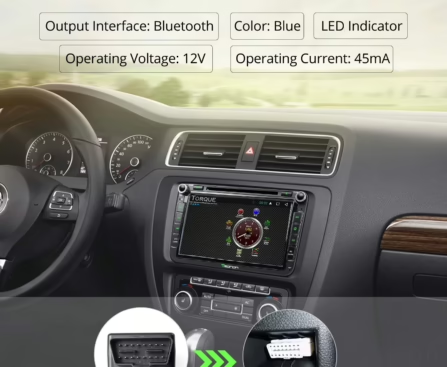
The P014D is a generic OBD-II powertrain trouble code. Its official definition is “O2 Sensor Slow Response – Lean to Rich (Bank 1, Sensor 1)”.
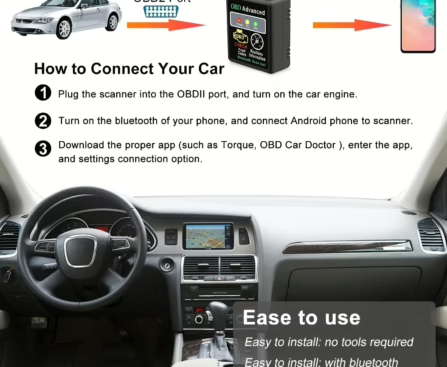
The P014C is a generic OBD-II powertrain trouble code. Its official SAE definition is “O2 Sensor Slow Response – Rich to Lean (Bank 1, Sensor 1)”.
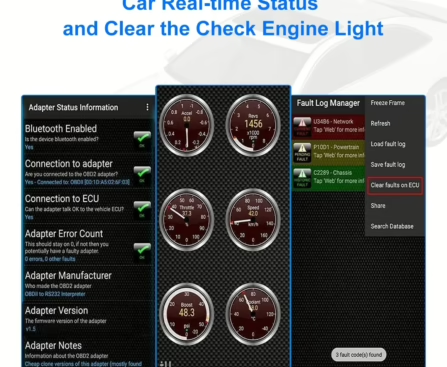
The P014B is a generic OBD-II powertrain trouble code. Its official definition is “O2 Sensor Slow Response – Lean to Rich (Bank 1, Sensor 2)“.
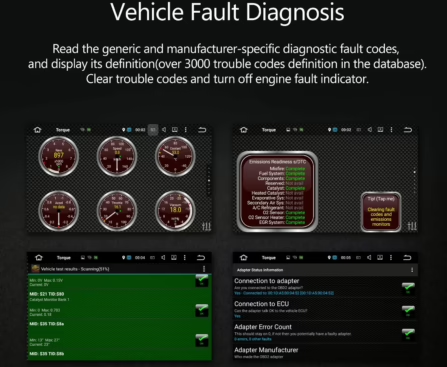
The P014A is a generic OBD-II powertrain trouble code. Its official definition is “O2 Sensor Slow Response – Rich to Lean (Bank 1, Sensor 2)”.

The P0149 is a generic OBD-II powertrain trouble code. Its official definition is “Fuel Timing Error”.
We use cookies to improve your experience on our site. By using our site, you consent to cookies.
Websites store cookies to enhance functionality and personalise your experience. You can manage your preferences, but blocking some cookies may impact site performance and services.
Essential cookies enable basic functions and are necessary for the proper function of the website.
These cookies are needed for adding comments on this website.
Google Tag Manager simplifies the management of marketing tags on your website without code changes.
Statistics cookies collect information anonymously. This information helps us understand how visitors use our website.
Google Analytics is a powerful tool that tracks and analyzes website traffic for informed marketing decisions.
Service URL: policies.google.com (opens in a new window)
SourceBuster is used by WooCommerce for order attribution based on user source.