
Are Portable Car Washers Good? A Comprehensive Analysis
Portable car washers, also known as portable car wash guns or vehicle washing guns, can be an excellent tool for many car owners, but their effectiveness and suitability depend heavily on your specific needs, vehicle condition, and washing environment. In short, they are a convenient and cost-effective solution for regular maintenance washes in locations without easy access to a hose or professional car wash, but they are not a perfect replacement for high-pressure professional equipment or a thorough hand wash with ample water.
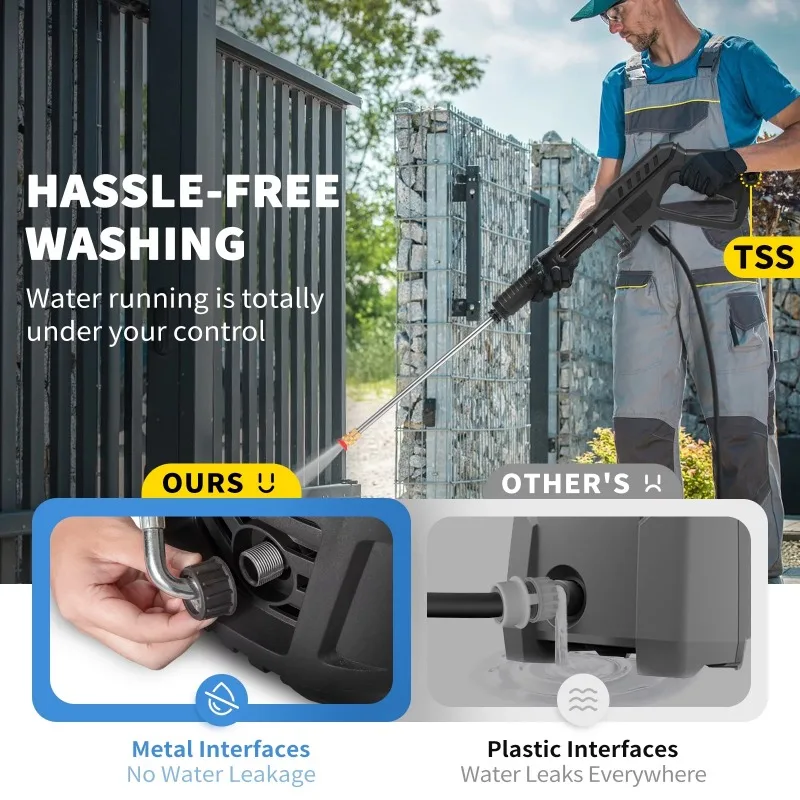
1. How Do Portable Car Washers Work & What Types Are Available?
Portable car washers are compact, self-contained systems designed to pressurize and spray water for cleaning. They are primarily categorized by their power source and mechanism.
| Type | Power Source / Mechanism | Typical Pressure & Flow | Key Components |
|---|---|---|---|
| Manual / Pump-Action | Human-powered pump (hand or foot) pressurizes an air chamber above a water reservoir. | Low to Medium Pressure; Flow limited by manual pumping speed. | Pressurized tank (8-11L), hand pump, hose, spray wand/brush. |
| Electric (12V / Corded) | Plugs into a car’s 12V cigarette lighter socket or a standard 110V/220V AC outlet. Uses a small electric motor to drive a pump. | Medium Pressure (e.g., 30-100 Bar); Flow ~3-8 L/min. | Electric motor, pump, hose, spray gun, often includes a suction hose for bucket/faucet. |
| Battery-Powered (Cordless) | Rechargeable lithium-ion battery pack powers a motor and pump. Offers the greatest mobility. | Varies widely (e.g., 10-80 Bar); Flow ~2-6 L/min. Limited by battery capacity (typically 20-30 mins runtime). | Battery pack, motor, pump, integrated water tank or suction hose, spray gun. |
2. Advantages & Disadvantages: Is a Portable Car Washer Right for You?
The value proposition of a portable car washing gun hinges on balancing its convenience against its performance limitations.
2.1 Key Advantages
- Portability & Convenience: Their compact size allows storage in a car trunk. You can wash your car anywhere—your driveway, apartment parking lot, or even on a camping trip—without needing a fixed water hookup.
- Water Efficiency: They use significantly less water than a running garden hose. Manual models can wash a car with as little as 5-8 liters (1.3-2.1 gallons).
- Cost Savings: A one-time purchase (typically $30-$200) saves money compared to frequent $15-$30 professional car washes.
- No External Power Needed (Manual/Battery): Manual and battery-powered models free you from the constraints of electrical outlets or worrying about draining your car’s battery.
- Control & Spot Cleaning: Ideal for quick rinses, bird dropping removal, or cleaning specific dirty areas like wheels and lower panels between full washes.
2.2 Common Limitations and Drawbacks
- Lower Pressure & Flow Rate: Even the best portable units cannot match the sustained high pressure (1000+ PSI) and flow of a residential electric pressure washer or professional setup. They may struggle with caked-on mud, heavy road grime, or deeply embedded contaminants.
- Limited Water Capacity/Supply: Tank models require frequent refills. Bucket-suction models need a nearby water source. This can interrupt the washing process for larger vehicles like SUVs and trucks.
- Physical Effort (Manual Models): Manual pump washers require constant pumping to maintain pressure, which can be tiring.
- Battery Life & Runtime: Cordless models are limited by their battery. A single charge may only last 15-30 minutes, which might be just enough for one car, leaving no margin for error.
- Potential for Incomplete Rinsing: Lower flow rates can make it challenging to thoroughly rinse off soap without leaving suds or water spots, especially on vertical panels.
3. Detailed Buying Guide: How to Choose the Best Portable Car Washer
Selecting the right model requires evaluating several technical and practical factors against your personal needs.
3.1 Power Source: The Fundamental Choice
| Type | Best For | Considerations |
|---|---|---|
| Manual / Pump | Budget users, occasional washers, those with no access to electricity, or for very small cars with light dirt. | Cheapest option. Very water-efficient. Requires physical effort. Lowest pressure. |
| 12V Electric (Plug into Car) | Users who wash near their parked car and want a balance of power and simplicity. | Requires car to be on or in accessory mode to avoid battery drain. Limited by cord length from the car’s socket. |
| Battery-Powered (Cordless) | Maximum mobility and convenience. Ideal for apartment dwellers, outdoor use, or anywhere without nearby outlets. | Check battery voltage (e.g., 20V, 40V) and capacity (mAh). Higher voltage generally means more power. Ensure runtime meets your needs. |
| 110V/220V AC Electric | Users with access to an outdoor outlet who prioritize cleaning power over portability. | Typically the most powerful portable option. Requires a long extension cord. Least portable of the electric options. |
3.2 Performance Metrics: Pressure & Flow
- Pressure (Bar or PSI): Determines the “stripping” force to remove dirt. For effective cleaning of light to moderate dirt, look for a minimum of 30-50 Bar (435-725 PSI). For better performance on tougher grime, aim for 80-100 Bar (1160-1450 PSI) or higher.
- Flow Rate (L/min or GPM): Determines how much water is delivered, affecting rinse speed and coverage. A flow rate of 4-6 L/min (1.0-1.6 GPM) is a good target for portable units. Both pressure and flow are crucial; high pressure with low flow may not rinse effectively.
3.3 Water Source & Practical Features
- Water Intake:
- Bucket Suction (Self-Priming): Most versatile. Allows you to draw water from any bucket or container. Essential for true portability.
- Garden Hose Connection: Provides a continuous water supply and often slightly better pressure, but ties you to a faucet.
- Spray Nozzle/Gun: Look for a spray gun with adjustable patterns: a 0° jet for stubborn spots, a 25° or 40° fan for general washing, and ideally a foam cannon attachment or soap injection system for applying shampoo.
- Portability & Weight: Consider the total weight when filled with water or carried. Battery-powered models often weigh 1.5-3 kg (3.3-6.6 lbs), while tank-style models can be 5+ kg (11+ lbs) when full.
- Build Quality & Safety: Look for a decent hose length (at least 5 meters/16 feet), robust connectors, and safety features like IPX5 or higher waterproof rating and automatic shut-off when the trigger is released.
4. How to Use a Portable Car Washer Effectively
To get the best results from your portable car washing gun, follow this optimized process:
- Pre-Rinse: Use the fan spray setting to gently rinse the entire car and loosen surface dirt. Start from the top and work down.
- Apply Shampoo: If your unit has a foam cannon or soap tank, apply a layer of car wash shampoo. If not, use a separate bucket with a wash mitt and the “soap” setting if available.
- The Two-Bucket Wash Method: Even with a portable washer, use two buckets (one with soapy water, one with clean rinse water) and a high-quality microfiber wash mitt to safely lift dirt without scratching the paint.
- Final Rinse: Thoroughly rinse off all soap, again working from top to bottom. Use the jet stream carefully around emblems and crevices.
- Drying: Use a clean, soft microfiber drying towel to pat the surface dry and prevent water spots.
Maintenance Tips: After each use, run clean water through the system to clear out soap. For battery models, follow charging instructions. For units with pumps, consider using pump protectant if storing in freezing temperatures. Store all components clean and dry.
5. Conclusion & Final Recommendation
Portable car washers are a very useful tool for a specific set of users. They excel at convenience, water conservation, and cost savings for regular maintenance washes.
You should consider a portable car washer if:
- You live in an apartment, condo, or have no driveway/outdoor faucet.
- Your car is generally kept clean and only needs light to moderate cleaning.
- You value the convenience of washing at home on your schedule.
- You want to save money on frequent professional car washes.
- You need a solution for quick spot cleaning or rinses.
You might want to reconsider or invest in a more powerful system if:
- Your vehicle is frequently very muddy or off-road.
- You demand a showroom-level finish and need powerful rinsing.
- You have multiple large vehicles to wash regularly.
- You have easy access to a hose and outlet and prefer a more traditional pressure washer.
Final Verdict: A portable car washer is a good and practical investment for the average urban or suburban driver looking for a flexible, economical way to maintain their vehicle’s cleanliness between occasional professional details. For best results, manage expectations regarding its power, choose a model with adequate pressure and a self-priming feature, and pair it with proper washing techniques.