
What Does Fault Code P010A Mean?
Fault code P010A, applicable to all vehicle manufacturers, indicates “Mass or Volume Air Flow ‘B’ Circuit Malfunction”.
Background: The Mass Air Flow (MAF) sensor measures the volume and density of air entering the engine. The Powertrain Control Module (PCM) uses this data to calculate the correct air-fuel mixture for optimal combustion, performance, and emissions. Code P010A specifically indicates a malfunction in the sensor’s “B” circuit, which is often a redundant or secondary circuit within the same physical sensor used for backup and self-testing.
Symptoms of Fault Code P010A
- Illuminated Check Engine Light (MIL) or Malfunction Indicator Lamp on the dashboard.
- Engine running rough, unstable idle, or stalling.
- Hard starting or difficulty cranking.
- Black smoke from the exhaust (indicating a rich fuel mixture).
- Hesitation during acceleration or noticeable power loss.
- Excessive fuel consumption.
- The vehicle may enter a “limp home mode,” limiting performance.
Main Causes of Fault Code P010A
- Faulty or Contaminated MAF Sensor: The sensor itself is defective, damaged, or contaminated by dust, oil, or debris from a dirty air filter or faulty PCV system.
- Wiring or Connector Issues: Damaged, frayed, corroded, or loose wiring and connectors in the MAF sensor “B” circuit are a primary cause. This includes short circuits, open circuits, or poor connections.
- Vacuum or Intake Air Leaks: Leaks in the intake system (cracked hoses, faulty intake manifold gaskets) downstream of the MAF sensor allow unmetered air to enter, causing incorrect readings.
- Clogged or Dirty Air Filter: A severely restricted air filter can alter airflow and cause the MAF sensor to read inaccurately.
- Faulty MAP Sensor or PCV Valve: A malfunctioning Manifold Absolute Pressure (MAP) sensor can corrupt the expected values for the MAF, triggering the code. A faulty Positive Crankcase Ventilation (PCV) valve can introduce excess or oily air into the intake.
- ECM/PCM Malfunction: In rare cases, a software glitch or internal fault in the Engine Control Module itself can cause it to misinterpret a valid sensor signal.
How to Diagnose Fault Code P010A?
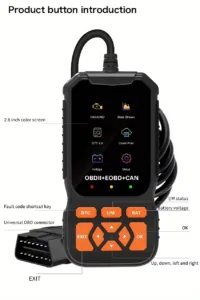
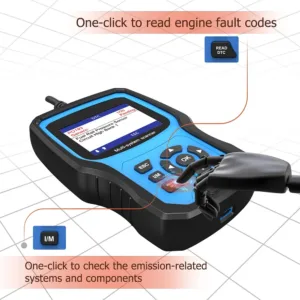
- Connect an OBD2 scanner or obd2 diagnostic tool to confirm the presence of code P010A and check for any related codes (e.g., P010B, P010C).
- Perform a thorough visual inspection of the MAF sensor, its electrical connector, and the associated wiring harness. Look for damage, corrosion, rodent chewing (common in stored vehicles), or loose connections.
- Inspect the entire air intake system for cracks, leaks, or disconnected hoses. A smoke machine test is highly effective for finding vacuum leaks.
- Check and replace the air filter if it is dirty or clogged.
- Clean the MAF sensor using a specialized MAF sensor cleaner, being careful not to touch the delicate sensing elements.
- Use a digital multimeter to test the MAF sensor circuit’s power (typically 5V or 12V reference), ground, and signal wires for continuity, shorts, or correct voltage.
- With a capable obd2 diagnostic scanner, monitor the MAF sensor’s live data stream (typically in grams per second or pounds per minute) at idle and varying RPMs, comparing it to manufacturer specifications.
Possible Causes and Diagnostic Methods
| Possible Cause | How to Check? |
| Dirty/Contaminated MAF Sensor | Remove and visually inspect the sensor element for oil or debris. Clean with MAF cleaner. |
| Wiring/Connector Fault | Visually inspect the harness. Use a multimeter to check for continuity, shorts to ground/power, and correct voltage at the connector pins. |
| Vacuum/Intake Leak | Listen for hissing sounds. Use a smoke machine or propane torch (with extreme caution) to find leaks in hoses, the intake manifold, or throttle body gaskets. |
| Faulty MAF Sensor | After ruling out leaks and wiring, test the sensor’s output signal with a multimeter or scan tool against specs, or swap with a known-good unit. |
| Clogged Air Filter | Remove the air filter and inspect. Replace if excessively dirty. |
| Faulty MAP Sensor or PCV Valve | Check for related codes (e.g., P0106). Test the MAP sensor and inspect the PCV valve for proper operation. |
Required Tools: OBD2 scanner, digital multimeter, basic hand tools, MAF sensor cleaner, smoke machine (for leak testing), vehicle-specific wiring diagrams.
How to Fix Fault Code P010A? (Solutions)
Simple Fixes:
- Clean the MAF Sensor: Use a dedicated MAF sensor cleaner. Allow it to dry completely before reinstalling.
- Replace the Air Filter: Install a new, high-quality air filter. Using an OEM filter is recommended, especially for Toyota/Lexus vehicles prone to contamination issues.
- Repair Minor Wiring/Connector Issues: Clean corroded terminals with electrical contact cleaner. Repair minor wire damage with solder and heat shrink. Ensure connectors are fully seated.
In-Depth Diagnosis and Repair:
- Replace the Faulty MAF Sensor. If cleaning doesn’t resolve the issue, replace the sensor. Opt for an OEM or high-quality aftermarket part for reliability.
- Repair Vacuum Leaks. Replace cracked intake boots, vacuum hoses, or reseal leaking gaskets (e.g., intake manifold gasket).
- Repair or Replace Damaged Wiring Harness. If wiring damage is extensive, repair or replace the affected section of the harness.
- Replace Faulty Related Components. Replace a malfunctioning MAP sensor or PCV valve if diagnosed as the root cause.
- Update or Replace the ECM/PCM. This is a last resort. A dealership may perform a software reflash. Hardware replacement is costly and requires programming.
Troubleshooting by Symptom
| Symptom | Likely Solution |
| Check Engine Light on, rough idle, poor fuel economy | Start with cleaning the MAF sensor and checking for vacuum leaks. |
| Black smoke from exhaust, hesitation under load | Likely a faulty MAF sensor providing incorrect rich-mixture data. Test sensor output. |
| Hard starting, stalling, code returns immediately after clearing | Check for a major vacuum leak or a complete failure of the MAF sensor or its wiring. |
| Intermittent issues, code appears only in certain conditions | Focus on wiring harness issues (chafing, loose connector) or an intermittently failing sensor. |
Common Vehicles with Fault Code P010A
- Toyota / Lexus: Particularly prone to P010A due to MAF sensor contamination from oil (often from a failing PCV system) or aftermarket air filter oils. The hot-wire MAF sensors in these vehicles are notably sensitive.
- General Motors (GM) Vehicles (Chevrolet, GMC, Cadillac): In some GM models, a heavily contaminated catalytic converter can contribute to conditions that trigger this DTC. Also check for brittle, cracked vacuum lines and intake tubing in older models.
- Volkswagen / Audi: Known for specific wiring harness issues in certain model years that can lead to false MAF circuit codes. Turbocharged engines are especially sensitive to accurate MAF readings.
- BMW / Mini: As part of the BMW group, Mini vehicles often have complex electronic systems. Diagnosing P010A may require checking for software updates or ECU recalibration needs.
- Mercedes-Benz: May use additional sensors (like intake pressure sensors) that influence MAF readings. Wiring issues in the engine bay are common causes.
- Ford Vehicles: Common causes include dirty MAF sensors and vacuum leaks, especially around the intake manifold and PCV hoses.
- Nissan / Infiniti: Similar to Toyota, oil contamination from the crankcase ventilation system is a frequent culprit for dirty MAF sensors triggering P010A.
- Older Vehicles (10+ years): Rubber intake and vacuum hoses become brittle and crack over time, leading to vacuum leaks that trigger this code.
- Vehicles Stored for Long Periods: Check for rodent damage to wiring harnesses and air intake components, as mice often nest in these areas and chew on wires and hoses.
- Cars with EGR Valves: A carbon-contaminated Exhaust Gas Recirculation (EGR) valve sticking open can adversely affect intake airflow, leading to MAF sensor discrepancies and this DTC.
P010A Frequently Asked Questions
What exactly does the “B Circuit” in P010A refer to?
Many modern MAF sensors contain multiple internal sensing elements or circuits (often labeled A and B) for redundancy and self-diagnosis. P010A specifically indicates a malfunction within the “B” circuit of the sensor, which could be a separate wire, internal component, or signal path.
Is it safe to drive with a P010A code?
You may be able to drive for a short distance, but it is not recommended. The engine will not run efficiently, leading to poor performance, increased emissions, and potential damage to the catalytic converter and oxygen sensors from an incorrect air-fuel mixture. The vehicle may also be in a reduced-power “limp mode”.
Can I diagnose and fix P010A myself?
Yes, if you are comfortable with basic automotive maintenance. Start with simple steps: read the code with an obd reader, visually inspect for obvious issues, clean the MAF sensor, and replace the air filter. Diagnosing electrical faults or vacuum leaks requires more advanced tools and skills.
How much does it cost to fix a P010A code?
Costs vary. Cleaning the sensor and replacing the air filter may cost less than $50. A new MAF sensor part costs $100-400. At a repair shop, including diagnostics and labor, you can expect to pay $150-600. Complex wiring repairs or ECU issues can significantly increase the cost.
What’s the difference between P010A and P0101?
P0101 indicates a “Mass Air Flow Circuit Range/Performance Problem,” meaning the sensor’s reading is outside the expected range. P010A is more specific, indicating a malfunction in the actual electrical “Circuit B” of the MAF sensor itself.
Can a dirty air filter cause P010A?
Yes, a severely clogged air filter restricts airflow, which can cause the MAF sensor to read inaccurately and potentially trigger a circuit malfunction code.
Why does my P010A code keep coming back after I clear it?
This indicates the root cause has not been fixed. The most common reasons are a persistently dirty MAF sensor, an unrepaired vacuum leak, a failing sensor that works intermittently, or an unresolved wiring issue like corrosion or a broken wire that makes contact only sometimes.
Do I need to replace the MAF sensor or just clean it?
Always try cleaning the sensor first with proper MAF cleaner, as it’s a low-cost fix. If the code returns or symptoms persist, the sensor itself is likely faulty and needs replacement.
Can a bad battery or alternator cause P010A?
Possibly. Low or unstable system voltage can affect the 5-volt reference circuit powering the MAF sensor, causing erratic readings that the PCM may interpret as a circuit malfunction.
Should I use an OEM (Original Equipment Manufacturer) MAF sensor or an aftermarket one?
For optimal compatibility and longevity, especially in sensitive vehicles like Toyotas and European brands, an OEM sensor is highly recommended. Cheap aftermarket sensors may not communicate accurately with the ECU, causing persistent issues.
Related OBD2 Fault Codes
- P0100 – Mass or Volume Air Flow “A” Circuit
- P0101 – Mass or Volume Air Flow “A” Circuit Range/Performance
- P0102 – Mass or Volume Air Flow “A” Circuit Low Input
- P0103 – Mass or Volume Air Flow “A” Circuit High Input
- P010B – Mass or Volume Air Flow “B” Circuit Range/Performance
- P010C – Mass or Volume Air Flow “B” Circuit Low Input
- P010D – Mass or Volume Air Flow “B” Circuit High Input
Important Note! Code P010A often points to an electrical circuit issue rather than just a dirty sensor. Before replacing the MAF sensor, always perform a thorough inspection of the wiring harness and connectors. Using a quality obd tool scanner to monitor live data is crucial for effective diagnosis. For complex electrical issues, especially on modern vehicles, consulting a professional mechanic with advanced diagnostic equipment is recommended.