
A Motorcycle Tire Pressure Monitoring System (TPMS) is an electronic safety system designed to monitor the air pressure and temperature of your motorcycle tires in real time. It alerts the rider if tire pressure becomes too high, too low, or drops rapidly—helping to prevent accidents caused by underinflated or overinflated tires.
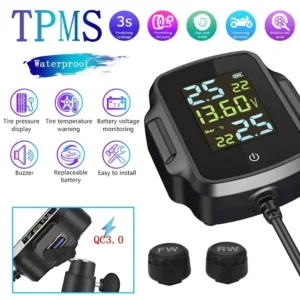
How It Works
- Sensors
- Mounted on each tire valve (external type) or inside the tire (internal type).
- Measure pressure and temperature, transmitting data wirelessly to a display unit.
- Display Unit
- Installed on the handlebar or dashboard.
- Shows real-time pressure/temperature readings and triggers alerts (visual/audible) when values fall outside preset safe ranges.
Why It’s Critical for Motorcycles
- Safety: Even slight pressure loss can drastically affect handling, braking, and stability.
- Prevention: Alerts you before a tire fails, reducing risks of blowouts or loss of control.
- Tire Longevity: Proper pressure extends tire life and improves fuel efficiency.
Types of TPMS
| Type | Installation | Pros | Cons |
| Internal | Sensor mounted inside tire (requires professional installation). | More accurate, secure, durable, no theft risk. | Higher cost, installation complexity. |
| External | Sensor screws onto valve stem (DIY-friendly). | Cheaper, easy to install/remove. | Vulnerable to theft/damage, may affect wheel balance. |
Key Considerations
- Accuracy: Internal sensors typically offer more reliable data.
- Battery Life: Internal sensor batteries last 5–7 years (often non-replaceable); external ones have replaceable batteries.
- Compatibility: Ensure the system fits your motorcycle’s valve type and wheel size.
Practical Advice
- Set pressure thresholds based on your motorcycle’s manual and riding conditions.
- Regularly calibrate the system and manually verify pressure with a gauge occasionally.
- For long trips or performance riding, a TPMS is highly recommended—it’s a small investment for significant safety benefits.
In short, a motorcycle TPMS acts as an early-warning system for tire health, giving riders critical data to stay safe on the road.