
A 12V cigarette lighter air compressor, commonly known as a portable tire inflator or mini air compressor, is a compact, electrically-powered device designed to inflate tires and other inflatables using your vehicle’s 12-volt electrical system. It plugs directly into your car’s standard cigarette lighter socket (also called a 12V accessory outlet), making it an essential piece of emergency and maintenance gear for any driver.
1. Core Definition & How It Works
This device is a small-scale air compressor. When plugged in and turned on, an electric motor drives a piston or diaphragm inside a cylinder. This action draws in ambient air, compresses it, and then forces it out through a hose connected to your tire’s valve stem. Most modern units feature a built-in digital pressure gauge and an auto-shutoff function, allowing you to set a desired PSI/Bar value; the compressor will stop automatically once that pressure is reached.
2. Primary Uses & Applications
Its versatility makes it invaluable beyond just flat tires:
- Vehicle Tires: The main use. Ideal for cars, SUVs, motorcycles, bicycles, and even some light truck tires (check pressure limits).
- Sports & Recreation Equipment: Footballs, basketballs, soccer balls, inflatable kayaks, pool toys, and air mattresses.
- Emergency Preparedness: A must-have in your roadside emergency kit to handle slow leaks or adjust tire pressure for changing conditions (e.g., adding pressure for a heavy load, lowering pressure for off-road/sandy conditions).
3. Key Features & Specifications to Understand
- Power Source: 12V DC from your vehicle’s outlet. This means you must have your engine running or at least in the “ON” (accessory) position to prevent draining the car battery.
- Maximum Pressure (PSI/Bar): Ranges vary. Common models go up to 100-150 PSI (6.9-10.3 Bar), sufficient for most passenger vehicles. High-performance models may reach 250+ PSI for truck tires.
- Duty Cycle: This indicates how long it can run continuously before needing to cool down. Most portable units have a 50% duty cycle (e.g., 10 minutes on, 10 minutes off). Continuous use beyond this can cause overheating and damage.
- Accessories: Should include various nozzle adapters (for balls, pool toys), a flexible hose, and sometimes a carrying case.
4. Step-by-Step Guide: How to Use It Safely & Effectively
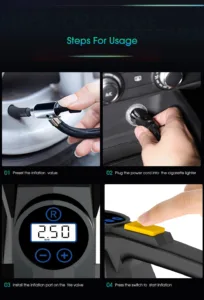
- Park & Prepare: Park on a level surface, turn off the engine, and engage the parking brake. Remove the valve stem cap from the tire.
- Power Up: Start your vehicle’s engine. This is critical to avoid a dead battery. Plug the compressor’s power cord firmly into the 12V cigarette lighter socket.
- Connect: Attach the compressor’s hose nozzle securely to the tire valve stem. You should hear a brief hiss of air and then it should seal.
- Set & Inflate:
- On digital units: Turn it on, set your desired pressure using the +/- buttons, and press start. It will beep and stop automatically.
- On manual units: Turn it on and monitor the built-in analog gauge. Check frequently and stop when you reach the recommended pressure (found in your car’s manual or driver’s side door jamb sticker).
- Disconnect & Check: Turn off the compressor, quickly disconnect the hose (a small air loss is normal), re-check pressure with a separate gauge if possible, and replace the valve stem cap.
- Cool Down: Allow the compressor to cool before storing it, especially after inflating multiple tires.
5. Crucial Safety Notes & Common FAQs
- Never use it with the engine off. It can draw 10-15 amps, quickly draining your battery.
- Check your fuse. If it doesn’t power on, your car’s 12V outlet fuse may be blown (often a 15A or 20A fuse). Consult your vehicle manual.
- It’s for top-offs and emergencies. While it can inflate a completely flat tire, it will take time and strain the unit. It’s best for maintaining proper pressure or handling slow leaks.
- Heat is normal. The motor and cylinder will get very hot during use—this is expected. Allow it to cool between tires.
- Gauge Accuracy: Built-in gauges can drift. For critical pressure (like before a long trip), verify with a high-quality standalone tire pressure gauge.
6. Choosing the Right Model: A Quick Buyer’s Guide
- For Sedans & Daily Drivers: A model with 100-150 PSI max pressure and auto-shutoff is perfect.
- For SUVs, Trucks & RVs: Look for a higher PSI rating (150+), a longer hose, and a higher duty cycle. Consider units with alligator clips for direct battery connection for more power.
- For Adventurers & Off-Roaders: Seek robust, durable models with accurate gauges for frequent pressure adjustments. Some come with built-in LED lights for nighttime use.
7. Maintenance & Storage
- After use, allow the compressor to cool completely before storing.
- Keep it in its case or a dry place in your vehicle, protected from extreme temperatures.
- Periodically check the power cord and hose for cracks or damage.
- If used infrequently, plug it in and let it run for 30 seconds every few months to keep the internal seals lubricated.
Conclusion
A 12V cigarette lighter air compressor is a simple, affordable, and profoundly useful tool that empowers you to handle one of the most common roadside issues—tire pressure—safely and independently. It turns potential stress and delay into a quick, five-minute task. For any driver, it’s not just an accessory; it’s a fundamental component of responsible vehicle ownership and preparedness.