
The Complete Guide to Motorcycle Tire Pressure Monitoring Systems (TPMS)
Maintaining correct tire pressure is not just about maintenance—it’s a critical safety practice for any motorcyclist. A Tire Pressure Monitoring System (TPMS) is an electronic aid that provides real-time monitoring, significantly enhancing your awareness and safety on the road.
Part 1: How It Works & Types of TPMS
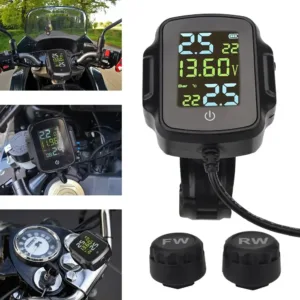
A Motorcycle TPMS typically consists of sensors installed in each wheel and a display unit. The sensors measure pressure and temperature, transmitting this data wirelessly to a display on your handlebars or to a smartphone app.
Two Main Types:
- Direct TPMS (The Standard): Uses physical pressure sensors inside each wheel. It provides precise, real-time readings for each tire individually, even when the bike is stationary. This is the most common and accurate type for motorcycles.
- Indirect TPMS: Relies on the motorcycle’s existing ABS wheel speed sensors to estimate pressure loss by detecting rotational differences. It’s less common on bikes, less accurate, cannot provide specific PSI readings, and may not work when stationary.
Sensor Installation Types:
- Internal (In-Valve) Sensors: Professionally installed inside the tire, mounted on the rim. They are more secure, aerodynamic, accurate, and have longer battery life (often 5+ years). This is the premium, cleanest option.
- External (Screw-On) Sensors: Easily screwed onto the standard valve stem. They are very user-installable and affordable but are more vulnerable to theft, damage, and can slightly affect wheel balance. Their batteries may deplete faster.
Part 2: Why Every Motorcyclist Should Consider a TPMS
For motorcycles, where two wheels are your only connection to the road, tire pressure is paramount for safety, performance, and tire life.
- Prevent Blowouts & Crashes: Under-inflation causes excessive tire flex, heat buildup, and can lead to a catastrophic failure. Over-inflation reduces grip and stability. A TPMS provides an immediate warning.
- Catch Slow Leaks Early: A nail or poor seal can cause a slow leak. A TPMS alerts you before the pressure reaches a dangerous level, preventing a roadside emergency.
- Optimize Performance: Correct pressure is key for optimal handling, braking, and cornering. Adventure riders can easily verify pressure adjustments for different terrains.
- Extend Tire Life & Save Fuel: Properly inflated tires wear evenly and have lower rolling resistance, saving you money on replacements and fuel.
- Peace of Mind: Eliminates the need for frequent manual checks, especially valuable before long rides or touring.
Part 3: Choosing the Right TPMS: Key Considerations
1. Accuracy & Reliability: Look for systems with a small margin of error (e.g., ±1 PSI). Read reviews for feedback on signal stability and sensor durability.
2. Display & Alerts: Options include a dedicated handlebar-mounted LCD screen (solar-powered models are convenient) or smartphone integration via Bluetooth. Ensure alerts are clear (visual and/or audible).
3. Power & Battery Life: For external displays, consider how they are powered (wired, battery, solar). For internal sensors, check the rated battery life.
4. Build Quality & Security: Choose reputable brands. For external sensors, ensure they have a robust, locking mechanism (security nut) to prevent theft and are waterproof (IP67 rating or higher).
5. Brand Considerations: Popular and reliable brands in the market include Garmin, FOBO, TireGard, Orange Electronic, and Schrader (a major OEM supplier). Many motorcycle-specific electronics brands also offer quality kits.
Part 4: Installation & Best Practices
Installation Guide:
- Internal Sensors: Must be installed by a professional tire technician. The process involves tire removal, sensor fitting, remounting, and—crucially—wheel balancing. The system is then programmed to recognize each sensor.
- External Sensors: Can be self-installed. Ensure the tire is at ambient (“cold”) temperature. Hand-tighten the sensor onto the clean valve stem, then use the provided security wrench to lock it. Avoid overtightening. Pair with the display as per instructions.
Using Your TPMS:
- Check Pressure Cold: Always set and check your tire pressure when the tires are cold (before riding or after sitting for 3+ hours). Heat from riding increases pressure.
- Know Your Numbers: Adhere to the manufacturer’s recommended pressures, usually found on the bike’s swingarm sticker or owner’s manual, not the tire’s sidewall.
- React to Alerts: If a low-pressure warning activates, stop safely as soon as possible to inspect the tire. Do not ignore it.
- Maintain the System: Periodically check the display unit’s charge. Note the sensor battery life. Re-initialize/re-learn the system if you swap wheels or sensors.
Part 5: Common Questions Answered
Q: Is a TPMS required by law for motorcycles?
A: Unlike passenger cars, motorcycles are generally not legally required to have TPMS in most regions. However, it is a highly recommended safety upgrade.
Q: The readings seem inaccurate. What should I do?
A: First, verify with a high-quality manual gauge. If a discrepancy persists, the sensor may need recalibration, have a low battery, or be faulty. Ensure the display unit is within range.
Q: Should I adjust pressure for hot/cold weather?
A: Yes. Ambient temperature affects pressure. A general rule is tire pressure changes by about 1 PSI for every 10°F (5.5°C) change in temperature. Check and adjust more often with seasonal shifts.
Q: Can I install TPMS on spoked wheels?
A: Yes. Many systems are compatible. For internal sensors, you may need a specific rubber/bolt-in valve stem kit designed for spoked wheels. External sensors work on any standard valve stem.
Final Verdict: A TPMS is one of the most cost-effective safety and performance upgrades for your motorcycle. It provides critical, real-time data that directly contributes to your safety, confidence, and enjoyment on every ride. For the touring rider, sport rider, commuter, or adventurer, it’s a modern piece of gear that pays for itself in peace of mind.